 Help & Contact
 Track order












Pigeon Canker Medicines Compared: Metronidazole, Ronidazole & Combination Products
Pigeon Canker Medicines Compared: Metronidazole, Ronidazole & Combination Products
A pigeon has stopped eating normally.
It repeatedly swallows.
It may regurgitate.
There may be saliva around the beak.
When the mouth is examined, thick yellow or white material may be visible in the throat.
For pigeon keepers, this immediately raises concern for:
canker.
Pigeon canker is the common name for trichomoniasis caused primarily by the protozoan parasite:
Trichomonas gallinae.
Several pigeon canker medicines are available, including:
- Metronidazole
- Ronidazole
- Ronidazole-based branded products
- Combination nitroimidazole products
- Multi-condition pigeon formulas
But these products should not be treated as interchangeable simply because they all appear in the same canker category.
The best comparison asks:
What is the active ingredient?
Is the product focused only on canker or several conditions?
Is this the first treatment or a recurrent/problem case?
What other symptoms are present?
Pigeon Canker Medicine: Quick Comparison
Metronidazole: a well-known nitroimidazole antiprotozoal used against susceptible Trichomonas organisms.
Ronidazole: another nitroimidazole commonly used in pigeon and cage-bird canker programs.
Canker Combo: combines ronidazole with dimetridazole for a multi-active canker formulation.
Tri-Cure / All in One / broader combination products: combine a canker ingredient with additional actives aimed at worms, coccidia or respiratory disease.
The strongest product choice depends on whether the pigeon has isolated Trichomonas canker or a broader diagnosed health problem.
Explore Bird Antibiotics
Browse our Best Bird Antibiotics collection and explore bird care products organized in one convenient place.
EXPLORE PRODUCTS →What Is Pigeon Canker?
Pigeon canker is trichomoniasis affecting pigeons and doves.
The organism involved is usually:
Trichomonas gallinae.
It commonly affects the:
- Mouth
- Throat
- Esophagus
- Crop

Common Pigeon Canker Symptoms
Possible signs include:
- Yellow-white mouth lesions
- Caseous or cheese-like plaques
- Repeated swallowing
- Difficulty swallowing
- Regurgitation
- Excess saliva
- Reduced appetite
- Weight loss
- Poor condition
- Reduced racing performance
- Weak young birds
Why Canker Can Cause Weight Loss
Lesions in the mouth, throat or crop can interfere with:
- Picking up food
- Swallowing
- Crop function
A bird may still approach the feeder but fail to consume enough food.
How Pigeon Canker Spreads
Trichomonas organisms can spread through:
- Parents feeding young pigeons
- Shared drinking water
- Contaminated feeders
- Direct oral contact
This is why canker management is not only about medication.
Loft hygiene and water management matter too.
How Is Canker Diagnosed?
Yellow oral lesions can strongly suggest trichomoniasis, but similar-looking lesions may have other causes.
A useful diagnostic method is a:
fresh warm saline wet mount.
Material from the mouth or crop is examined microscopically for motile Trichomonas organisms.
Do Not Peel Canker Lesions Away
Thick oral plaques may be firmly attached to underlying tissue.
Aggressively removing them can cause:
- Bleeding
- Tissue injury
- Additional swallowing problems
Explore Bird Antibiotics
Browse our Best Bird Antibiotics collection and explore bird care products organized in one convenient place.
EXPLORE PRODUCTS →The Main Pigeon Canker Medication Family: Nitroimidazoles
Several familiar canker medicines belong to the nitroimidazole group.
These include:
- Metronidazole
- Ronidazole
- Dimetridazole
They share antiprotozoal activity but are not identical products.

Metronidazole for Pigeon Canker
Metronidazole is one of the best-known veterinary antiprotozoal ingredients associated with:
- Trichomonas
- Selected Giardia infections
- Certain anaerobic organisms
BirdAntibiotic.com Metronidazole 20% Powder
Metronidazole 20% Powder contains:
20 g metronidazole per 100 g powder.
Product format:
- Powder
- 20% concentration
- 100 g package
Shop Metronidazole 20% Powder
A concentrated single-active metronidazole powder for pet-bird protozoal-care programs.
Advantages of a Single-Ingredient Metronidazole Product
A single-active product makes it clear exactly which pharmacological category is being used.
This can be useful when:
- Canker is the primary health concern
- You do not need worm treatment
- You do not need coccidiosis treatment
- You do not need a respiratory antibiotic at the same time
Explore Bird Antibiotics
Browse our Best Bird Antibiotics collection and explore bird care products organized in one convenient place.
EXPLORE PRODUCTS →Ronidazole for Pigeon Canker
Ronidazole is another major nitroimidazole antiprotozoal used in pigeon medicine.
It is particularly familiar to:
- Racing pigeon keepers
- Breeding lofts
- Cage-bird owners
Ronivet-S — Ronidazole 6%
Ronivet-S by Vetafarm contains:
Ronidazole 6%.
It is positioned for protozoal organisms including:
- Trichomonas
- Hexamita
- Giardia
- Cochlosoma
Shop Ronivet-S Ronidazole 6%
A dedicated ronidazole-based product for canker and other susceptible protozoal problems in pigeons and cage birds.
Ronidazole Powder Products
BirdAntibiotic.com also carries ronidazole-focused products through the:
Current listings include:
- Ronidazole – Canker, Giardia & Protozoal Infection Treatment
- Ronidazole 6% Powder
- Ronivet-S products
Metronidazole vs Ronidazole
| Feature | Metronidazole | Ronidazole |
|---|---|---|
| Drug family | Nitroimidazole | Nitroimidazole |
| Main pigeon search intent | Canker / Trichomonas | Canker / Trichomonas |
| BirdAntibiotic format | 20% powder | Ronivet-S 6% and other ronidazole products |
| Product style | Single active | Single active in dedicated ronidazole products |
| Best comparison use | Targeted canker-care program | Targeted canker-care program |
Is One Automatically Better?
No.
The correct question is not simply:
“Which drug is stronger?”
Instead consider:
- Diagnosis
- Previous treatment history
- Product concentration
- Administration method
- Whether the case has failed previous treatment
What About Resistant or Recurrent Canker?
Repeated exposure to the same medication can be associated with reduced susceptibility in Trichomonas populations.
This becomes particularly relevant when a loft experiences:
- Frequent recurrence
- Poor response to treatment
- Rapid return of symptoms
In those situations, simply repeating the same blind medication program may not solve the problem.

Canker Combo — Ronidazole + Dimetridazole
Canker Combo by Medpet is different from a single-active product.
Its listed active ingredients per 5 g are:
- Dimetridazole — 1000 mg
- Ronidazole — 500 mg
Net size:
100 g.
Shop Canker Combo by Medpet
A two-active nitroimidazole canker formula containing dimetridazole plus ronidazole.
Explore Bird Antibiotics
Browse our Best Bird Antibiotics collection and explore bird care products organized in one convenient place.
EXPLORE PRODUCTS →Single-Ingredient vs Combination Canker Medicine
| Approach | Main Advantage | Main Consideration |
|---|---|---|
| Single active | Simple targeted pharmacology | Best when the health problem is clearly defined |
| Dual-active canker product | Two antiprotozoal actives in one formula | Not automatically necessary for every case |
| Multi-condition combination | Addresses several disease categories | Most appropriate when several relevant conditions are actually being considered |
Tri-Cure Tablets — Canker + Coccidia + Worms
Tri-Cure Tablets by Medpet combine three different active categories:
- Fenbendazole — worm control
- Diclazuril — coccidiosis control
- Ronidazole — Trichomonas/canker
This is fundamentally different from using ronidazole alone.
When a Multi-Condition Product Makes More Sense
A combination formula becomes more relevant when there is a genuine management reason to address multiple parasite categories.
It should not be interpreted as:
“every pigeon with canker also has worms and coccidia.”
All in One Powder
All in One Powder combines:
- Ronidazole 5%
- Tylosin 10%
- Levamisole 3%
- Amprolium 10%
What Those Ingredients Represent
Ronidazole: canker / Trichomonas category.
Tylosin: selected respiratory bacterial/Mycoplasma category.
Levamisole: selected worm category.
Amprolium: coccidiosis category.
All in One Does Not Mean Every Disease Is Present
The product covers several care categories.
It does not mean every sick pigeon automatically needs all four actives.
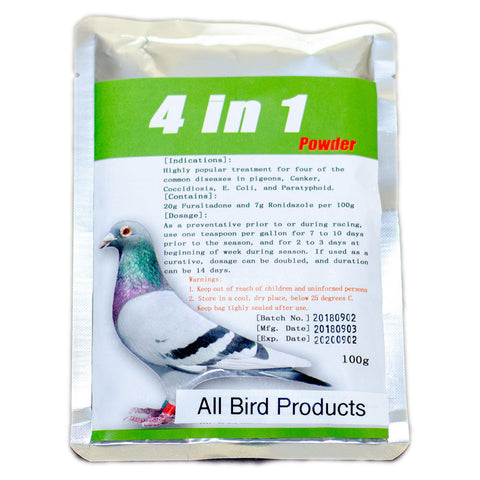
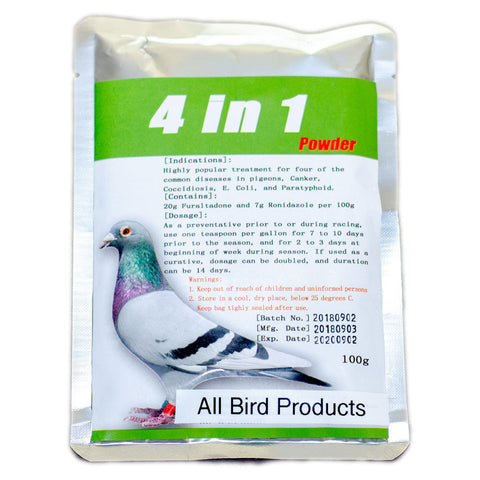
4 in 1 Products
BirdAntibiotic.com also carries multi-condition pigeon products in its:
These products may combine canker coverage with:
- Coccidiosis care
- Bacterial disease care
- Other pigeon-health targets
Best Canker Medicine for a Simple Trichomonas Case
When canker is the primary diagnosed problem, a targeted single-purpose product such as:
- Metronidazole
- Ronidazole
- Ronivet-S
provides a more focused approach than automatically selecting a multi-condition formula.
Best Canker Medicine When Several Problems Are Suspected
If the pigeon also has evidence supporting:
- Coccidiosis
- Worms
- Respiratory disease
a combination product may become more commercially and practically relevant.
Metronidazole 20% vs Ronivet-S
This is one of the most useful direct comparisons for buyers.
| Product | Active | Strength | Primary Positioning |
|---|---|---|---|
| Metronidazole 20% | Metronidazole | 20% | Concentrated single-active protozoal powder |
| Ronivet-S | Ronidazole | 6% | Dedicated ronidazole canker/protozoal product |
Ronivet-S vs Canker Combo
Ronivet-S:
- Ronidazole-based
- Single primary antiprotozoal active
- Focused canker/protozoal positioning
Canker Combo:
- Ronidazole + dimetridazole
- Two nitroimidazole actives
- Combination canker positioning
Ronidazole vs All in One Powder
A ronidazole-only product targets the canker/protozoal category.
All in One Powder additionally incorporates:
- Respiratory support
- Worm support
- Coccidiosis support
These are very different treatment strategies.
Why Repeated Blind Canker Treatment Can Fail
When a pigeon repeatedly develops the same symptoms, possible reasons include:
- Incorrect original diagnosis
- Reinfection from shared water
- Chronically infected breeding birds
- Incomplete environmental control
- Reduced drug susceptibility
- Another oral or crop disease
Canker vs Candida
Candidiasis can also affect the mouth and crop.
It may produce:
- White plaques
- Regurgitation
- Slow crop function
- Poor appetite
but Candida is a yeast problem, not Trichomonas.
Antiprotozoal canker medicine is not a universal yeast treatment.
Canker vs Pigeon Pox
Pigeon pox may create lesions around:
- Beak
- Mouth
- Eyes
and can sometimes create confusing oral lesions.
Again, visual examination alone may not always be enough.
Canker vs Respiratory Disease
Both can produce:
- Reduced performance
- Difficulty breathing
- Weight loss
- Reduced appetite
But classic canker more strongly points toward:
- Swallowing problems
- Oral lesions
- Crop involvement
- Regurgitation
Can Canker Affect Breathing?
Yes.
Large lesions in the mouth or throat may physically interfere with airflow.
A bird with severe breathing difficulty needs prompt attention.
Should Canker Lesions Be Scraped Out?
No aggressive lesion removal should be attempted simply to make the mouth look cleaner.
Caseous material can adhere strongly to tissue.
Removing it forcefully may cause bleeding.
Canker in Young Pigeons
Young pigeons are particularly important because Trichomonas can pass:
from parent to squab during feeding.
Possible signs include:
- Poor growth
- Weakness
- Difficulty swallowing
- Visible oral lesions
- Crop problems
Canker in Racing Pigeons
Racing pigeons may show subtler performance-related signs before obvious severe lesions develop.
Watch for:
- Reduced endurance
- Slow recovery
- Poor appetite
- Weight loss
- Repeated throat clearing
Canker in Breeding Pigeons
Breeding lofts deserve special attention because adults can transmit Trichomonas directly to young birds while feeding them.
Why Waterer Hygiene Matters
Shared water is an important transmission route.
Daily management should include:
- Fresh clean water
- Regular cleaning of drinkers
- Removal of organic material
- Avoiding contaminated communal water
Why Reinfection Happens
A successfully treated pigeon can be exposed again through:
- Untreated carrier birds
- Contaminated drinkers
- Shared feeders
- Breeding contact
Should Every Pigeon in the Loft Be Treated?
That depends on:
- The outbreak pattern
- How many birds are affected
- Testing results
- Breeding status
- Loft management
Individual confirmed disease and flock-level management are not always the same situation.
What About Probiotics After Treatment?
After an appropriate medication program, digestive support can be useful—especially in birds recovering from:
- Reduced appetite
- Weight loss
- Stress
Bio Plus
Bio Plus provides probiotic, electrolyte and nutritional support for recovery.
What About Electrolytes?
Birds that have eaten poorly or become dehydrated may benefit from supportive hydration care during recovery.
Guardian Angel
Guardian Angel provides electrolyte, energy and nutritional recovery support for stressed or weakened birds.
Explore Bird Antibiotics
Browse our Best Bird Antibiotics collection and explore bird care products organized in one convenient place.
EXPLORE PRODUCTS →Frequently Asked Questions
What is the best medicine for pigeon canker?
Common canker products include metronidazole, ronidazole and combination formulas. The best choice depends on diagnosis, previous treatment history and whether canker is the only health problem involved.
What is metronidazole used for in pigeons?
Metronidazole is a nitroimidazole antiprotozoal commonly associated with Trichomonas/canker treatment.
What is ronidazole used for in pigeons?
Ronidazole is widely used in pigeon and cage-bird programs for susceptible Trichomonas and other protozoal organisms.
Is ronidazole the same as metronidazole?
No. They belong to the same general nitroimidazole family but are different active ingredients.
Which is better, metronidazole or ronidazole?
Neither is automatically best for every pigeon. Diagnosis, treatment history and organism susceptibility matter.
What is Ronivet-S?
Ronivet-S is a ronidazole 6% product marketed for canker and susceptible protozoal infections in pigeons and cage birds.
What is Canker Combo?
Canker Combo by Medpet combines dimetridazole and ronidazole in one pigeon canker formula.
What is Tri-Cure?
Tri-Cure combines fenbendazole, diclazuril and ronidazole to cover selected worms, coccidia and canker.
What is All in One Powder?
All in One Powder combines ronidazole, tylosin, levamisole and amprolium for canker, selected respiratory issues, worms and coccidiosis support.
What causes pigeon canker?
Pigeon canker is primarily caused by Trichomonas gallinae.
What do pigeon canker lesions look like?
Typical lesions are yellow-white, caseous or cheese-like plaques in the mouth, throat or crop.
Can pigeons have canker without visible lesions?
Yes. A bird can carry Trichomonas with subtle or limited visible disease.
How do you confirm pigeon canker?
A fresh warm saline wet mount from oral or crop material can demonstrate motile Trichomonas organisms.
Can canker make pigeons stop eating?
Yes. Mouth and throat lesions can interfere with swallowing and cause appetite loss and weight loss.
Can canker cause regurgitation?
Yes. Crop and upper digestive tract involvement can contribute to regurgitation.
Can canker affect breathing?
Large throat lesions may interfere with normal airflow.
Can canker spread through drinking water?
Yes. Shared contaminated water can facilitate transmission.
Can parents infect young pigeons?
Yes. Trichomonas can pass from parent pigeons to squabs during feeding.
Why does pigeon canker keep coming back?
Possible reasons include reinfection, carrier birds, contaminated waterers, incomplete loft management, incorrect diagnosis or reduced medication susceptibility.
Can canker become resistant to medicine?
Reduced susceptibility to nitroimidazole drugs has been reported in Trichomonas populations, particularly where repeated treatment occurs.
Should I switch medication if canker returns?
Repeated treatment failure should first trigger reassessment of diagnosis, reinfection risk and susceptibility rather than automatic cycling through medicines.
Is a combination canker medicine always better?
No. A combination product provides more active ingredients, but that does not mean every pigeon requires all of them.
When is a single-ingredient product better?
A targeted product can make sense when Trichomonas is the clearly identified primary problem and no additional treatment categories are needed.
When are combination pigeon products useful?
They become more relevant when multiple confirmed or strongly suspected disease categories need to be addressed.
Can canker look like Candida?
Yes. Both can affect the mouth or crop, which is why microscopic testing can be useful.
Can canker look like pigeon pox?
Some oral lesions may appear similar enough that diagnosis should not rely entirely on appearance.
Should canker plaques be removed manually?
Do not aggressively scrape attached lesions because they can bleed and damage underlying tissue.
Should loft waterers be cleaned during canker treatment?
Yes. Waterer hygiene is an important part of reducing environmental transmission.
Can recovered pigeons get canker again?
Yes. Reinfection can occur, particularly when carrier birds or contaminated communal water remain in the loft.
Where can I compare pigeon canker products?
BirdAntibiotic.com maintains a dedicated Pigeon Canker collection containing ronidazole, metronidazole and combination pigeon-health formulas.
Professional Product-Selection Framework
1. Confirm that the disease pattern fits Trichomonas canker.
2. Check the mouth, throat, appetite, crop function and weight.
3. Use microscopy when the diagnosis is uncertain or disease keeps returning.
4. Review previous canker medicines used in the loft.
5. Decide whether you need a targeted single-active product or a multi-condition formula.
6. Clean waterers and feeders.
7. Reduce reinfection from carrier birds.
8. Monitor weight and swallowing during recovery.
9. Support hydration and digestive recovery when needed.
10. Reassess recurrent treatment failure rather than repeatedly treating blindly.
Compare Pigeon Canker Treatments
Shop metronidazole, ronidazole, Ronivet-S, Canker Combo and multi-condition pigeon medicines by active ingredient and treatment category.
The Most Important Canker-Medicine Rule
Do not choose medicine only because the package says:
“canker.”
Look at the active ingredients.
Ask whether the product contains:
- Metronidazole
- Ronidazole
- Multiple nitroimidazoles
- Anticoccidials
- Wormers
- Respiratory antibacterial ingredients
A pigeon with isolated Trichomonas infection and a pigeon with canker plus other confirmed loft-health problems may need very different product strategies.
Correct diagnosis + appropriate active ingredient + waterer hygiene + reinfection control is stronger than repeatedly rotating medicines without knowing why canker keeps returning.
Recommended Products
Products selected to complement this guide.


Shop Related Products
Explore the products featured for this topic.


