 Help & Contact
 Track order




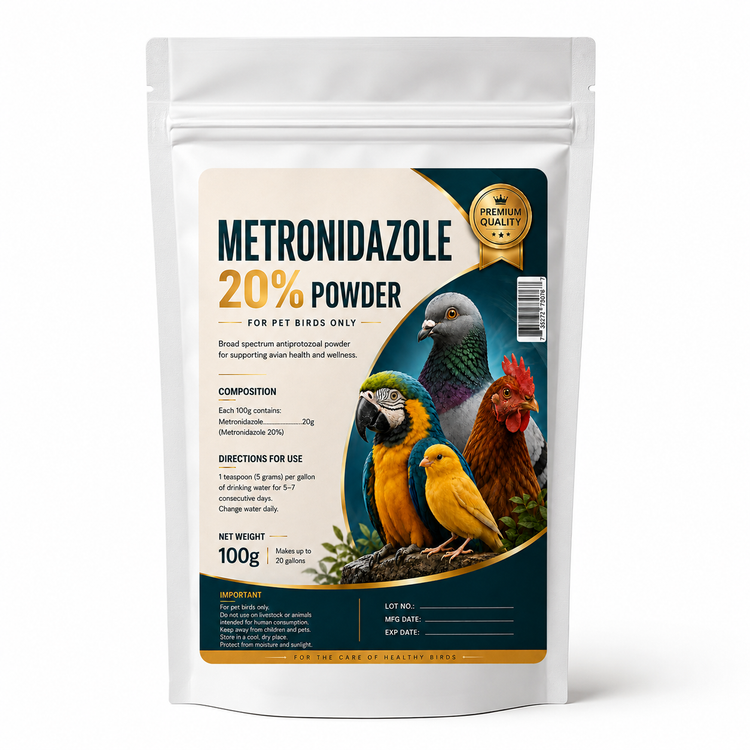
Metronidazole 20% Powder for Pet Birds – Avian Antiprotozoal & Trichomonas Support – 100 g
Regular price $29.95
In Stock
- FREE SHIPPING ON ORDERS OVER $49
Metronidazole 20% Powder for Pet Birds is a concentrated avian-care formulation containing 20% metronidazole and supplied in a convenient 100 g resealable pouch. Designed specifically for pet and companion birds, this powdered formulation is positioned for veterinary-directed protozoal, parasite and digestive-health management.
Metronidazole is a well-known veterinary active ingredient with antiprotozoal and antimicrobial properties. In avian veterinary medicine, metronidazole may be considered by a veterinarian for selected protozoal and gastrointestinal conditions when diagnosis indicates that the active ingredient is appropriate.
Metronidazole 20% Powder – Product Overview
| Product Name | Metronidazole 20% Powder |
| Active Ingredient | Metronidazole |
| Strength | 20% |
| Composition | 20 g Metronidazole per 100 g Powder |
| Form | Powder |
| Net Weight | 100 g |
| Animal Category | Pet & Companion Birds |
| Care Focus | Protozoal & Digestive Health Support |
What Is Metronidazole 20% Powder for Birds?
Metronidazole 20% Powder is an avian veterinary formulation containing metronidazole as its active ingredient. The 20% concentration means that every 100 g of powder contains 20 g of metronidazole.
Metronidazole has both antiprotozoal and activity against certain anaerobic bacteria. Veterinary references describe its use in pet birds for selected conditions involving organisms such as Trichomonas, Giardia and certain Clostridium infections when professionally diagnosed.
Key Product Features
- 20% metronidazole concentration
- 20 g metronidazole per 100 g of finished powder
- Convenient 100 g resealable pouch
- Powder formulation for pet-bird care
- Broad-spectrum antiprotozoal positioning
- Relevant to veterinary-directed protozoal management
- Suitable for companion and ornamental bird-care programs
- Clearly identified active ingredient and strength
Metronidazole & Avian Trichomoniasis
One of the most important veterinary applications associated with metronidazole for birds is the management of trichomoniasis, a protozoal disease caused primarily by Trichomonas gallinae.
Trichomoniasis has been reported across numerous bird groups and is particularly important in pigeons and doves. The disease can also occur in songbirds, raptors and pet birds, including budgerigars. Veterinary references identify metronidazole among the compounds that may be used in appropriate diagnosed cases.
Pigeon Canker & Trichomonas Support
In pigeons and doves, avian trichomoniasis is commonly associated with the search term “pigeon canker”. The infection is caused by protozoa of the Trichomonas genus and can affect the mouth, throat, crop, esophagus and, in more severe cases, other internal tissues.
This makes keyword phrases such as metronidazole for pigeons, pigeon trichomoniasis and pigeon canker highly relevant to the veterinary context of metronidazole. Any treatment should be based on appropriate diagnosis and professional veterinary guidance.
Recognizing Trichomoniasis in Birds
Birds affected by trichomoniasis can develop signs that vary by species. Veterinary references describe possible signs including:
- Reduced appetite
- Difficulty swallowing
- Weight loss
- Regurgitation
- Increased salivation
- Breathing difficulty in some cases
- Whitish or yellow caseous lesions in the mouth or upper digestive tract in certain species
These signs are not unique to trichomoniasis. Similar symptoms may occur with bacterial, fungal, nutritional or other diseases, which is why diagnostic evaluation is important.
Metronidazole & Giardia in Pet Birds
Veterinary literature also discusses metronidazole in pet birds for selected cases of Giardia infection. Giardiasis is a protozoal condition affecting the gastrointestinal tract and may require fecal testing or other diagnostic methods for confirmation.
Because intestinal symptoms can result from many different causes, gastrointestinal problems should not automatically be assumed to be Giardia or treated without a suitable veterinary assessment.
Digestive & Gastrointestinal Health
Metronidazole is also recognized in avian veterinary medicine in connection with selected anaerobic bacterial gastrointestinal conditions. This makes terms such as avian digestive health, bird gastrointestinal support and bird gut health semantically relevant to this product category.
The actual cause of digestive illness should be identified whenever possible before treatment because protozoa, bacteria, fungi, parasites, diet and husbandry problems can produce overlapping clinical signs.
Made for Pet & Companion Birds
This product is labeled specifically for pet birds. Relevant companion and ornamental bird categories can include:
- Budgerigars and budgies
- Parakeets
- Canaries
- Finches
- Cockatiels
- Lovebirds
- Parrots
- Macaws
- Companion pigeons
- Companion doves
- Other ornamental and pet birds
Bird species can differ considerably in physiology and medication requirements. Inclusion in this list does not mean that metronidazole is automatically appropriate for every species or condition.
Powder Format for Avian Care
The powdered presentation provides an alternative to tablets, capsules and liquid preparations. It is supplied in a compact, resealable 100 g package designed for straightforward storage and handling.
Because concentration, administration and duration of treatment can vary according to the bird, diagnosis and veterinary instructions, always follow the product label and appropriate professional guidance.
Product Composition
According to the product labeling:
- Metronidazole: 20 g per 100 g
- Equivalent concentration: 20%
- Net weight: 100 g
- Form: Powder
Why Accurate Diagnosis Matters
Protozoal infections such as trichomoniasis can resemble other avian illnesses. For example, lesions of the mouth and throat, weight loss, regurgitation or breathing changes can have more than one possible cause.
Trichomoniasis can be confirmed through veterinary examination and appropriate diagnostic techniques. Identifying the organism helps determine whether an antiprotozoal such as metronidazole is suitable.
Sanitation & Bird-House Management
Medication may be only one part of managing protozoal disease. Good sanitation can be particularly important with infections transmitted through contaminated food or water.
- Keep drinking containers clean.
- Clean feeding utensils regularly.
- Provide fresh drinking water.
- Avoid excessive contamination of shared food and water sources.
- Separate clinically affected birds when directed.
- Maintain clean cages, aviaries and feeding areas.
Responsible Veterinary Use
Metronidazole is a veterinary medication and should be used responsibly. The correct treatment approach depends on the bird species, body weight, diagnosis, organism involved and individual health status.
Do not substitute dosing information from another metronidazole concentration or another species. Follow the instructions supplied with the product and professional veterinary guidance.
Storage & Handling
- Keep the pouch securely closed when not in use.
- Store in a cool, dry location as directed by the product label.
- Protect from moisture and direct sunlight.
- Keep in the original labeled package.
- Keep out of reach of children.
- Do not use beyond the stated expiration date.
Important Product Information
For pet birds only. Not for human use. Do not use in animals intended for human consumption. Veterinary and regulatory requirements can vary by location.
In the United States, veterinary references note that metronidazole is not approved for use in birds, although veterinary extra-label use may occur in appropriate non-food birds. Extra-label use is prohibited in food-producing bird species. Always follow applicable laws and veterinary guidance.
Frequently Asked Questions
What is Metronidazole 20% Powder?
It is a powdered pet-bird formulation containing 20% metronidazole, equivalent to 20 g of metronidazole per 100 g of finished powder.
How much powder is included?
Each pouch contains 100 g of product.
Is metronidazole an antiprotozoal?
Yes. Metronidazole has antiprotozoal activity and is used in veterinary medicine against selected susceptible protozoal organisms.
Is metronidazole used for trichomoniasis in birds?
Veterinary references describe metronidazole among the treatment options used for diagnosed avian trichomoniasis in appropriate non-food birds.
What is pigeon canker?
Pigeon canker is a common name associated with avian trichomoniasis caused by Trichomonas organisms, particularly Trichomonas gallinae.
Can pet budgies develop trichomoniasis?
Yes. Veterinary literature notes that trichomoniasis can occur in pet birds and is reported particularly in budgerigars among commonly kept companion birds.
Is metronidazole associated with Giardia treatment in birds?
Veterinary references include metronidazole among medications used in selected diagnosed cases of Giardia infection in pet birds.
Is this product for food-producing poultry?
No. This product is positioned for pet birds only and should not be used in animals intended for human consumption.
Usually ships within 1 business day to USA & CANADA
Shipping Options:
FREE SHIPPING ON ALL ORDERS- USPS First Class Package : $6.95, 3-5 days (USPS First Class Package)
- FedEx 2Day®: $29.95, 1-Business Days (FedEx)
More Shipping Info:
- Orders placed Monday-Friday before 2pm Central Time usually ship the same day.
- We ship to the USA And Canada only.
Related Products


- $39.50
- $59.99
- $39.50
