 Help & Contact
 Track order












Doxycycline for Birds: Uses, Bird Doxy Products & Respiratory Support Guide
Doxycycline for Birds: Uses, Bird Doxy Products & Respiratory Support Guide
Your bird has started sneezing.
Maybe the nostrils look slightly wet.
Perhaps one eye is watery.
A pigeon may be flying poorly.
A cockatiel may be unusually quiet.
A budgie may sit fluffed and eat less than usual.
When owners begin researching these symptoms, one medication name appears repeatedly:
doxycycline.
Doxycycline is one of the best-known antibiotics used in avian medicine.
It belongs to the:
tetracycline antibiotic family.
It is especially important in discussions involving:
- Avian chlamydiosis
- Ornithosis
- Psittacosis
- Selected bacterial respiratory infections
- Selected Mycoplasma-associated respiratory disease
But this distinction is essential:
Doxycycline is an antibacterial medication—not a universal treatment for every bird that sneezes, wheezes or breathes differently.
Bird respiratory signs can also result from:
- Fungal disease
- Viruses
- Air-sac mites
- Other parasites
- Dust
- Smoke
- Household fumes
- Foreign material
- Nutritional disease
The strongest use of doxycycline therefore begins with understanding:
what type of disease is actually causing the bird's symptoms.
Doxycycline for Birds: Quick Answer
Doxycycline is a tetracycline-class antibacterial medication widely used in avian medicine.
It is particularly well known for its role in treating:
- Chlamydia psittaci infection
- Avian chlamydiosis
- Ornithosis / psittacosis
- Selected susceptible bacterial respiratory diseases
- Selected Mycoplasma-associated infections
BirdAntibiotic.com currently carries several doxycycline formats including:
- Doxycycline 20% Powder — 100 g
- Doxy-Tyl Powder — doxycycline + tylosin
- Doxyvet liquid oral solution — 50 ml
- Doxyvet liquid oral solution — 250 ml
- Additional pigeon and cage-bird doxycycline products
Doxycycline does not treat viral, fungal or parasitic respiratory disease, so the bird's full symptom pattern still matters.
Explore Bird Antibiotics
Browse our Best Bird Antibiotics collection and explore bird care products organized in one convenient place.
EXPLORE PRODUCTS →What Is Doxycycline?
Doxycycline is an antibiotic from the tetracycline family.
It works by interfering with bacterial protein production, which limits bacterial growth and replication.
This type of antimicrobial action makes doxycycline useful against selected susceptible bacterial organisms.
Why Is Doxycycline So Commonly Associated With Birds?
Its importance in avian medicine comes largely from its activity against:
Chlamydia psittaci.
This organism causes:
- Avian chlamydiosis
- Ornithosis
- Psittacosis
Different names may appear depending on:
- The bird species
- The context
- The source discussing the disease
What Is Avian Chlamydiosis?
Avian chlamydiosis is a systemic bacterial infection caused by:
Chlamydia psittaci.
It can affect many bird species.
Companion-bird species commonly discussed in connection with the disease include:
- Parrots
- Budgies
- Cockatiels
- Pigeons
- Doves
- Canaries
- Other cage birds
Possible Signs of Chlamydiosis in Birds
Clinical signs vary significantly.
Some birds can carry the organism without obvious symptoms.
Others may develop:
- Reduced activity
- Fluffed feathers
- Loss of appetite
- Weight loss
- Eye discharge
- Nasal discharge
- Sinus problems
- Difficulty breathing
- Green or yellow-green droppings
Why Doxycycline Is Especially Important for Chlamydia
Doxycycline has several characteristics that make it valuable in this context.
Compared with several older tetracyclines, it is:
- Well absorbed
- Widely distributed through body tissues
- Relatively long acting
For this reason, doxycycline is one of the principal avian antimicrobial options associated with Chlamydia psittaci.
Chlamydia Is Not the Same as Every Respiratory Infection
A bird with:
- Sneezing
- Tail bobbing
- Eye discharge
- Wheezing
does not automatically have Chlamydia.
Respiratory disease is a:
syndrome.
Several different diseases can create similar signs.
Explore Bird Antibiotics
Browse our Best Bird Antibiotics collection and explore bird care products organized in one convenient place.
EXPLORE PRODUCTS →What Respiratory Symptoms Make Bird Owners Research Doxycycline?
1. Repeated Sneezing
An occasional sneeze can occur when a bird clears dust from the upper airway.
Repeated sneezing becomes more concerning when accompanied by:
- Wet nostrils
- Eye discharge
- Reduced activity
- Breathing changes
2. Nasal Discharge
Watch for:
- Clear moisture around the nostrils
- Thicker mucus
- Crust around the nares
- Repeated rubbing of the beak on perches
3. Watery or Swollen Eyes
Eye problems can occur with:
- Conjunctivitis
- Sinus disease
- Respiratory infection
- Trauma
- Foreign material
4. Wheezing or Clicking
Abnormal respiratory sounds may suggest involvement of:
- Upper airways
- Lower respiratory tract
- Air sacs
However, clicking in small birds can also occur with air-sac mites.
5. Tail Bobbing
Pronounced rhythmic movement of the tail with each breath can indicate:
increased respiratory effort.
6. Open-Mouth Breathing
A bird breathing with its mouth open while resting may be experiencing significant respiratory distress.
Respiratory Emergency Warning
A bird with:
- Persistent open-mouth breathing
- Marked tail bobbing
- Severe weakness
- Collapse
- Inability to perch
requires prompt veterinary attention.
Do not repeatedly chase or force oral medication into a bird that is already struggling to breathe.

What Bird Diseases Can Doxycycline Be Used For?
The strongest established avian use is:
susceptible bacterial disease.
Doxycycline is particularly associated with:
- Chlamydia psittaci
- Ornithosis
- Psittacosis
- Selected Mycoplasma infections
- Other susceptible bacterial infections
Doxycycline and Mycoplasma in Birds
Mycoplasma organisms can contribute to respiratory disease in some bird populations.
Possible respiratory signs may include:
- Sneezing
- Nasal discharge
- Sinus swelling
- Eye problems
- Respiratory noise
- Poor performance in pigeons
Tetracycline-class antibiotics, including doxycycline, are commonly considered when susceptible Mycoplasma infection is involved.
Does Doxycycline Treat Air-Sac Mites?
No.
Air-sac mites are parasites.
Doxycycline is an antibacterial medication.
This distinction is important because air-sac mites can create respiratory signs that resemble bacterial disease, especially in:
- Canaries
- Gouldian finches
- Other susceptible finches
Air-Sac Mites vs Bacterial Respiratory Disease
| Finding | Possible Bacterial Disease | Possible Air-Sac Mites |
|---|---|---|
| Nasal discharge | Can occur | Less characteristic |
| Eye discharge | Can occur | Not the classic sign |
| Clicking | Possible | Commonly researched sign |
| Species | Many species | Especially canaries and some finches |
| Doxycycline appropriate? | For susceptible bacterial disease | No—parasite treatment is different |
Does Doxycycline Treat Fungal Respiratory Disease?
No.
Fungal disease requires antifungal care.
An important avian example is:
aspergillosis.
Aspergillosis can cause:
- Breathing difficulty
- Voice changes
- Exercise intolerance
- Weakness
- Weight loss
Doxycycline does not kill Aspergillus fungus.
Does Doxycycline Treat Viral Disease?
No.
Antibiotics do not directly treat viral infections.
Does Doxycycline Treat Canker?
No.
Pigeon canker is caused by:
Trichomonas gallinae.
That is a protozoan parasite.
Canker belongs to a different treatment category from bacterial respiratory disease.
Explore Bird Antibiotics
Browse our Best Bird Antibiotics collection and explore bird care products organized in one convenient place.
EXPLORE PRODUCTS →What Is “Bird Doxy”?
Bird Doxy is a search phrase owners often use when looking for doxycycline products formulated or marketed for birds.
On BirdAntibiotic.com, the central commercial destination is the:
Doxycycline for Birds collection.
This collection contains several product formats suited to different bird-care preferences.
Shop Doxycycline for Birds
Compare doxycycline powder, liquid oral solution and combination respiratory products for pigeons, parrots, budgies, cockatiels and other pet birds.
Doxycycline 20% Powder for Pet Birds — 100 g
Doxycycline 20% Powder for Pet Birds is one of the principal doxycycline products currently available from BirdAntibiotic.com.
Product specifications include:
- Active ingredient: Doxycycline
- Concentration: 20%
- Form: Powder
- Net weight: 100 g
- Intended use: Pet birds
Why Choose a Powder Format?
Bird owners and aviary keepers may prefer powder because it offers:
- Compact storage
- Clearly identified concentration
- Convenient aviary-care format
- A practical option for owners who prefer powder products
Doxycycline 20% Powder — 100 g
A clearly labeled doxycycline powder format for pet-bird bacterial-care routines.
Doxycycline 20% Powder for Ornithosis & Respiratory Support
BirdAntibiotic.com also carries:
Doxycycline 20% Powder for Birds — Ornithosis & Respiratory Support — 100 g.
This product is commercially positioned specifically around searches involving:
- Ornithosis
- Respiratory bacterial challenges
- Pigeon respiratory care
- Cage-bird respiratory care
Doxy-Tyl Powder — Doxycycline + Tylosin
Doxy-Tyl Powder combines:
- Doxycycline 20%
- Tylosin 40%
in a 100 g powder format.
Why Do Bird Owners Search for Doxy-Tyl?
The combination is especially relevant to owners researching:
- Pigeon respiratory problems
- Mycoplasma-associated respiratory disease
- Ornithosis
- Psittacosis
- Mixed bacterial respiratory concerns
Doxy-Tyl Respiratory Combination
Compare doxycycline + tylosin in one powder formula for organized pet-bird respiratory-care programs.
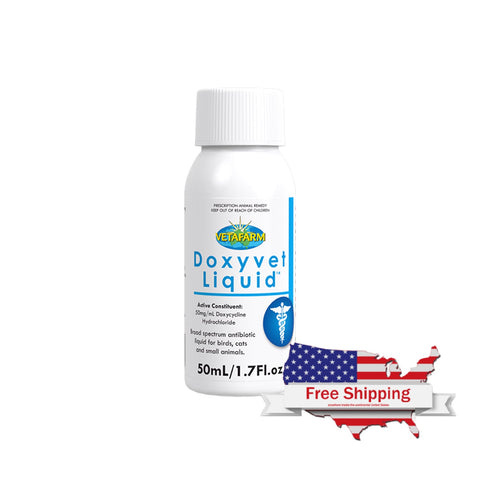
Doxyvet Doxycycline Oral Solution — 50 ml
Doxyvet by Vetafarm provides doxycycline in a liquid oral format.
The 50 ml bottle is well suited to owners looking for:
- A compact liquid format
- Individual-bird care
- A Vetafarm doxycycline product
Doxyvet Doxycycline Oral Solution — 250 ml
BirdAntibiotic.com also carries a larger:
250 ml Doxyvet bottle.
This format may be attractive to:
- Breeders
- Multi-bird households
- Aviary managers
- Owners preferring a larger liquid format
Powder vs Liquid Doxycycline for Birds
| Format | Advantages | Best Fit |
|---|---|---|
| Doxycycline Powder | Compact, stable, practical aviary format | Owners and breeders preferring measured powder preparations |
| Doxyvet Liquid | Liquid format allows flexible administration according to product/professional directions | Individual birds and caretakers who prefer liquids |
| Doxy-Tyl Powder | Contains two antibacterial ingredients | Respiratory programs where the combination is appropriate |
Explore Bird Antibiotics
Browse our Best Bird Antibiotics collection and explore bird care products organized in one convenient place.
EXPLORE PRODUCTS →Doxycycline for Pigeons
Pigeon owners frequently research doxycycline for respiratory problems.
Common search terms include:
- Pigeon ornithosis
- Pigeon respiratory infection
- Pigeon one-eye cold
- Pigeon Chlamydia
- Pigeon Mycoplasma
- Pigeon respiratory medicine
Respiratory Signs in Pigeons
Watch for:
- Sneezing
- Wet nostrils
- Watery eyes
- Swelling around the eyes
- Reduced flight performance
- Breathing noise
- Weight loss
- Reduced appetite
Doxycycline for Pigeons Collection
BirdAntibiotic.com maintains a dedicated:
Doxycycline for Pigeons collection.
It contains products including:
- Doxycycline powders
- Doxyvet liquid
- Doxycycline tablets
- Doxy-Tyl combinations
Doxycycline for Budgies
Budgies can be affected by avian chlamydiosis.
Potential signs include:
- Fluffing
- Reduced appetite
- Weight loss
- Eye or nasal discharge
- Abnormal droppings
- Respiratory difficulty
However, respiratory signs in a budgie can also have other causes.
Doxycycline for Cockatiels
Cockatiels are among companion birds commonly discussed in connection with Chlamydia psittaci.
Possible signs may include:
- Reduced activity
- Fluffed feathers
- Eye discharge
- Nasal discharge
- Appetite changes
- Breathing abnormalities
Doxycycline for Parrots
Larger parrots may show:
- Respiratory signs
- Weakness
- Reduced appetite
- Green droppings
- Weight loss
- Reduced vocalization
depending on the underlying disease.
Doxycycline for Canaries & Finches
Doxycycline may be relevant when susceptible bacterial disease is diagnosed.
But small passerines require an especially careful differential diagnosis because respiratory signs can also result from:
- Air-sac mites
- Environmental irritation
- Fungal disease
- Other respiratory infections
Doxycycline vs Tylosin for Birds
These are different antibiotics.
Doxycycline belongs to the tetracycline family.
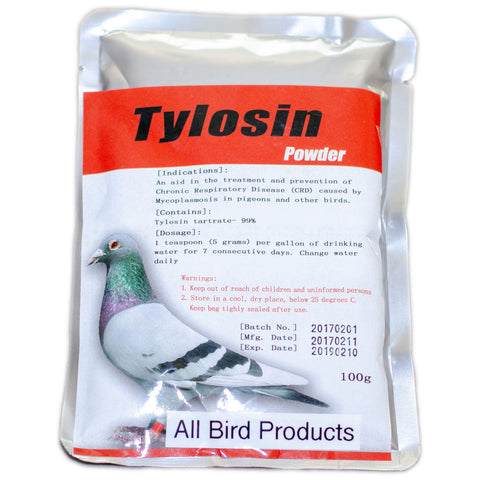
Tylosin belongs to the macrolide family.
Tylosin is commonly researched by pigeon and bird owners for:
- Mycoplasma
- CRD-type respiratory disease
- Selected susceptible bacterial infections
Shop Tylosin Powder
BirdAntibiotic.com carries:
Tylosin Tartrate 99% Powder — 100 g.
Doxycycline vs Enrofloxacin for Birds
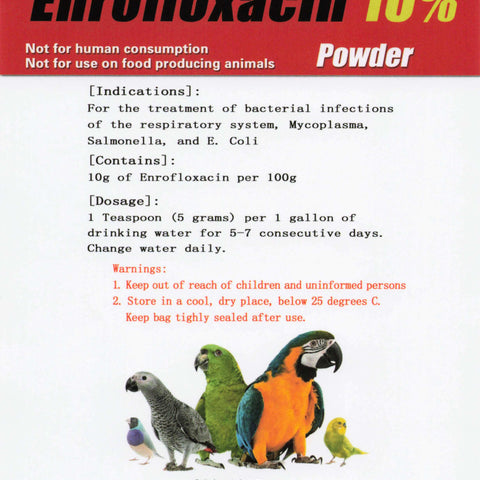
Enrofloxacin and doxycycline belong to different antibiotic classes.
Enrofloxacin is a fluoroquinolone antibacterial medication with activity against many gram-negative and selected gram-positive bacteria.
Doxycycline is particularly important when:
- Chlamydia is involved
- Selected Mycoplasma infections are suspected
- The target organism is susceptible to tetracyclines
BirdAntibiotic.com Enrofloxacin Options
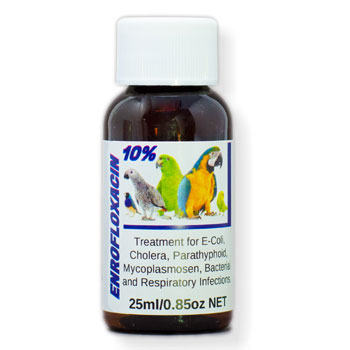
The store carries:
- Enrofloxacin 10% Powder
- Enrofloxacin oral solutions
- Tablet formats
Explore Enrofloxacin for Birds →
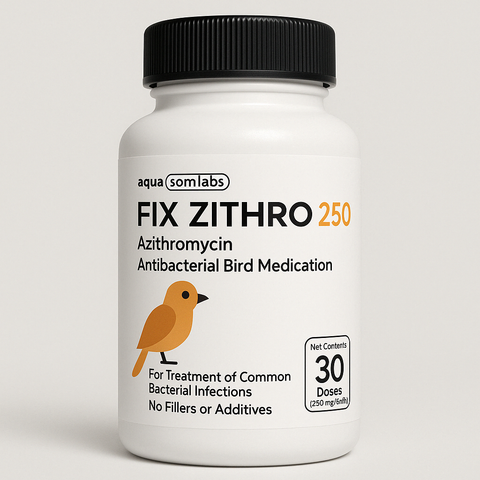
Doxycycline vs Azithromycin for Birds
Azithromycin belongs to the macrolide antibiotic family.
Both doxycycline and azithromycin appear in avian medicine, but they:
- Belong to different drug classes
- Have different pharmacologic profiles
- Are not interchangeable in every infection
The organism involved and the individual bird matter.
Doxycycline vs Doxy-Tyl
Standard doxycycline products contain:
doxycycline alone.
Doxy-Tyl contains:
- Doxycycline
- Tylosin
Why Choose a Single-Ingredient Product?
A single ingredient makes sense when doxycycline itself matches the identified bacterial problem.
Why Choose a Combination Product?
A combination formula may be considered when the respiratory-care plan appropriately calls for both active ingredients.
More ingredients do not automatically mean better treatment.
Does Every Bird With a Respiratory Infection Need Doxycycline?
No.
A bird can have respiratory symptoms from:
- Bacteria
- Chlamydia
- Mycoplasma
- Viruses
- Fungi
- Air-sac mites
- Smoke
- Dust
- Household fumes
- Other airway irritation
Doxycycline only addresses appropriate susceptible bacterial causes.
Testing Can Improve Antibiotic Selection
Depending on the symptoms and suspected disease, avian diagnostic work can include:
- Physical examination
- Weight and body-condition assessment
- Choanal or conjunctival samples
- PCR testing
- Bacterial culture
- Antimicrobial susceptibility testing
- Imaging
Testing is especially valuable when:
- The infection keeps returning
- Treatment has already failed
- The bird is seriously ill
- Several birds are affected
Why Water Medication Can Be Unpredictable
Birds do not all drink the same amount.
Water consumption can change with:
- Species
- Temperature
- Diet
- Illness
- Individual preference
A sick bird may also drink less than expected.
This is why medication format and administration method should match the bird and treatment plan rather than relying on one universal method.
Calcium & Doxycycline
Tetracycline-class antibiotics can interact with minerals such as calcium in the digestive tract.
For prolonged doxycycline therapy, follow the specific product instructions and professional guidance regarding:
- Mineral supplements
- Calcium sources
- Other medications
Can Doxycycline Cause Side Effects in Birds?
Any medication can produce unwanted effects in some birds.
Potential concerns may include:
- Reduced appetite
- Regurgitation
- Digestive changes
- Altered intestinal microbial balance
Monitor the bird throughout treatment.
Bio Plus After Appropriate Antibiotic Treatment
BirdAntibiotic.com carries:
for probiotic and digestive support.
It can be relevant during recovery after an appropriate antimicrobial program.
Support Digestive Recovery
Bio Plus provides multiple probiotic strains together with nutritional and electrolyte support for birds recovering from stress or appropriate medication programs.
What Should You Monitor During Respiratory Treatment?
Track:
- Breathing effort
- Tail bobbing
- Sneezing frequency
- Eye discharge
- Nasal discharge
- Appetite
- Body weight
- Droppings
- Activity level
Improvement Should Be More Than “The Bird Looks Better”
Useful recovery signs include:
- Quieter breathing
- Reduced discharge
- Improved appetite
- Increased activity
- Stable or increasing body weight
- Normal interaction
When Treatment Is Not Working
Reconsider the diagnosis if:
- Respiratory distress is worsening
- Discharge continues increasing
- The bird continues losing weight
- Several birds become ill
- No improvement occurs despite an appropriate treatment course
The problem may involve:
- A resistant bacterium
- A different bacterium
- A fungal disease
- A parasite
- A viral disease
- An environmental problem
Frequently Asked Questions About Doxycycline for Birds
What is doxycycline used for in birds?
Doxycycline is used for susceptible bacterial infections and is especially important in avian medicine for Chlamydia psittaci infection and selected respiratory bacterial diseases.
What is Bird Doxy?
Bird Doxy is a common search phrase for bird-focused doxycycline products. BirdAntibiotic.com carries a dedicated Doxycycline for Birds collection with powder, liquid and combination options.
Is doxycycline an antibiotic?
Yes. Doxycycline belongs to the tetracycline antibiotic family.
Does doxycycline treat bird respiratory infections?
It can be appropriate for susceptible bacterial respiratory infections, including avian chlamydiosis. It does not treat every possible respiratory cause.
Does doxycycline treat psittacosis?
Doxycycline is a principal antimicrobial used in avian chlamydiosis caused by Chlamydia psittaci.
Is ornithosis the same as psittacosis?
Both terms are commonly used in connection with avian infection by Chlamydia psittaci.
Can pigeons take doxycycline?
Doxycycline is commonly used in avian medicine, including pigeons, when an appropriate susceptible bacterial condition is involved.
Can budgies take doxycycline?
Doxycycline is used in budgerigars for appropriate bacterial diseases, particularly avian chlamydiosis, under a suitable treatment plan.
Can cockatiels take doxycycline?
Yes, doxycycline is an important avian antimicrobial and cockatiels are one species commonly discussed in relation to avian chlamydiosis.
Can parrots take doxycycline?
Doxycycline is used in multiple psittacine species for appropriate bacterial infections.
Does doxycycline treat Mycoplasma in birds?
Doxycycline may be used for susceptible Mycoplasma infections, but respiratory signs alone do not confirm Mycoplasma.
Does doxycycline treat air-sac mites?
No. Air-sac mites are parasites and require antiparasitic treatment.
Does doxycycline treat canker?
No. Canker is caused by the protozoan Trichomonas gallinae.
Does doxycycline treat Aspergillus?
No. Aspergillus is a fungus and requires antifungal management.
Does doxycycline treat viruses?
No. Antibiotics do not directly treat viral disease.
What is Doxycycline 20% Powder?
BirdAntibiotic.com carries a 100 g pet-bird powder containing doxycycline at a 20% concentration.
What is Doxyvet?
Doxyvet by Vetafarm is a doxycycline-based oral liquid available from BirdAntibiotic.com in 50 ml and 250 ml formats.
What is Doxy-Tyl?
Doxy-Tyl is a combination powder containing both doxycycline and tylosin for avian antibacterial care.
Is Doxy-Tyl the same as doxycycline?
No. Doxycycline products contain doxycycline as the principal active ingredient, while Doxy-Tyl combines doxycycline with tylosin.
Is doxycycline or tylosin better for bird respiratory problems?
They belong to different antimicrobial classes and target different bacterial profiles. The appropriate choice depends on the suspected or identified organism.
Is doxycycline or enrofloxacin better for birds?
Neither is universally better. Doxycycline is particularly important for Chlamydia and selected tetracycline-susceptible organisms, while enrofloxacin has a different antibacterial spectrum.
Can doxycycline and tylosin be combined?
Combination products such as Doxy-Tyl exist, but using more than one antibiotic should be based on an appropriate treatment rationale rather than assuming combinations are always stronger or better.
Can doxycycline be put in bird drinking water?
Some avian doxycycline products are formulated for water-based administration. Actual intake can vary substantially between birds, so follow the exact product instructions and appropriate professional guidance.
What symptoms suggest a bird respiratory infection?
Possible signs include repeated sneezing, eye or nasal discharge, wheezing, respiratory noise, tail bobbing, reduced activity and appetite changes.
Is tail bobbing a respiratory symptom?
Pronounced tail movement synchronized with breathing can indicate increased respiratory effort.
Is open-mouth breathing an emergency?
Persistent open-mouth breathing at rest can indicate serious respiratory distress and deserves prompt evaluation.
Why is my pigeon showing one watery eye?
Possible causes include eye irritation, sinus disease, respiratory infection, Chlamydia and other conditions. One-eye symptoms alone do not identify the organism.
Can Chlamydia cause green droppings in birds?
Green to yellow-green droppings can occur with avian chlamydiosis, but dropping color alone cannot diagnose the disease.
Should probiotics be used after doxycycline?
Digestive and probiotic support can be useful during recovery in appropriate situations. BirdAntibiotic.com carries Bio Plus for this purpose.
Where can I compare doxycycline products for birds?
BirdAntibiotic.com's Doxycycline for Birds collection brings together powder, liquid, tablet and combination doxycycline products for pet and aviary birds.
Doxycycline Product Comparison
| Product | Active Ingredient | Format | Best Commercial Fit |
|---|---|---|---|
| Doxycycline 20% Powder | Doxycycline | 100 g powder | Owners seeking a concentrated single-ingredient doxycycline powder |
| Doxycycline 20% Ornithosis Support | Doxycycline | 100 g powder | Ornithosis and respiratory-search intent |
| Doxy-Tyl | Doxycycline + Tylosin | 100 g powder | Combination respiratory-care searches |
| Doxyvet 50 ml | Doxycycline | Liquid oral solution | Compact liquid format |
| Doxyvet 250 ml | Doxycycline | Liquid oral solution | Larger liquid format for multi-bird care |
Explore Bird Antibiotics
Browse our Best Bird Antibiotics collection and explore bird care products organized in one convenient place.
EXPLORE PRODUCTS →The Professional Doxycycline Decision Framework
Step 1 — Identify the complete respiratory symptom pattern.
Step 2 — Separate respiratory distress from mild upper-airway signs.
Step 3 — Consider bacterial, chlamydial, fungal, parasitic, viral and environmental causes.
Step 4 — Use testing when the diagnosis is uncertain or disease is recurrent.
Step 5 — Choose doxycycline when the suspected or identified organism fits its antimicrobial spectrum.
Step 6 — Choose powder, liquid or combination format according to the care plan.
Step 7 — Follow the exact product instructions rather than using a universal bird dose.
Step 8 — Monitor appetite, weight, droppings and breathing throughout treatment.
Step 9 — Support hydration and digestive recovery appropriately.
Step 10 — Reassess the diagnosis if the bird does not improve.
Shop Doxycycline & Respiratory Products for Birds
Compare doxycycline powder, Doxyvet liquid, Doxy-Tyl combination products and other bird respiratory antibacterial options available from BirdAntibiotic.com.
Shop Doxycycline for Birds Doxycycline for Pigeons All Bird Antibiotics
The Most Important Doxycycline Rule
Doxycycline is a powerful and important avian antibiotic.
But the correct question is not:
“My bird is sneezing—should I automatically use doxycycline?”
The better question is:
“What is causing the respiratory disease?”
If the cause is:
- Chlamydia
- Selected susceptible bacterial disease
- Selected Mycoplasma infection
doxycycline may be highly relevant.
If the cause is:
- Air-sac mites
- Aspergillus
- A virus
- Smoke
- Dust
- Another nonbacterial problem
a different care strategy is needed.
Match the medicine to the organism, choose the product format that fits the bird-care plan, monitor response carefully, and use BirdAntibiotic.com's doxycycline collection to compare the available avian formulations.
Recommended Products
Products selected to complement this guide.


Shop Related Products
Explore the products featured for this topic.


