 Help & Contact
 Track order













Bird Crop Not Emptying: Crop Stasis, Canker, Yeast & Other Causes
Bird Crop Not Emptying: Crop Stasis, Canker, Yeast & Other Causes
You fed your bird several hours ago.
But the crop still feels full.
Later that evening, it remains enlarged.
By the next morning, there still seems to be food inside.
Or perhaps your bird has started:
- Regurgitating
- Eating less
- Losing weight
- Acting weak
- Producing fewer droppings
This pattern raises an important concern:
crop stasis.
The crop is a temporary storage pouch in the upper digestive tract.
Food should not simply remain there indefinitely.
Normal muscular contractions gradually move crop contents farther into the digestive system.
When those contractions slow dramatically—or stop—the crop may remain persistently full.
But crop stasis is not one disease.
It is a sign that normal digestive movement has been disrupted.
Possible causes include:
- Candida yeast
- Bacterial crop infection
- Trichomonas canker
- Dehydration
- Systemic illness
- Improper hand-feeding
- Foreign material
- Crop obstruction
- Crop injury
- Other digestive disease
The most important question therefore is not:
“How do I empty the crop?”
It is:
“Why has the crop stopped emptying normally?”
Bird Crop Not Emptying: Quick Answer
Crop stasis means food is remaining in the crop longer than expected because normal crop motility has slowed or stopped.
Common causes include:
- Candida or other crop infection
- Trichomonas canker
- Bacterial disease
- Dehydration
- Improper hand-feeding conditions
- Foreign material or obstruction
- Severe systemic illness
Warning signs include:
- A persistently distended crop
- Regurgitation
- Poor appetite
- Weight loss
- Weakness
- Abnormal crop contents
Do not repeatedly add food to a crop that is not emptying normally, and do not aggressively squeeze or massage a distended crop. The underlying cause needs to be identified.
Explore Bird Antibiotics
Browse our Best Bird Antibiotics collection and explore bird care products organized in one convenient place.
EXPLORE PRODUCTS →What Is a Bird’s Crop?
The crop is an expandable pouch associated with the esophagus.
Its main role is temporary food storage.
It allows a bird to:
- Eat relatively quickly
- Store food temporarily
- Move food gradually into the rest of the digestive tract
The crop is especially noticeable after a bird has eaten a large meal.
What Is Crop Stasis?
Crop stasis means that the crop is:
not emptying within its normal expected time.
Food remains inside longer than it should because gastrointestinal movement has slowed.
The crop may become:
- Persistently full
- Soft and fluid-filled
- Firm with retained food
- Distended
depending on the underlying problem.
Does a Full Crop Always Mean Crop Stasis?
No.
A crop is supposed to fill after eating.
The important questions are:
- How recently did the bird eat?
- Is the crop gradually becoming smaller?
- Is the bird behaving normally?
- Does significant food remain when the crop would normally be substantially empty?
A recently fed bird with a full crop is very different from a bird whose crop remains distended for many hours without normal progression.
Bird Crop Full in the Morning
This is one of the most common searches associated with crop stasis.
In many birds, the crop should become substantially empty after an overnight period without feeding.
A persistently full crop the following morning can be an important warning sign, especially when accompanied by:
- Poor feeding response
- Regurgitation
- Weakness
- Weight loss
- Abnormal crop odor or contents
Explore Bird Antibiotics
Browse our Best Bird Antibiotics collection and explore bird care products organized in one convenient place.
EXPLORE PRODUCTS →Common Symptoms of Crop Stasis
Watch for:
- Crop remaining full too long
- Slow reduction in crop size
- Swollen or distended crop
- Regurgitation
- Vomiting
- Poor appetite
- Reduced feeding response in chicks
- Weight loss
- Lethargy
- Dehydration
- Fewer droppings
- Abnormal crop contents
When Slow Crop Becomes Urgent
Seek prompt avian veterinary attention when crop stasis occurs with:
- Repeated vomiting or regurgitation
- Severe weakness
- Marked dehydration
- Rapid weight loss
- Difficulty breathing
- Inability to swallow
- A very enlarged crop that is not emptying
- Suspected foreign-body obstruction
- Collapse
A bird with respiratory distress or impaired swallowing should not be force-fed because aspiration can create an additional emergency.

Cause #1 — Candida Yeast & Sour Crop
Candida is one of the most important causes of crop disease in birds.
Candida albicans and related yeasts may exist in small numbers in the digestive tract without causing disease.
Problems develop when conditions allow yeast to multiply excessively.
Birds at Higher Risk
Candidiasis is particularly important in:
- Young hand-fed birds
- Recently hatched cockatiels
- Immunocompromised birds
- Malnourished birds
- Birds receiving prolonged or broad-spectrum antibacterial treatment
- Birds kept with poor feeding-utensil hygiene
Signs of Candida Crop Infection
Possible signs include:
- Delayed crop emptying
- Crop stasis
- Poor appetite
- Regurgitation
- Weight loss
- Lethargy
- White oral plaques in some cases
- A crop filled with retained food or mucus
What Is “Sour Crop”?
“Sour crop” is a commonly used term for an infected, poorly emptying crop.
The term does not identify the organism.
Crop infections may involve:
- Candida yeast
- Bacteria
- Trichomonas
which require different treatment strategies.
Antibiotics Do Not Treat Candida
This distinction is extremely important.
Candida is a yeast.
It requires an:
antifungal treatment approach.
Unnecessary antibacterial use may disrupt normal digestive flora and make yeast overgrowth more likely.
Medistatin — Nystatin-Based Candida Support
Medistatin is one of the most directly relevant BirdAntibiotic.com products for crop yeast and Candida-related digestive problems.
Medistatin contains:
Nystatin 400,000 IU/g.
Its commercial positioning includes:
- Candida
- Crop yeast
- Sour crop
- Digestive fungal overgrowth
Shop Medistatin for Crop Yeast & Candida
Explore the nystatin-based Medistatin formula for pigeon, cage-bird and avian Candida-care programs.
Explore Bird Antibiotics
Browse our Best Bird Antibiotics collection and explore bird care products organized in one convenient place.
EXPLORE PRODUCTS →Cause #2 — Trichomonas Canker
Another important crop disease is:
trichomoniasis.
It is caused by the protozoan:
Trichomonas gallinae.
The condition is particularly associated with:
- Pigeons
- Doves
- Some budgies
- Other susceptible birds
Where Canker Can Develop
Trichomonas lesions may involve the:
- Mouth
- Throat
- Esophagus
- Crop
Possible Canker Signs
- Difficulty swallowing
- Repeated swallowing
- Regurgitation
- Salivation
- Reduced appetite
- Weight loss
- Whitish-yellow or cheese-like oral lesions
Canker Can Interfere With Crop Emptying
Inflammation or lesions involving the upper digestive tract can interfere with normal:
- Eating
- Swallowing
- Crop movement
Do Not Scrape Canker Lesions Off
Removing adherent lesions can damage underlying tissue and cause bleeding.
Diagnosis can include examination of fresh crop or oral material under a microscope.
Metronidazole 20% Powder
Metronidazole 20% Powder is a BirdAntibiotic.com product positioned specifically for avian Trichomonas/canker care.
Its most relevant role in this article is:
crop problems caused by appropriately identified trichomoniasis.
Explore Metronidazole 20% for Canker
For pigeons and other susceptible birds with a Trichomonas-associated crop or upper digestive problem.
Cause #3 — Bacterial Crop Infection
Bacteria can also cause crop infection.
A bacterial crop problem may develop after:
- Contaminated feeding equipment
- Poor hygiene
- Retained food
- Other underlying illness
Possible signs overlap heavily with yeast infection:
- Crop stasis
- Regurgitation
- Poor appetite
- Weight loss
- Weakness
Why Testing Matters
A crop that is not emptying cannot tell you whether the cause is:
- Bacterial
- Fungal
- Protozoal
- Mechanical
Veterinary testing may include:
- Crop cytology
- Gram stain
- Microscopic examination
- Culture and susceptibility testing
When Bird Antibiotics Become Relevant
If testing or the overall clinical picture identifies an appropriate susceptible bacterial infection, antibacterial treatment may become relevant.
BirdAntibiotic.com carries avian antibacterial families including:
- Doxycycline
- Amoxicillin
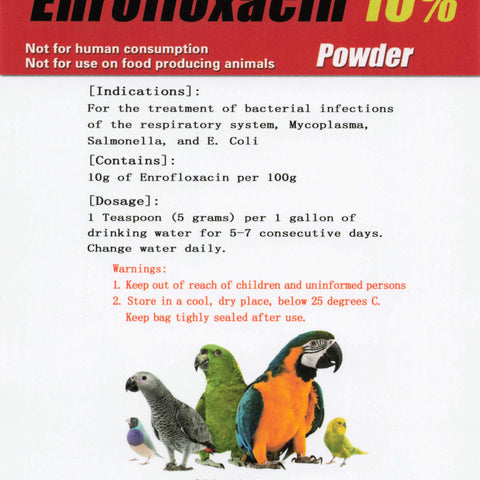
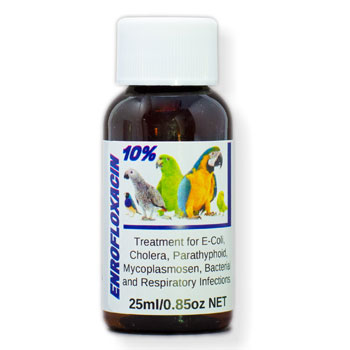
- Enrofloxacin
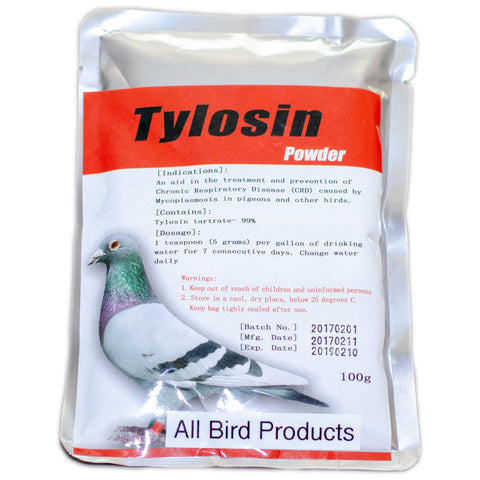
- Tylosin
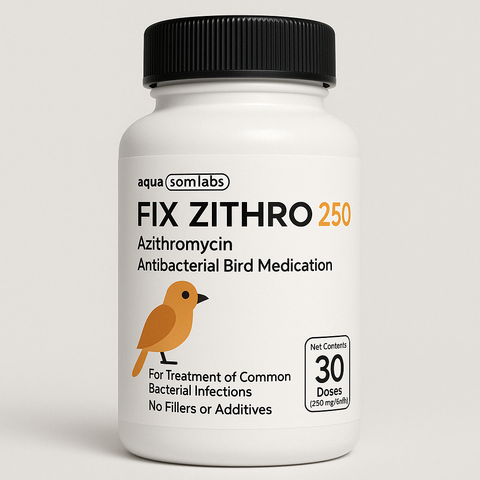
- Azithromycin
But antibiotics are not appropriate simply because the crop is slow.
Cause #4 — Dehydration
A dehydrated bird may develop poor gastrointestinal motility.
When the body lacks adequate fluid:
- Digestive contents may become less mobile
- The crop may empty more slowly
- The bird may become progressively weaker
Possible Dehydration Clues
- Weakness
- Poor appetite
- Reduced droppings
- Weight loss
- General depression
Guardian Angel — Recovery & Hydration Support
Guardian Angel combines:
- Electrolytes
- Energy support
- Vitamins
- Probiotic support
- Prebiotic support
and is commercially relevant during:
- Illness
- Stress
- Reduced intake
- Recovery
Cause #5 — Severe Systemic Illness
The digestive tract does not operate independently from the rest of the bird.
A bird that is seriously ill from another disease may develop secondary gastrointestinal slowing.
Possible accompanying signs include:
- Persistent fluffing
- Sleeping during the day
- Weight loss
- Respiratory signs
- Abnormal droppings
- Weakness
Explore Bird Antibiotics
Browse our Best Bird Antibiotics collection and explore bird care products organized in one convenient place.
EXPLORE PRODUCTS →Cause #6 — Foreign Material or Crop Obstruction
Birds can swallow materials that do not move normally through the digestive system.
Possible foreign materials include:
- Bedding
- Wood fibers
- Plant fibers
- Other nonfood material
Foreign material can lead to:
- Crop impaction
- Obstruction
- Vomiting
- Weight loss
- Depression
Crop Stasis vs Crop Impaction
These terms should not automatically be treated as identical.
Crop Stasis
The crop is not moving contents forward normally.
Crop Impaction
A mass of retained material may physically obstruct normal emptying.
A bird can potentially have both.
Cause #7 — Hand-Feeding Formula Too Cold or Too Thick
Crop stasis is particularly important in hand-fed chicks.
Improper feeding technique can slow crop emptying.
Important risk factors include:
- Formula that is too cold
- Formula that is too thick
- Incorrect feeding intervals
- Poor nursery temperature
- Inadequate humidity
Do Not Keep Filling a Slow Crop
Repeatedly adding full meals when the previous feeding has not moved normally can worsen crop distention and fermentation.
The cause of delayed emptying should be addressed first.
Cause #8 — Cold Environmental Temperature in Chicks
Young birds depend heavily on appropriate environmental conditions.
If a chick becomes too cold:
- Digestion slows
- Crop emptying may slow
- Feeding response may decrease
Correct nursery temperature depends on:
- Species
- Age
- Feather development
Cause #9 — Crop Burn or Feeding Trauma
Hand-feeding formula that is too hot can burn the crop.
This can lead to:
- Inflammation
- Tissue damage
- Reduced crop function
- Necrosis in severe cases
- Abnormal openings or fistulas
Microwaving Formula Can Create Hot Spots
Formula may appear to be an acceptable temperature overall while containing localized areas hot enough to injure tissue.
Cause #10 — Other Gastrointestinal Disease
Problems farther down the digestive tract can sometimes reduce movement throughout the system.
Examples can include:
- Proventricular disease
- Ventricular disease
- Viral gastrointestinal disorders
- Internal masses
- Severe systemic infection
Crop Stasis vs Avian Gastric Yeast
Avian gastric yeast—or macrorhabdosis—is different from Candida.
It primarily affects the stomach rather than being a classic crop yeast infection.
It is particularly relevant in:
- Budgies
- Finches
- Cockatiels
- Lovebirds
- Parrotlets
Signs may include:
- Weight loss
- Regurgitation
- Abnormal droppings
- Weakness
A bird with regurgitation and weight loss therefore should not automatically be labeled as having sour crop.
What Does a Normal Crop Feel Like?
A recently fed crop can feel:
- Full
- Soft
- Rounded
As food moves onward, the crop should gradually become smaller.
The crop should not remain:
- Persistently distended
- Packed with old food
- Repeatedly refilling without normal emptying
Soft Crop vs Hard Crop
The texture can provide clues but does not establish the diagnosis.
Soft or Fluid-Filled Crop
May occur with:
- Retained fluid
- Fermentation
- Crop infection
Firm Crop
May raise concern for:
- Dry retained food
- Impaction
- Foreign material
Should You Massage a Bird’s Crop?
Aggressive crop massage is not a universal treatment.
Manipulating a very full crop can increase the risk of:
- Regurgitation
- Aspiration
- Trauma
particularly if the bird is weak.
Should You Turn a Bird Upside Down to Empty the Crop?
No.
Attempting to force crop contents out through the mouth creates a serious aspiration risk.
Should You Force-Feed a Bird With Crop Stasis?
Do not continue force-feeding a crop that is already abnormally full without determining why it is not emptying.
Assisted feeding requires appropriate technique and careful assessment of:
- Crop capacity
- Hydration
- Body temperature
- Swallowing ability
- Respiratory status
How Is Crop Stasis Diagnosed?
An avian veterinarian may use several approaches.
Physical Examination
The crop can be assessed for:
- Size
- Texture
- Contents
- Emptying pattern
Crop Cytology or Gram Stain
A crop sample can help identify:
- Yeast
- Bacterial abnormalities
- Other microorganisms
Fresh Microscopic Examination
This can be particularly important when:
Trichomonas is suspected.
Culture & Susceptibility
Culture may help identify bacterial organisms and guide antibacterial selection.
Imaging
Radiographs or other imaging may be useful when obstruction or foreign material is suspected.
Probiotics & Digestive Recovery
Once the primary disease is being appropriately managed, restoring digestive balance can become part of recovery care.
Bio Plus — Multi-Strain Probiotic Support
Bio Plus contains multiple probiotic strains plus:
- Electrolytes
- Vitamins
- Minerals
- Glucose polymers
It is particularly relevant during:
- Digestive recovery
- Stress
- Recovery after appropriate antibacterial therapy
- Periods of disrupted gut flora
Potent Brew — Live Liquid Probiotic
Potent Brew is another BirdAntibiotic.com digestive-support option.
Its live probiotic positioning makes it especially relevant to:
- Crop and gut balance
- Breeding birds
- Chicks
- Stress recovery
- Post-treatment digestive support
Support Crop & Gut Recovery
Explore probiotics designed to support healthy digestive flora after stress, illness or appropriate medication programs.
Survive — Emergency Nutritional Support
Survive is designed for critically underweight, starving or severely depleted birds.
It provides:
- Digestible protein
- Energy
- Vitamins
- Minerals
- Electrolytes
Its role is:
recovery nutrition when assisted feeding is appropriate and the crop is functioning sufficiently to accept nutrition.
It should not simply be added repeatedly to a crop that remains abnormally full.
Crop Stasis in Baby Birds
Young hand-fed birds deserve particular attention because crop stasis can progress quickly.
Check:
- Formula preparation
- Feeding temperature
- Formula consistency
- Brooder temperature
- Hydration
- Feeding-utensil hygiene
Crop Stasis in Budgies
Possible differentials include:
- Candida
- Trichomonas
- Other gastrointestinal disease
- Systemic illness
Monitor body weight carefully because budgies can lose condition rapidly.
Crop Stasis in Cockatiels
Young cockatiels are particularly recognized as susceptible to Candida-associated crop disease.
Watch for:
- Slow crop
- Regurgitation
- Poor feeding response
- Weight loss
- White oral plaques
Crop Stasis in Pigeons
For pigeons, important differentials include:
- Canker
- Candida
- Bacterial crop infection
- Foreign material
- Severe systemic disease
If the bird is repeatedly swallowing, regurgitating or developing yellow-white oral lesions, canker becomes particularly important to investigate.
Crop Stasis in Parrots
Adult parrots with new-onset crop or regurgitation problems may require investigation for:
- Crop infection
- Foreign material
- Gastrointestinal disease
- Systemic illness
Do not assume all regurgitation is crop stasis because parrots may also regurgitate behaviorally during courtship.
How to Tell Crop Stasis From Behavioral Regurgitation
| Feature | Behavioral Regurgitation | Crop/Digestive Disease |
|---|---|---|
| Trigger | Person, toy, mirror or mate | Often unrelated to social interaction |
| Bird condition | Usually bright and active | May be weak, losing weight or eating poorly |
| Crop | Normal emptying | May remain distended |
| Other signs | Courtship behavior | Appetite loss, weight loss, abnormal droppings |
Explore Bird Antibiotics
Browse our Best Bird Antibiotics collection and explore bird care products organized in one convenient place.
EXPLORE PRODUCTS →Frequently Asked Questions About Crop Stasis
Why is my bird’s crop not emptying?
Possible causes include Candida, bacterial crop infection, Trichomonas, dehydration, systemic illness, foreign material, obstruction and hand-feeding problems.
What is crop stasis?
Crop stasis means the crop is not moving food onward through the digestive tract within the normal expected time.
Should a bird’s crop be empty in the morning?
In many birds, the crop should be substantially empty after an overnight period without feeding. Persistent significant retention deserves investigation.
What does sour crop mean?
Sour crop is a general term commonly used for crop infection and poor crop emptying. Yeast, bacteria or other organisms may be involved.
What does Candida crop infection look like?
Possible signs include delayed crop emptying, regurgitation, poor appetite, weight loss, lethargy and sometimes white oral plaques.
Can antibiotics cause yeast overgrowth in birds?
Prolonged or broad-spectrum antibacterial treatment can disrupt normal digestive flora and increase the risk of Candida overgrowth in susceptible birds.
What is Medistatin?
Medistatin is a BirdAntibiotic.com nystatin-based antifungal product positioned for Candida and crop-fungus management in birds.
Can canker affect the crop?
Yes. Trichomonas can involve the mouth, throat, esophagus and crop.
What are signs of pigeon canker?
Difficulty swallowing, regurgitation, salivation, appetite loss, weight loss and yellow-white oral lesions are common warning signs.
What is Metronidazole 20% used for in birds?
Metronidazole is commonly associated with appropriately diagnosed Trichomonas/canker and selected protozoal digestive conditions.
Can a bacterial infection cause crop stasis?
Yes. Crop infections may be bacterial as well as fungal or protozoal.
How is a crop infection diagnosed?
Crop cytology, Gram staining, microscopic examination and bacterial culture can help identify the cause.
Why is my baby bird’s crop not emptying?
Possible causes include formula that is too cold or thick, inadequate brooder temperature, dehydration, infection or underlying disease.
Can cold formula cause slow crop?
Improper formula temperature can contribute to delayed crop emptying in hand-fed chicks.
Can thick formula cause crop stasis?
Improperly prepared formula that is too thick can contribute to poor crop emptying in chicks.
Can dehydration cause crop stasis?
Dehydration can impair normal digestive function and may contribute to slow gastrointestinal movement.
Should I massage a full crop?
Aggressive crop massage is not a universal treatment and can increase regurgitation or aspiration risk.
Should I turn my bird upside down to empty its crop?
No. Attempting to force crop contents out through the mouth can result in aspiration.
Should I feed more food when the crop is still full?
Repeatedly adding full meals to an abnormally slow crop can worsen distention and retained-food problems.
Can a foreign object block the crop?
Yes. Bedding, fibers and other swallowed materials can contribute to obstruction or impaction.
What is crop impaction?
Crop impaction refers to retained material that physically interferes with normal crop emptying.
Can crop stasis cause weight loss?
Yes. A bird may eat inadequately or fail to move and digest food normally, leading to progressive weight loss.
Can crop stasis cause vomiting?
Yes. Regurgitation or vomiting can accompany several crop disorders.
Can crop stasis be dangerous?
Yes. Severe stasis can contribute to dehydration, malnutrition, infection and aspiration risk.
Can probiotics help after crop disease?
Probiotic products such as Bio Plus or Potent Brew may support digestive recovery after the underlying cause is appropriately treated.
What is Bio Plus?
Bio Plus is a BirdAntibiotic.com multi-strain probiotic containing additional vitamins, electrolytes and digestive-support nutrients.
What is Potent Brew?
Potent Brew is a live liquid probiotic designed to support crop and intestinal microbial balance.
What is Guardian Angel?
Guardian Angel provides electrolyte, energy, vitamin and digestive support for sick, stressed or recovering birds.
What is Survive?
Survive is an emergency nutritional formula for severely depleted, underweight or critically recovering birds.
When should I contact an avian veterinarian?
A persistently full crop associated with regurgitation, appetite loss, dehydration, weight loss, weakness, suspected obstruction or respiratory problems deserves prompt veterinary assessment.
The Professional Slow-Crop Checklist
1. Confirm when the bird last ate.
2. Determine whether the crop is becoming smaller normally.
3. Record body weight.
4. Check appetite and feeding response.
5. Look for regurgitation or vomiting.
6. Examine the mouth for lesions when safe.
7. Consider Candida and other crop infections.
8. Consider Trichomonas in susceptible birds.
9. Review hydration.
10. Review hand-feeding technique in chicks.
11. Consider obstruction or foreign material.
12. Match treatment to the actual cause.
Shop Crop, Digestive & Recovery Care
Explore antifungal care, Trichomonas products, probiotics, electrolytes and recovery nutrition for targeted avian digestive-health programs.
The Most Important Crop-Stasis Rule
A full crop is a symptom.
It is not the diagnosis.
The same slow crop can result from:
yeast.
bacteria.
canker.
dehydration.
poor hand-feeding technique.
obstruction.
systemic illness.
Those conditions need different solutions.
Do not keep filling a crop that is failing to empty, do not aggressively force crop contents out, and match the treatment to the actual cause of the motility problem.
Recommended Products
Products selected to complement this guide.


Shop Related Products
Explore the products featured for this topic.


