 Help & Contact
 Track order












Ammonia Poisoning in Fish: Red Gills, Burns, Gasping & Recovery
Ammonia Poisoning in Fish: Red Gills, Burns, Gasping & Recovery
Your aquarium water looks completely clear.
But suddenly your fish are:
- Breathing rapidly
- Gathering near the surface
- Gasping around the filter outlet
- Holding their fins tightly against the body
- Refusing food
- Becoming unusually lethargic
When you look closely, the gills may appear:
- Red
- Inflamed
- Swollen
- Irritated
This pattern should immediately raise an important possibility:
ammonia poisoning.
Ammonia is invisible.
You cannot determine its concentration by:
- Looking at the water
- Smelling the aquarium
- Judging how clean the glass appears
A crystal-clear aquarium can still contain enough ammonia to severely damage fish.
And because the gills are continuously exposed to the surrounding water, they are among the first tissues affected.
The most important principle is:
ammonia poisoning is primarily a water-quality emergency.
The first treatment is therefore not an antibiotic.
It is:
finding and correcting the ammonia problem.
Ammonia Poisoning: Quick Answer
Ammonia poisoning occurs when toxic ammonia accumulates in aquarium water and damages fish tissues, especially the gills.
Common warning signs include:
- Rapid breathing
- Gasping at the surface
- Red or irritated gills
- Excess mucus
- Clamped fins
- Darkening of body color
- Loss of appetite
- Lethargy
- Disorientation in severe cases
The immediate priorities are to:
- Test ammonia and pH
- Increase aeration
- Reduce or temporarily stop feeding
- Correct the source of ammonia
- Perform appropriate water changes when safe
- Restore effective biological filtration
Medication cannot permanently correct ammonia poisoning while the fish remain exposed to toxic water.
Explore Bird Antibiotics
Browse our Best Bird Antibiotics collection and explore bird care products organized in one convenient place.
EXPLORE PRODUCTS →What Is Ammonia?
Ammonia is one of the major nitrogenous waste products in an aquarium.
It enters the water from:
- Fish metabolism
- Fish waste
- Uneaten food
- Dead fish
- Dead plants
- Other decomposing organic material
In a healthy established aquarium, beneficial microorganisms in the biological filter process ammonia through the nitrogen cycle.
The Aquarium Nitrogen Cycle
The simplified pathway is:
ammonia → nitrite → nitrate.
Nitrifying bacteria convert highly toxic nitrogen compounds into progressively less immediately toxic forms.
When that biological filtration is:
- Immature
- Overloaded
- Damaged
- Interrupted
ammonia can accumulate.
Ammonia vs Ammonium: NH3 and NH4+
This distinction is extremely important.
Total ammonia in aquarium water exists primarily in two related forms:
- NH3 — unionized ammonia
- NH4+ — ammonium
NH3 is substantially more toxic to fish.
NH4+ is less toxic.
What Does TAN Mean?
Many aquarium tests measure:
Total Ammonia Nitrogen, or TAN.
TAN represents the combined ammonia pool rather than measuring only the most toxic NH3 fraction.
Why pH Changes Ammonia Toxicity
As pH rises, a greater proportion of total ammonia shifts toward the toxic unionized NH3 form.
This means:
the same total ammonia reading can be substantially more dangerous in alkaline water than in acidic water.
Why Temperature Matters
Temperature also influences the balance.
As water temperature rises, a greater percentage of the total ammonia pool may exist as NH3.
pH generally has the stronger effect, but both should be considered.
| Condition | NH3 Toxicity Risk |
|---|---|
| Lower pH | More ammonia remains in the less toxic NH4+ form |
| Higher pH | Greater proportion shifts toward toxic NH3 |
| Lower temperature | Generally lower NH3 fraction |
| Higher temperature | Generally greater NH3 fraction |
How Much Ammonia Is Dangerous?
In an established aquarium, the practical target is:
no detectable ammonia.
But interpreting toxicity requires more than looking at one TAN number.
Water:
- pH
- Temperature
- Species
- Duration of exposure
all influence risk.
Veterinary references indicate that unionized NH3 concentrations around:
0.05 mg/L
are already capable of producing microscopic gill damage.
Much higher concentrations can become rapidly lethal.
Why Ammonia Damages Fish Gills
The gills are extraordinarily delicate.
They are designed to maximize contact between:
blood and water.
That makes them efficient for oxygen exchange.
It also makes them vulnerable to toxic water.
Ammonia can cause:
- Gill irritation
- Cell swelling
- Excess mucus
- Tissue thickening
- Fusion of delicate gill structures
- Reduced oxygen exchange

Explore Bird Antibiotics
Browse our Best Bird Antibiotics collection and explore bird care products organized in one convenient place.
EXPLORE PRODUCTS →Why Fish Gasp During Ammonia Poisoning
The aquarium may contain oxygen.
But damaged gills may no longer transfer oxygen efficiently.
The fish responds by:
- Increasing breathing rate
- Moving more water across the gills
- Moving toward highly oxygenated areas
- Gasping near the surface
Why Are the Gills Red?
Red or inflamed gills can develop because the tissue is:
- Irritated
- Inflamed
- Receiving increased blood flow
- Damaged by toxic exposure
However:
red gills do not automatically prove ammonia poisoning.
Other possibilities include:
- Gill parasites
- Bacterial gill disease
- Chemical irritation
- Other water-quality abnormalities

10 Signs of Ammonia Poisoning in Fish
1. Rapid Breathing
Fish may move the gill covers much faster than normal.
2. Gasping at the Surface
Fish may congregate near:
- The surface
- Air stones
- Filter outlets
3. Red or Inflamed Gills
Gill tissue may look intensely red or irritated.
4. Excess Mucus
Irritated gills and skin may produce additional protective mucus.
5. Clamped Fins
Sick fish may hold their fins tight against the body.
6. Loss of Appetite
Ammonia-stressed fish commonly reduce feeding.
7. Lethargy
Fish may:
- Rest near the bottom
- Hide
- Stop interacting
- Swim slowly
8. Darkened Coloration
Some fish become darker when severely stressed.
9. Abnormal Swimming
Severe ammonia toxicity may cause:
- Disorientation
- Erratic swimming
- Spinning
10. Convulsions or Collapse
Very severe acute toxicity can produce neurological signs and rapid mortality.
Ammonia Emergency Signs
Act immediately when multiple fish suddenly develop:
- Heavy surface gasping
- Very rapid breathing
- Severe lethargy
- Loss of balance
- Spinning
- Convulsions
- Rapid unexplained deaths
If several fish become distressed at the same time, test water quality before assuming an infectious disease outbreak.
Acute vs Chronic Ammonia Poisoning
Acute Ammonia Exposure
A large ammonia spike can produce:
- Sudden gasping
- Severe respiratory distress
- Abnormal swimming
- Rapid mortality
Chronic Low-Level Exposure
Lower but persistent ammonia can contribute to:
- Poor appetite
- Reduced growth
- Chronic gill irritation
- Reduced disease resistance
- Repeated secondary infections
What Causes High Ammonia in a Fish Tank?
Cause #1 — A New Aquarium
This is one of the most common causes.
A brand-new aquarium may not yet have enough nitrifying bacteria to process the waste produced by its fish.
This is called:
new tank syndrome.
New Tank Syndrome
New aquariums frequently develop:
- Ammonia spikes
- Nitrite spikes
during the first several weeks.
A biological filter commonly requires approximately:
6–8 weeks
to become fully established under typical conditions.
A Common New Tank Scenario
Week 1:
The aquarium looks perfect.
Week 2:
The fish appear normal.
Week 3:
Fish begin breathing quickly.
Week 4:
Ammonia or nitrite becomes dangerously elevated.
The problem is not that the aquarium suddenly became dirty.
The problem is:
the biofilter never had enough established nitrifying bacteria to handle the waste load.
Cause #2 — Adding Too Many Fish Too Quickly
Even an established biological filter has a limited processing capacity.
Adding many fish at once creates a sudden increase in:
- Ammonia production
- Food consumption
- Waste production
The bacterial population needs time to adapt.
Cause #3 — Overfeeding
Food creates ammonia in two ways.
First:
Fish eat food and excrete nitrogenous waste.
Second:
Uneaten food decomposes.
Both increase the nitrogen load.
Cause #4 — Dead Fish or Decaying Organic Material
A hidden dead fish can produce a substantial ammonia spike.
Check:
- Behind decorations
- Inside caves
- Filter compartments
- Dense plants
Cause #5 — Biological Filter Failure
The biofilter may be damaged when beneficial bacteria are lost.
Possible reasons include:
- Filter stopped running
- Filter media dried out
- Filter media was replaced all at once
- Media was aggressively sterilized
- Water flow was interrupted
- Oxygen supply to the filter fell
Do Not Sterilize Your Biological Filter
The brown material in a mature filter is not necessarily something that needs to be eliminated.
That filter contains the organisms responsible for processing ammonia.
A completely sterile filter is:
not the goal.
Cause #6 — Overstocking
Too many fish create:
- More ammonia
- More feces
- More uneaten food
- Greater oxygen demand
A tank can therefore exceed the capacity of:
- The water volume
- The filter
- The maintenance schedule
Cause #7 — Medication or Chemicals Damaging the Biofilter
Some aquarium treatments can reduce populations of beneficial nitrifying bacteria.
Monitor:
- Ammonia
- Nitrite
during and after medication programs.
Cause #8 — Source Water Containing Ammonia or Chloramine
This is frequently overlooked.
Some municipal water supplies use:
chloramine.
When chloramine is neutralized, ammonia can remain or be released into the aquarium system depending on the treatment process.
Test source water when aquarium ammonia behaves unexpectedly.
Cause #9 — Power Failure or Filter Shutdown
Nitrifying bacteria require:
- Oxygen
- Water flow
A prolonged power interruption can therefore damage biological filtration.
Cause #10 — Old Tank Syndrome
Older aquariums can develop a very different problem.
If water changes have been inadequate for a long period:
- Organic acids accumulate
- Alkalinity falls
- pH falls
- Nitrification becomes impaired
- Total ammonia can become extremely high
The Old Tank Syndrome Trap
At very low pH, much of the total ammonia may exist in the less toxic NH4+ form.
If the aquarist suddenly raises the pH dramatically:
NH4+ can shift toward toxic NH3.
This means a large sudden water correction in an old, severely acidic tank can sometimes create an unexpected ammonia crisis.
Old tank syndrome requires careful restoration of water chemistry rather than blindly changing every parameter at once.
Explore Bird Antibiotics
Browse our Best Bird Antibiotics collection and explore bird care products organized in one convenient place.
EXPLORE PRODUCTS →How to Confirm Ammonia Poisoning
Do not diagnose from red gills alone.
Test the water.
At Minimum, Check:
- Ammonia / TAN
- Nitrite
- Nitrate
- pH
- Temperature
When Possible, Also Check:
- Dissolved oxygen
- Alkalinity
- Source water
Test the Water Before Adding Medication
This simple step can prevent a major diagnostic mistake.
Rapid breathing can be caused by:
- Ammonia
- Nitrite
- Low oxygen
- Gill parasites
- Bacterial gill disease
- Temperature stress
- Chemical contamination
Ammonia Poisoning vs Low Oxygen
| Finding | Ammonia Poisoning | Low Oxygen |
|---|---|---|
| Surface gasping | Common | Common |
| Rapid breathing | Common | Common |
| Gill irritation | Common | Not necessarily |
| Ammonia test | Detectable/elevated | May be normal |
| Dissolved oxygen | May be normal or low | Low |
Ammonia vs Nitrite Poisoning
Both can cause:
- Rapid breathing
- Surface behavior
- Weakness
- Loss of appetite
Ammonia primarily causes direct tissue irritation and gill damage.
Nitrite primarily interferes with normal oxygen transport in the blood.
The only reliable way to distinguish them in many aquarium situations is:
water testing.
Ammonia vs Gill Parasites
Gill parasites can also cause:
- Rapid breathing
- Flared gills
- Excess mucus
- Flashing
- Surface gasping
But parasites will not cause an elevated ammonia test.
Ammonia vs Bacterial Gill Disease
Bacterial gill disease can produce:
- Swollen gills
- Mucus
- Rapid breathing
- Respiratory distress
Interestingly, bacterial gill disease is itself more likely under stressful conditions such as:
- Poor water quality
- Heavy organic loading
- High ammonia
- Overcrowding
This means environmental gill damage and bacterial disease can sometimes occur together.

Emergency Step #1 — Test Ammonia Immediately
If multiple fish are:
- Gasping
- Breathing rapidly
- Becoming lethargic
test ammonia before assuming infection.
Emergency Step #2 — Increase Aeration
Ammonia-damaged gills have difficulty exchanging oxygen efficiently.
Increase:
- Surface agitation
- Air-stone output
- Appropriate water movement
while keeping current strength appropriate for the fish species.
Emergency Step #3 — Reduce or Temporarily Stop Feeding
Food eventually becomes nitrogenous waste.
During an acute ammonia problem, reducing the nutrient load helps prevent additional ammonia production.
Healthy adult fish can generally tolerate a short feeding reduction far better than continued exposure to toxic ammonia.
Fry and special species require additional consideration.
Emergency Step #4 — Perform an Appropriate Water Change
For most ordinary aquarium ammonia spikes, replacing contaminated water with:
safe, temperature-matched, appropriately conditioned water
is one of the fastest ways to reduce ammonia concentration.
Depending on severity, aquarium and source-water quality, significant partial water changes may be appropriate.
Test the Replacement Water
Before assuming water changes will solve the problem, confirm that the source water itself does not contain:
- Ammonia
- Problematic chloramine
- Extreme pH differences
Do Not Automatically Perform a Sudden Massive pH Correction
This is particularly important in old tank syndrome.
If:
- Total ammonia is extremely high
- pH is very low
a rapid pH increase can convert more NH4+ into toxic NH3.
The entire water chemistry situation must be considered.
Emergency Step #5 — Remove the Source
Look for:
- Dead fish
- Dead snails
- Decaying food
- Large quantities of waste
- Rotting plants
Emergency Step #6 — Check the Filter
Ask:
- Is water flowing?
- Was filter media recently replaced?
- Did media dry out?
- Was it sterilized?
- Was there a power failure?
Emergency Step #7 — Consider an Ammonia-Binding Water Conditioner
Commercial ammonia-binding products can provide short-term assistance in some tank systems.
They should be viewed as:
temporary protection while the biological problem is corrected.
They do not replace:
- Water testing
- Water changes
- Proper filtration
- Biofilter recovery
Why Your Ammonia Test May Still Show a Reading After a Binder
Some aquarium test methods can continue detecting total ammonia even after a conditioner has temporarily converted or bound part of it.
Read the conditioner and test-kit instructions carefully.
Should Fish Be Moved to a Hospital Tank?
Sometimes.
A separate clean system can be useful when:
- The main tank cannot be corrected quickly
- Some fish are severely compromised
- Secondary disease requires separate treatment
But moving fish into:
another uncycled tank
can simply create a second ammonia problem.
A Hospital Tank Still Needs Water-Quality Management
Monitor:
- Ammonia
- Nitrite
- Temperature
- pH
- Oxygenation
closely.
How to Restore the Biological Filter
Long-term control depends on adequate nitrification.
Support the biofilter by:
- Maintaining continuous water flow
- Maintaining oxygenation
- Avoiding unnecessary sterilization
- Preventing heavy overfeeding
- Keeping stocking appropriate
- Using established biological media when safe
- Using reputable nitrifying-bacteria products when needed
Do Not Replace All Filter Media at Once
This is one of the most common aquarium-maintenance mistakes.
If all mature biological media is discarded simultaneously, the aquarium can lose a major portion of its nitrifying bacteria.
The result may be:
a mini-cycle and new ammonia spike.
Explore Bird Antibiotics
Browse our Best Bird Antibiotics collection and explore bird care products organized in one convenient place.
EXPLORE PRODUCTS →Can Fish Recover From Ammonia Poisoning?
Yes.
Many fish recover when:
- Exposure is recognized early
- Water quality is corrected quickly
- Gill damage is not too severe
- Secondary infection does not develop
Signs a Fish Is Recovering
Positive signs include:
- Breathing slows toward normal
- Surface gasping stops
- Appetite returns
- Fish begin swimming normally
- Fins reopen
- Color returns toward normal
- Normal social behavior resumes
How Long Does Ammonia Burn Take to Heal?
Recovery time depends on:
- Severity of exposure
- Duration
- Fish species
- Amount of gill damage
- Water quality after exposure
- Whether secondary infection develops
Behavior may improve before damaged gill tissue has fully recovered.
Why Fish Can Become Sick After the Ammonia Is Fixed
An ammonia crisis may end today.
But damaged tissues remain vulnerable.
Fish may develop secondary:
- Bacterial gill disease
- Fin deterioration
- Skin infection
- Ulcers
during the following days or weeks.
Do Antibiotics Treat Ammonia Poisoning?
No.
Ammonia is a:
water-quality toxin.
Antibiotics target susceptible bacteria.
No fish antibiotic can make toxic ammonia disappear from aquarium water.
When Fish Antibiotics Can Become Relevant
Antibacterial treatment becomes a separate consideration if ammonia-damaged fish later develop signs consistent with secondary bacterial disease such as:
- Progressive fin rot
- Open ulcers
- Red lesions
- Persistent bacterial gill disease
- Skin infection
- Septicemia-like signs
At that point:
the ammonia problem and the bacterial problem are two separate issues that both require attention.
Fish Flox — Ciprofloxacin
Fish Flox is BirdAntibiotic.com's ciprofloxacin aquarium-antibacterial family.
It is commercially relevant when aquarium owners are researching bacterial conditions such as:
- Fin rot
- Columnaris-type bacterial disease
- Ulcerative bacterial disease
- Septicemia-like infections
Its role after an ammonia event is:
secondary bacterial disease—not ammonia detoxification.
Explore Fish Flox Ciprofloxacin
Compare BirdAntibiotic.com Fish Flox aquarium antibacterial products for susceptible bacterial disease following environmental stress or tissue damage.
Fish Sulfa — Sulfamethoxazole / Trimethoprim
Fish Sulfa contains:
sulfamethoxazole + trimethoprim (SMZ/TMP).
This aquarium antibacterial family belongs in a secondary bacterial-care comparison when a bacterial condition is identified after the original water-quality problem has been corrected.
Explore Fish Sulfa SMZ/TMP
Compare Fish Sulfa aquarium antibacterial products by labeled strength and tablet count.
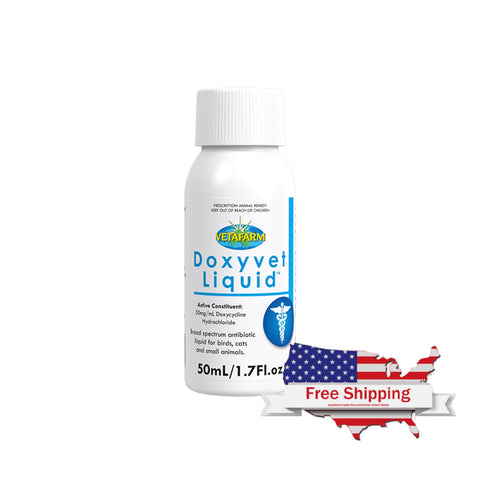
Fish Doxy — Doxycycline
Fish Doxy is the BirdAntibiotic.com doxycycline aquarium-product family.
Doxycycline products may be compared with other antibacterial categories when fish develop a separate susceptible bacterial disease after environmental damage.
Explore Fish Doxy
Browse doxycycline-based ornamental aquarium products for bacterial-care programs.
Fish Mox — Amoxicillin
Fish Mox is BirdAntibiotic.com's amoxicillin aquarium family.
As with every antibacterial product discussed here:
Fish Mox does not remove ammonia from water.
It belongs in a separate bacterial-care program when the fish develops an appropriate susceptible bacterial infection.
Ammonia Poisoning vs Secondary Infection
| Problem | Primary Action |
|---|---|
| High ammonia | Correct water quality and biofiltration |
| Gill irritation from ammonia | Remove toxic exposure and maximize appropriate oxygenation |
| Secondary bacterial fin disease | Evaluate appropriate antibacterial care |
| Secondary bacterial ulcers | Evaluate bacterial diagnosis and treatment |
| Gill parasites | Use an appropriate antiparasitic strategy |
Ammonia Poisoning in Bettas
Bettas may show:
- Rapid gill movement
- Surface breathing
- Clamped fins
- Lethargy
- Loss of appetite
A small uncycled container can develop dangerous ammonia surprisingly quickly.
Ammonia Poisoning in Goldfish
Goldfish produce substantial waste relative to many similarly sized aquarium fish.
Problems are particularly common in:
- Small bowls
- Overstocked aquariums
- Under-filtered systems
Goldfish require substantial:
- Water volume
- Filtration
- Regular maintenance
Ammonia Poisoning in Guppies
Guppy populations can increase rapidly.
A tank that was appropriately stocked several months ago may become overloaded after repeated reproduction.
Ammonia Poisoning in Cichlids
Large cichlids can create heavy waste loads.
High-protein feeding and territorial stocking can further increase:
- Waste production
- Organic load
Ammonia Poisoning in Koi and Pond Fish
Pond ammonia can increase after:
- Heavy feeding
- Sudden stocking increases
- Biofilter failure
- Major organic decomposition
Because pond systems are larger and more complex, management can differ from small indoor aquariums.
Explore Bird Antibiotics
Browse our Best Bird Antibiotics collection and explore bird care products organized in one convenient place.
EXPLORE PRODUCTS →Frequently Asked Questions About Ammonia Poisoning
What does ammonia poisoning look like in fish?
Common signs include rapid breathing, surface gasping, red or irritated gills, excess mucus, lethargy, clamped fins and appetite loss.
Why are my fish's gills red?
Ammonia can irritate and damage gill tissue, but parasites, bacterial gill disease and other chemical irritants can also produce red gills.
Why are my fish gasping at the surface?
Possible causes include ammonia, nitrite, low dissolved oxygen, gill parasites and gill disease.
Can ammonia burn fish gills?
Yes. Toxic unionized ammonia can damage delicate gill tissues and interfere with normal oxygen exchange.
Can ammonia kill fish quickly?
Yes. Severe acute exposure can produce respiratory distress, neurological signs and rapid mortality.
Can low ammonia harm fish over time?
Chronic exposure can irritate gills, suppress appetite, reduce performance and increase susceptibility to disease.
What is NH3?
NH3 is unionized ammonia, the more toxic form of ammonia in aquarium water.
What is NH4+?
NH4+ is ammonium, which is considerably less toxic than unionized NH3.
What is TAN?
TAN means Total Ammonia Nitrogen and represents the total ammonia pool measured in the water.
Why does pH affect ammonia toxicity?
Higher pH shifts a greater percentage of total ammonia toward the toxic NH3 form.
Does high temperature make ammonia more toxic?
Higher temperature generally increases the proportion of unionized ammonia, although pH has an even stronger effect.
What should ammonia be in an established aquarium?
The practical target is no detectable ammonia.
What causes an ammonia spike?
Common causes include an immature tank, overfeeding, overstocking, dead animals, filter failure, loss of beneficial bacteria and excessive organic waste.
What is new tank syndrome?
New tank syndrome occurs when ammonia and/or nitrite accumulate before biological filtration has fully matured.
How long does a biological filter take to establish?
Under typical aquarium conditions, development commonly requires several weeks and may take roughly six to eight weeks.
Can replacing filter media cause ammonia?
Yes. Discarding mature biological media can remove much of the aquarium's nitrifying bacterial population.
Can cleaning my filter cause an ammonia spike?
Aggressive cleaning or sterilization can damage biological filtration and contribute to a mini-cycle.
Can overfeeding cause high ammonia?
Yes. Fish produce more nitrogenous waste after eating, and uneaten food decomposes into additional waste.
Can a dead fish cause an ammonia spike?
Yes. Decomposition of a dead fish or other organic material can contribute substantially to ammonia.
Can tap water contain ammonia?
Yes. Some water supplies contain ammonia or use chloramine, so source water should be checked when unexplained ammonia persists.
How do I lower ammonia quickly?
Test the water, reduce feeding, increase aeration, remove decomposing material, correct filtration and perform appropriate water changes with safe replacement water.
Should I do a water change for high ammonia?
Appropriate partial water changes are one of the fastest ways to reduce ammonia in many aquarium systems, provided the replacement water is safe and water chemistry changes are controlled.
Should I change 100% of the water?
A complete abrupt replacement can create major temperature, pH and chemistry changes. The appropriate amount depends on ammonia severity, source water and aquarium conditions.
Why is old tank syndrome different?
Very old poorly maintained tanks may contain high total ammonia at very low pH. Suddenly increasing pH can convert more ammonium to toxic ammonia.
Should I stop feeding during an ammonia spike?
Temporarily reducing or stopping feeding can reduce additional nitrogen loading while the problem is corrected.
Does adding an air stone remove ammonia?
An air stone does not directly remove the ammonia problem, but better oxygenation supports fish and the aerobic bacteria in the biological filter.
Do ammonia detoxifiers work?
Ammonia-binding conditioners can provide temporary assistance but do not replace a functional biofilter and proper maintenance.
Why does my ammonia test still read positive after conditioner?
Some test methods continue detecting total ammonia even when part of it has been temporarily bound or converted by a conditioner.
Can fish recover from ammonia poisoning?
Yes. Recovery is possible when exposure is corrected early and severe irreversible gill damage has not occurred.
How do I know my fish is recovering?
Breathing slows, surface gasping decreases, appetite returns, activity improves and fins reopen.
Can ammonia-damaged gills heal?
Gill tissue can recover from some injuries after water quality is restored, although severe damage may require considerable time or may be irreversible.
Can ammonia cause fin rot?
Ammonia damages and stresses fish, which can make fin tissue more vulnerable to secondary bacterial infection.
Can ammonia cause bacterial infections?
Ammonia does not itself create bacteria, but damaged tissues and chronic stress can increase susceptibility to opportunistic bacterial disease.
Do antibiotics lower ammonia?
No. Aquarium antibiotics do not remove ammonia from water.
When are Fish Flox, Fish Sulfa or Fish Doxy relevant?
They belong in a separate bacterial-care program when an ammonia-injured fish develops an appropriate secondary bacterial infection.
Should I medicate before testing the water?
No. Water-quality testing should be one of the first steps whenever several aquarium fish suddenly develop respiratory or behavioral abnormalities.
Can ammonia poisoning look like gill parasites?
Yes. Both may cause rapid breathing, excess mucus and surface behavior, which is why water testing is essential.
Can ammonia poisoning look like bacterial gill disease?
Yes. Both can produce irritated gills and respiratory distress, and poor water quality may predispose fish to secondary bacterial gill problems.
The Professional Ammonia Emergency Framework
Step 1 — Test ammonia immediately.
Step 2 — Measure pH and temperature so the ammonia result has context.
Step 3 — Test nitrite as well.
Step 4 — Increase aeration.
Step 5 — Reduce or temporarily stop feeding.
Step 6 — Remove dead animals and decomposing waste.
Step 7 — Perform an appropriate water change using safe replacement water.
Step 8 — Check the biofilter and water flow.
Step 9 — Restore biological filtration instead of repeatedly relying on emergency products.
Step 10 — Monitor recovering fish for secondary bacterial disease.
Secondary Bacterial Care After Water-Quality Damage
If ammonia-damaged fish later develop fin rot, ulcers, red lesions or another identifiable bacterial problem, BirdAntibiotic.com carries Fish Flox, Fish Sulfa, Fish Doxy, Fish Mox and other aquarium antibacterial families.
The Most Important Ammonia Rule
Do not treat a water-quality problem as though it were only a fish problem.
If ammonia is present, every fish in that water is exposed.
The fish cannot swim into cleaner water.
The gills cannot escape the toxin.
And medication cannot compensate for a failing nitrogen cycle.
The strongest recovery strategy is therefore:
test the water → reduce the toxic exposure → improve oxygenation → restore biological filtration → monitor damaged fish → treat secondary disease only when it actually develops.
Clean-looking water is not enough.
Healthy aquarium water must also be chemically safe.
Recommended Products
Products selected to complement this guide.


Shop Related Products
Explore the products featured for this topic.


