 Help & Contact
 Track order












White Spots on Fish: Ich, Epistylis, Fungus or Something Else?
White Spots on Fish: Ich, Epistylis, Fungus or Something Else?
You notice one white spot on a fish.
The next day there are several more.
Maybe they look like:
- Grains of salt
- Tiny raised bumps
- White tufts
- Cottony growth
- Gray-white patches
- Fine dust
The most common reaction is:
“My fish has Ich.”
Sometimes that is correct.
Sometimes it is not.
Several very different aquarium diseases can produce white or pale lesions.
Important possibilities include:
- Ich
- Epistylis
- True fungal growth
- Columnaris
- Velvet
- Lymphocystis
- Breeding tubercles
- Physical injury
The important question is therefore not simply:
“Are there white spots?”
It is:
“What do the spots look like, where are they located, how quickly are they changing, and what is the fish doing?”
White Spots on Fish: Quick Answer
Classic freshwater Ich usually creates numerous small, discrete, salt-grain-like white spots on the body and fins.
Epistylis may produce raised colonies or small white tufts attached to the skin, fins or gills.
True fungal growth such as Saprolegnia is more likely to look:
- Cottony
- Fuzzy
- Filamentous
Velvet typically creates a much finer gold, yellow or dusty coating rather than large white grains.
Columnaris often forms broader gray-white lesions or mouth, skin and fin damage.
Appearance provides clues, but microscopy is the best way to distinguish several white-spot lookalikes when the diagnosis is unclear.
Explore Fish Antibiotics
Browse our Fish Antibiotics collection and explore aquarium bacterial-care products organized in one convenient place.
EXPLORE PRODUCTS →Why White Spots Are So Easy to Misdiagnose
The skin of a fish has a limited number of ways to respond to damage.
Many unrelated problems can create:
- Pale tissue
- White mucus
- Raised lesions
- Dead tissue
- Inflammation
That means two completely different diseases can look surprisingly similar from several feet away.
The First Five Questions to Ask
Before selecting a treatment, look closely at:
- Are the spots individual grains or fuzzy tufts?
- Are they evenly scattered or concentrated around damaged areas?
- Are they on the fins, body, eyes, mouth or gills?
- Is the fish flashing, gasping or clamping its fins?
- Are the lesions multiplying quickly?

Explore Fish Antibiotics
Browse our Fish Antibiotics collection and explore aquarium bacterial-care products organized in one convenient place.
EXPLORE PRODUCTS →Ich: The Classic Salt-Grain White Spot Disease
Freshwater Ich is caused by:
Ichthyophthirius multifiliis.
It is a ciliated protozoan parasite.
The parasite infects:
- Skin
- Fins
- Gills
What Does Ich Look Like?
Classic Ich spots are often described as:
someone sprinkling salt over the fish.
They are generally:
- Small
- Clearly defined
- Round or nearly round
- Bright white
- Scattered across the fish
Common Ich Locations
You may see spots on:
- Tail
- Dorsal fin
- Pectoral fins
- Body
- Head
Ich Can Exist Without Visible Body Spots
When parasites are concentrated in the gills, the fish may show:
- Rapid breathing
- Gasping
- Flashing
- Excess mucus
without obvious spots on the body.
Behavioral Signs of Ich
Look for:
- Rubbing against decorations
- Flashing
- Clamped fins
- Reduced appetite
- Lethargy
- Rapid gill movement
- Surface gasping
Why Ich Can Suddenly Explode Through a Tank
Ich has a multi-stage life cycle.
The parasite feeds while attached to the fish.
It later leaves the fish and enters a reproductive stage.
One mature organism can generate many new infective organisms.
Those free-swimming stages then search for new fish hosts.
The Important Treatment Principle
Not every Ich life stage is equally vulnerable to aquarium treatment.
This is why treatment must continue through the life cycle rather than stopping when the visible white spots temporarily disappear.
Ich vs Epistylis
Epistylis is one of the most important Ich lookalikes.
It is a stalked ciliate that can attach to:
- Skin
- Fins
- Gills
and can form colonies.
What Does Epistylis Look Like?
Possible visual clues include:
- Raised white growths
- Small tufts
- Uneven nodules
- Colonies rather than uniformly scattered dots
Epistylis may be especially important when the fish also has:
- Damaged skin
- Red sores
- Ulcers
- High organic load in the aquarium
Ich vs Epistylis Comparison
| Feature | Ich | Epistylis |
|---|---|---|
| Organism | Parasitic ciliate | Stalked ciliate |
| Typical appearance | Small salt-like spots | Raised colonies, tufts or nodules |
| Distribution | Often scattered broadly | May cluster on skin or damaged tissue |
| Common additional concern | Skin and gill irritation | Can occur with tissue damage and bacterial invasion |
| Best confirmation | Microscopy | Microscopy |
Do Not Diagnose Epistylis From a Photo Alone
The visual clues can help.
But:
Ich, Epistylis and other ciliates can overlap visually.
Microscopic examination of:
- Skin mucus
- Fin tissue
- Gill material
provides much stronger confirmation.

Epistylis and Bacterial Disease
Epistylis can damage tissue at its attachment sites.
This can create an opportunity for bacterial invasion.
Watch for:
- Red sores
- Ulcers
- Hemorrhage
- Fin erosion
- Inflamed skin
When Aquarium Antibacterial Products Become Relevant
If the fish has a confirmed or strongly suspected secondary bacterial problem, antibacterial treatment may become a separate part of the care plan.
BirdAntibiotic.com carries aquarium antibacterial categories including:
- Fish Flex — Cephalexin
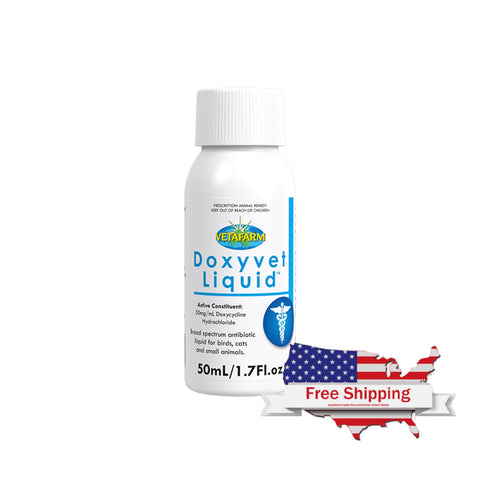
- Fish Doxy — Doxycycline
- Fish Flox — Ciprofloxacin
- Fish Mox — Amoxicillin
These products are for bacterial disease—not a replacement for identifying the white-spot organism itself.
Fish Flex — Cephalexin
Fish Flex is the BirdAntibiotic.com cephalexin aquarium collection.
It fits this article commercially in the:
secondary external bacterial infection section.
Explore Fish Flex Cephalexin
Compare cephalexin-based aquarium products by strength and count for ornamental fish bacterial-care preparedness.
Fish Doxy — Doxycycline
Fish Doxy is BirdAntibiotic.com's doxycycline aquarium product family.
It belongs in the bacterial-complication comparison rather than being positioned as a direct Ich medication.
Explore Fish Antibiotics
Browse our Fish Antibiotics collection and explore aquarium bacterial-care products organized in one convenient place.
EXPLORE PRODUCTS →White Spots vs True Fish Fungus
True external fungal disease looks very different from classic salt-grain Ich when it becomes well developed.
A common aquatic fungus-like infection is associated with:
Saprolegnia.
What Does Saprolegnia Look Like?
Typical lesions may appear:
- Gray-white
- Cottony
- Fuzzy
- Hair-like
- Filamentous
Growth can occur on:
- Skin
- Fins
- Eyes
- Gills
Fungus Often Takes Advantage of Damaged Tissue
External fungal disease is commonly associated with:
- Physical injury
- Damaged skin
- Poor sanitation
- Dead or decaying tissue
- Previous parasite damage
Ich vs Fungus
| Feature | Ich | Fungal Growth |
|---|---|---|
| Shape | Small discrete dots | Fuzzy or filamentous patch |
| Texture | Salt-grain appearance | Cotton-like growth |
| Distribution | Often numerous scattered lesions | Often localized to damaged tissue |
Fish Flucon — Fluconazole Antifungal Collection
Fish Flucon is BirdAntibiotic.com's fluconazole-based ornamental fish antifungal category.
The current collection includes:
- Fish Fluconazole 100 mg — 30 Tablets
- Fish Flucon 100 mg — 10 Capsules
Fish Flucon is commercially relevant when the condition being investigated is genuinely fungal rather than classic Ich.
The exact antifungal product should be matched to the diagnosed condition and its label rather than assuming every white fuzzy lesion requires the same antifungal.
Explore Fish Flucon Fluconazole
Compare fluconazole-based aquarium antifungal products for ornamental fish.
Fish Ketoconazole
Fish Ketoconazole is another BirdAntibiotic.com antifungal category for ornamental aquarium fish.
The current collection includes:
Fish Ketoconazole 200 mg — 30 Tablets.
Explore Fish Ketoconazole
Browse ketoconazole-based aquarium antifungal products for a prepared ornamental fish-care setup.

White Spots vs Columnaris
Columnaris is a bacterial disease caused by organisms in the Flavobacterium columnare group.
It can affect:
- Skin
- Mouth
- Fins
- Gills
Possible Columnaris Signs
- Gray-white patches
- Pale mouth lesions
- Fin erosion
- Saddle-like skin lesions
- Gill damage
Columnaris Is Frequently Mistaken for Fungus
A white lesion can look cottony from a distance even when the underlying disease is bacterial.
This distinction matters because:
antifungal and antibacterial treatments are different categories.
Ich vs Columnaris
Ich usually appears as:
many small discrete dots.
Columnaris is more likely to create:
broader patches, erosions or lesions.
But severe disease can be difficult to distinguish visually.
White Spots vs Velvet
Velvet disease is caused by dinoflagellate parasites such as:
- Piscinoodinium in freshwater fish
- Amyloodinium in marine fish
The external appearance is usually much finer than Ich.
What Does Velvet Look Like?
The skin may appear covered with:
- Gold dust
- Rust-colored dust
- Yellowish powder
- Very fine pale specks
Behavioral Signs
Fish may:
- Flash
- Rub against objects
- Stop eating
- Become lethargic
- Breathe rapidly
Ich vs Velvet
A simple visual rule is:
Ich = salt grains.
Velvet = dust.
Microscopy remains more reliable when the appearance is unclear.
White Growths vs Lymphocystis
Lymphocystis is a viral disease.
It can produce:
- Larger nodules
- Irregular white or pale growths
- Cauliflower-like lesions
on the:
- Skin
- Fins
Lymphocystis Usually Looks Nothing Like Fine Ich Once Developed
Instead of dozens of tiny salt grains, lymphocystis commonly produces:
larger slow-growing nodules.
It often affects appearance more than general health and may resolve over time.
Goldfish White Spots: Could They Be Breeding Tubercles?
Male goldfish in breeding condition can develop small white bumps known as:
breeding tubercles.
These often occur in an organized pattern around:
- Gill covers
- Leading rays of the pectoral fins
Breeding Tubercles vs Ich
Breeding tubercles tend to:
- Appear in predictable locations
- Occur in mature males
- Remain relatively organized
Ich spots are generally more randomly distributed across fins and body.
Can an Injury Turn White?
Yes.
Recently damaged skin may appear:
- Pale
- Cloudy
- White
before healing.
Injured tissue can also later develop:
- Bacterial infection
- Fungal growth
so continue monitoring rather than assuming a white wound is harmless.
The White-Spot Comparison Table
| Condition | Typical Appearance | Common Clue |
|---|---|---|
| Ich | Small discrete salt-like white spots | Flashing, clamped fins, respiratory irritation |
| Epistylis | Raised colonies, tufts or nodules | Can occur with damaged tissue and bacterial disease |
| Saprolegnia / fungus | Gray-white cottony or fuzzy growth | Often develops on damaged tissue |
| Columnaris | Gray-white patches, mouth or skin lesions | Fin erosion, gill disease, ulcers |
| Velvet | Very fine gold, rust or pale dust | Severe gill irritation can occur |
| Lymphocystis | Larger cauliflower-like nodules | Often slowly developing |
| Breeding tubercles | Small organized white bumps | Typical locations on breeding males |
Explore Fish Antibiotics
Browse our Fish Antibiotics collection and explore aquarium bacterial-care products organized in one convenient place.
EXPLORE PRODUCTS →What Should You Check Before Treating White Spots?
Test the aquarium.
Important parameters include:
- Ammonia
- Nitrite
- Nitrate
- pH
- Temperature
- Oxygenation
- Salinity where applicable
Why Water Quality Matters
Many skin and gill diseases become worse when fish are stressed by:
- High organic load
- Overcrowding
- Poor filtration
- Low oxygen
- Ammonia
- Nitrite
- Rapid temperature change
Do Not Raise Temperature Just Because You See White Spots
Temperature manipulation is sometimes incorporated into specific Ich protocols.
But white spots do not automatically equal Ich.
If the fish actually has another disease, changing temperature without confirming the diagnosis can complicate the situation.
When Should the Entire Aquarium Be Considered Exposed?
If true Ich is confirmed in a shared tank, assume different parasite stages may exist:
- On other fish
- In the gills
- On aquarium surfaces
- In the water column
Treating only the visibly spotted fish may leave the rest of the life cycle in the aquarium.
When Is a Hospital Tank Useful?
A hospital or quarantine tank can help when:
- You need closer observation
- Medication may affect sensitive tankmates
- Plants or invertebrates complicate treatment
- A fish has severe secondary wounds
- You want easier monitoring of eating and waste
Fish With White Spots and Rapid Breathing
This is a more urgent combination.
Possible explanations include:
- Ich affecting the gills
- Velvet
- Other gill parasites
- Secondary gill disease
- Poor oxygenation
Check oxygen and water quality immediately.
Fish With White Spots and Red Sores
This combination is particularly important.
Consider:
- Epistylis with damaged tissue
- Secondary bacterial infection
- Ulcerative bacterial disease
- Physical injury with secondary infection
Fish With White Spots and Fuzzy Growth
Distinct fuzzy or cotton-like growth makes:
- Fungal disease
- Fungus-like secondary colonization
- Some bacterial skin lesions
more important differentials than classic uniform salt-grain Ich.
Fish With White Spots on the Eyes
Eye lesions deserve extra caution.
Possible explanations include:
- External ciliates
- Injury
- Secondary infection
- Cloudy-eye disease
- Popeye-associated tissue changes
A white eye lesion is not automatically Ich.
Betta With White Spots
Important possibilities include:
- Ich
- Fungal growth
- Epistylis
- Injury
- Columnaris
Check whether the lesion looks:
granular, raised, fuzzy or patch-like.
Goldfish With White Spots
In addition to Ich and infectious diseases, male goldfish may have breeding tubercles.
Look at:
- Location
- Pattern
- Fish behavior
- Whether other fish are affected
Guppy With White Spots
Guppies in crowded community tanks can be exposed to:
- Ich
- External ciliates
- Bacterial disease
- Fungal secondary infections
Newly purchased fish deserve particular observation.
White Spots After Adding New Fish
This pattern increases concern for an infectious problem introduced with:
- New fish
- Bag water
- Wet equipment
- Decor moved between tanks
Quarantine helps reduce this risk.
Why Treatment Sometimes Fails
Common reasons include:
- The disease was misidentified
- Ich treatment was stopped too early
- A bacterial complication was ignored
- A fungal lesion was treated as a parasite
- Water quality remained poor
- Medication was removed by chemical filtration
- The fish were re-exposed
Should You Mix Several Medications “Just in Case”?
Do not automatically combine:
- Antiparasitic products
- Antibiotics
- Antifungals
simply because the diagnosis is uncertain.
The safer and more effective approach is:
identify the lesion category first.
Explore Fish Antibiotics
Browse our Fish Antibiotics collection and explore aquarium bacterial-care products organized in one convenient place.
EXPLORE PRODUCTS →Frequently Asked Questions About White Spots on Fish
Are white spots on fish always Ich?
No. Epistylis, fungal growth, velvet, columnaris, lymphocystis, breeding tubercles and injuries can all create white or pale lesions.
What does Ich look like?
Classic freshwater Ich produces multiple small, clearly defined spots often compared with grains of salt.
What does Epistylis look like?
Epistylis can form raised stalked colonies or small tufts attached to the skin, fins or gills.
How do I tell Ich from Epistylis?
Ich tends to appear as numerous individual salt-like spots, while Epistylis may appear more raised, tufted or clustered. Microscopy provides much stronger confirmation than visual diagnosis alone.
What does fish fungus look like?
External fungal growth is commonly described as gray-white, fuzzy, cottony or filamentous.
How do I tell Ich from fungus?
Ich generally looks like discrete salt grains. Fungus is more likely to form cotton-like growth or fuzzy patches.
What does velvet look like on fish?
Velvet usually creates a finer gold, yellow, rust or dusty coating rather than individual large white dots.
What is lymphocystis?
Lymphocystis is a viral disease that can create larger cauliflower-like skin or fin growths.
What are breeding tubercles?
Breeding tubercles are small white bumps that can appear naturally on male goldfish and other cyprinids during breeding condition.
Why is my fish rubbing against rocks?
Flashing or rubbing can occur when skin or gills are irritated by parasites, poor water quality or other disease.
Can Ich affect the gills without white spots?
Yes. Gill-heavy Ich can cause rapid breathing and irritation even when external white spots are limited.
Can Epistylis cause sores?
Epistylis can damage tissue at attachment sites and may occur alongside bacterial invasion and red-sore disease.
Can fish fungus grow after Ich?
Damaged skin after a parasitic infection can become vulnerable to secondary microbial or fungal colonization.
Can fish have two diseases at once?
Yes. A fish can have a parasite plus a secondary bacterial or fungal problem.
Why are my fish's white spots fuzzy?
Fuzzy growth is less typical of classic Ich and raises concern for fungal growth, Epistylis or another surface lesion.
Why are the white spots raised?
Several diseases can create raised lesions. Epistylis colonies, Ich cyst-like lesions and viral nodules can all look raised.
Why are the white spots only around a wound?
A localized pattern around damaged tissue makes secondary colonization, fungal growth or a sessile ciliate more important to consider.
Should I raise the aquarium temperature for white spots?
Only after the disease has been reasonably identified and the fish species can tolerate the intended temperature. White spots alone do not prove Ich.
Should I treat the entire tank for Ich?
When true Ich is established in a shared aquarium, multiple parasite stages may already be present throughout the system.
Can activated carbon remove fish medicine?
Activated carbon can remove many dissolved aquarium medications, so review the specific product directions.
What is Fish Flucon?
Fish Flucon is BirdAntibiotic.com's fluconazole-based aquarium antifungal product family.
What is Fish Ketoconazole?
Fish Ketoconazole is BirdAntibiotic.com's ketoconazole-based ornamental aquarium antifungal category.
Is Fish Flucon an Ich treatment?
Fluconazole is an antifungal ingredient. Classic Ich is caused by a protozoan parasite, so the disease category is different.
Are antibiotics used for Ich?
Antibiotics do not directly treat the classic Ich parasite. They may become relevant if the fish develops a separate bacterial infection.
When is Fish Flex relevant?
Fish Flex contains cephalexin and fits bacterial-disease sections rather than direct classic Ich treatment.
When is Fish Doxy relevant?
Fish Doxy is a doxycycline aquarium antibacterial family used when an appropriate susceptible bacterial condition is involved.
Can poor water quality cause white lesions?
Poor water quality can damage skin and gills, increase mucus production and make fish more vulnerable to opportunistic infections.
Should I quarantine a fish with unknown white spots?
A hospital tank can be useful when you need close observation or when treatment would affect plants, invertebrates or other sensitive animals.
How can I know exactly what the white spots are?
Microscopic examination of skin mucus, fins or gill material is one of the best ways to distinguish parasites and other surface organisms.
What should I test first when fish develop white spots?
Check ammonia, nitrite, nitrate, pH, temperature and oxygenation while evaluating the fish's lesions and behavior.
The Professional White-Spot Decision Framework
Step 1 — Decide whether the lesions are dots, tufts, fuzz, patches or nodules.
Step 2 — Check whether the fish is flashing or breathing rapidly.
Step 3 — Test aquarium water.
Step 4 — Review recent new-fish introductions.
Step 5 — Compare Ich with Epistylis, fungus, velvet, columnaris and lymphocystis.
Step 6 — Avoid changing temperature based only on “white spots.”
Step 7 — Use microscopy when diagnosis remains uncertain.
Step 8 — Match antiparasitic, antifungal or antibacterial care to the actual disease category.
Step 9 — Monitor for secondary infection.
Step 10 — Quarantine future new fish before adding them to the display aquarium.
Explore Aquarium Fish Medications
BirdAntibiotic.com carries Fish Flucon, Fish Ketoconazole, Fish Flex, Fish Doxy and additional aquarium medication categories organized by active ingredient.
Shop Fish Flucon Shop Fish Ketoconazole Explore Fish Antibiotics
The Most Important White-Spot Rule
Do not treat the color. Treat the diagnosis.
White lesions can come from:
- Parasites
- Sessile ciliates
- Fungi
- Bacteria
- Viruses
- Normal breeding changes
- Trauma
Those categories require completely different approaches.
A salt-like dot is not the same as cottony fungus.
A cauliflower-like viral growth is not the same as Ich.
A bacterial white patch is not automatically fungal.
Look at the shape, distribution, behavior of the fish, aquarium conditions and disease progression before choosing the treatment category.
Recommended Products
Products selected to complement this guide.


Shop Related Products
Explore the products featured for this topic.


