 Help & Contact
 Track order












Pigeon Health After Racing Season: Molting, Weight, Respiratory Health & Parasite Checks
Pigeon Health After Racing Season: Molting, Weight, Respiratory Health & Parasite Checks
The final race is over.
The baskets are put away.
Training intensity drops.
The loft becomes quieter.

|
 |
But for the pigeons, the racing year is not finished simply because the race calendar is.
This is one of the most important periods of the entire season.
A pigeon may finish racing:
- Lighter than its normal condition
- Dehydrated after repeated exertion
- Beginning a heavy Autumn molt
- Carrying subtle respiratory signs
- Shedding coccidian oocysts without dramatic illness
- Harboring Trichomonas without obvious mouth lesions
- Carrying intestinal parasites
- Or appearing completely healthy
The challenge is deciding which bird simply needs:
rest + nutrition + hydration + time
and which bird needs:
testing + diagnosis + targeted treatment.
That distinction is the foundation of professional post-racing pigeon care.
The end of the racing season should not automatically trigger:
antibiotics, canker medicine, coccidiosis treatment and dewormer for every bird.
Instead, it should trigger a structured health review.
This review should answer six questions:
- Has the pigeon maintained healthy body condition?
- Is it entering a normal molt?
- Has respiratory performance returned to normal?
- Are the droppings and digestive condition normal?
- Is parasite testing indicated?
- Is the loft ready for a healthy recovery and off-season?
The best post-race program is not the program containing the most medications.
It is the one that identifies what each pigeon actually needs.
Post-Racing Pigeon Health: The Professional Summary
Weight: compare current weight and breast-muscle condition with the bird's known healthy baseline.
Hydration: restore normal fluid balance after exertion when needed, but do not assume every pigeon requires electrolyte supplementation indefinitely.
Molting: racing-season completion often overlaps with substantial feather replacement, increasing demand for balanced protein, amino acids, vitamins and minerals.
Respiratory health: persistent sneezing, wet nostrils, watery eyes, respiratory noise or reduced exercise tolerance deserves investigation rather than routine antibiotic treatment.
Coccidia: fecal testing can identify oocyst shedding, but positive results must be interpreted with body condition and clinical signs.
Canker: Trichomonas can exist subclinically in pigeons; fresh oral/crop wet-mount testing is more useful than assuming every bird needs a routine canker course.
Worms: fecal parasite examination can guide whether a wormer is actually needed and which parasite category is involved.
Core rule: recover the healthy pigeon, diagnose the unhealthy pigeon, and do not medicate a calendar date.
Explore Bird Antibiotics
Browse our Best Bird Antibiotics collection and explore bird care products organized in one convenient place.
EXPLORE PRODUCTS →Why the End of Racing Season Deserves Its Own Health Plan
Racing pigeons undergo repeated:
- Exercise
- Transport
- Environmental changes
- Feeding changes
- Water changes
- Contact with shared environments
These pressures are not automatically harmful.
A conditioned racing pigeon is built for endurance.
But the end of the season gives the keeper an opportunity to identify small problems before they become chronic off-season problems.
Racing Is a Physiological Stressor
Research examining different categories of racing pigeons has documented substantially higher stress-hormone concentrations in birds actively competing through racing season.
The practical implication is not that racing is inherently unhealthy.
It means recovery deserves to be treated as a genuine biological process.
The First 48 Hours Are Not the Entire Recovery Period
A pigeon can:
- Drink
- Eat
- Rest
- Appear brighter
within a short period after returning.
That does not necessarily mean every physiological effect of a long racing season has disappeared.
Post-season monitoring should continue beyond the final return from the basket.
Start With the Individual Bird
Before looking at medicines, look at the pigeon.
Evaluate:
- Body weight
- Breast muscle
- Keel prominence
- Feather quality
- Eyes
- Nostrils
- Mouth and throat
- Breathing
- Droppings
- Appetite
- Activity
Body Weight: One of the Best Post-Racing Measurements
A gram scale converts an impression into data.
Instead of saying:
“He looks a little thin.”
you can determine whether the pigeon is actually below its established healthy weight.
Compare the Bird With Its Own Baseline
One universal ideal weight should not be applied to every racing pigeon.
Body size, sex, genetics and build vary.
A much better comparison is:
this pigeon's healthy pre-season or mid-season baseline.
Why Feathers Can Hide Weight Loss
A pigeon may appear full-bodied while:
- Fluffed
- Molting
- Growing new body feathers
Underneath the plumage, breast-muscle volume can be reduced.
This makes hands-on body-condition assessment especially useful.
The Keel and Breast Muscle Check
The keel runs along the center of the breast.
Healthy pectoral muscles should provide appropriate mass on either side.
A progressively sharper keel can indicate:
- Loss of muscle
- Loss of fat reserves
- Chronic inadequate intake
- Disease
Do Not Try to “Fatten” Every Post-Race Pigeon
The goal is not simply to increase body weight as quickly as possible.
A healthy post-season pigeon should restore:
- Normal hydration
- Appropriate muscle condition
- Normal energy reserves
without becoming excessively fat.
Why Diet Quality Matters More Than Feeding More Grain
Post-race recovery and Autumn molt can overlap.
That means nutrients are being directed toward:
- General maintenance
- Muscle recovery
- New feather production
- Normal immune function
Simply increasing calorie-dense seed or grain is not the same as improving nutritional balance.
Explore Bird Antibiotics
Browse our Best Bird Antibiotics collection and explore bird care products organized in one convenient place.
EXPLORE PRODUCTS →Pigeon Nutrition After Racing Season
A professional feeding program should consider:
- Total energy intake
- Protein quality
- Essential amino acids
- Vitamins
- Minerals
- Body condition
- Stage of molt
Why Molt Changes the Nutritional Picture
Feathers are protein-rich structures.
Producing thousands of new feathers requires significant nutritional resources.
During heavy feather replacement, inadequate nutrition can compromise:
- Plumage quality
- Body condition
- General recovery
Look at the New Feathers
Good post-season feather development should produce:
- Well-formed new feathers
- Strong shafts
- Normal symmetry
- Progressive replacement of worn plumage
Persistent malformed feathers or failure of normal regrowth deserves investigation.
Do Not Pull New Blood Feathers
Growing feathers have an active blood supply.
They should not be pulled or aggressively manipulated unless treatment of an injured feather is required.
Premolt 100 and Post-Racing Molt
Premolt 100 by MedPet is one of the most directly related products for this phase.
The current formulation is positioned as a:
- Vitamin supplement
- Mineral supplement
- Trace-element supplement
- Amino-acid supplement
for pigeons and cage birds during molting and plumage development.
It fits the nutritional portion of a post-race program—not the parasite or respiratory sections.
Hydration After Racing
Long exercise, warm conditions and transport can alter fluid and electrolyte balance.
The first requirement remains:
clean drinking water.
Electrolyte supplementation can be useful in specific recovery situations.
But supplements should not indefinitely replace normal fresh water.
Medilyte for Racing Pigeon Recovery
Medilyte by MedPet is specifically positioned around racing-pigeon electrolyte and amino-acid recovery.
Its best placement in this article is:
immediately after the hydration and post-exercise recovery section.
Aminostress After Exercise
Aminostress by MedPet combines electrolytes with vitamins and amino-acid support intended for pigeons after exercise.
It is another recovery-oriented product rather than a disease treatment.
Should Every Pigeon Receive Electrolytes?
Not indefinitely.
The need depends on:
- Exercise intensity
- Heat
- Hydration status
- Recovery
- Diet
Fresh water remains the everyday foundation.
Gut Recovery After the Season
The gastrointestinal system also deserves attention.
Transport, changes in water and food, medication exposure and racing stress can alter the management environment around gut health.
Monitor:
- Appetite
- Dropping consistency
- Body weight
- Feed utilization
Bio Plus and Gut Support
Bio Plus is a multi-strain probiotic product currently positioned for digestive support during recovery, illness, stress or after antimicrobial use.
It should be viewed as supportive nutrition—not as treatment for coccidia, canker or worms.
Post-Race Droppings: What Should You Watch?
One unusual dropping after transport does not necessarily indicate disease.
More concerning are:
- Persistent watery droppings
- Persistent diarrhea
- Repeated abnormal color combined with illness
- Weight loss
- Reduced appetite
- Progressive weakness
True Diarrhea vs Polyuria
A pigeon dropping contains both fecal and urinary components.
A wet dropping may therefore represent:
- True diarrhea
- Increased urine
- Increased drinking
- Stress
Interpret the entire dropping rather than color alone.

Post-Racing Respiratory Health
Respiratory health deserves a specific review because endurance flight places high demands on oxygen delivery.
Watch for persistent:
- Sneezing
- Wet nostrils
- Nasal discharge
- Watery eyes
- Sinus swelling
- Noisy breathing
- Tail bobbing
- Reduced exercise tolerance
A Tired Pigeon Is Not Automatically a Respiratory Pigeon
A bird returning from a difficult race may be tired.
Temporary fatigue is expected.
The important distinction is:
does the bird recover?
Persistent poor exercise tolerance deserves investigation.
Respiratory Disease Can Be Multifactorial
Pigeon respiratory disease may involve:
- Chlamydia
- Mycoplasma
- Conventional bacterial organisms
- Pigeon herpesvirus
- Fungal disease
- Environmental factors
- Mixed infections
A Positive Mycoplasma Test Does Not Always Equal Disease
Research in racing pigeons has detected Mycoplasma species and pigeon herpesvirus in birds both with and without clinical respiratory signs.
This is important.
The laboratory result must be interpreted together with:
- Clinical signs
- Bird condition
- Loft history
- Other test results
Chlamydia psittaci
Chlamydia psittaci is an important respiratory and systemic pathogen in pigeons.
Signs can include:
- Eye discharge
- Nasal discharge
- Respiratory difficulty
- Lethargy
- Poor appetite
- Dropping changes
It is also zoonotic.
Should Every Loft Receive Antibiotics After Racing Season?
No.
A calendar date is not a bacterial diagnosis.
Routine antibiotics in healthy birds can:
- Expose birds unnecessarily
- Increase antimicrobial selection pressure
- Confuse future diagnosis
- Distract from ventilation and hygiene problems
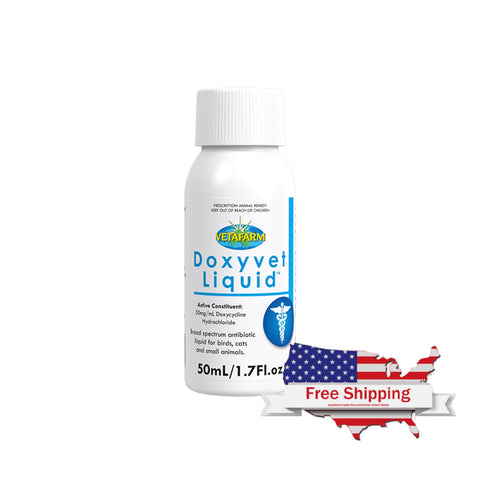
When Doxycycline Becomes Relevant
When veterinary testing or the clinical picture supports an appropriate susceptible bacterial condition—particularly avian chlamydiosis—doxycycline may be selected.
BirdAntibiotic.com carries:
Doxycycline 20% Powder for Birds – Ornithosis & Respiratory Support – 100 g.
This should remain a conditional related product, not a routine post-race supplement.
Respiratory Emergency Signs
Seek prompt veterinary care for:
- Continuous open-mouth breathing
- Pronounced respiratory tail bobbing
- Severe weakness
- Collapse
- Rapid deterioration
Explore Bird Antibiotics
Browse our Best Bird Antibiotics collection and explore bird care products organized in one convenient place.
EXPLORE PRODUCTS →The Post-Racing Parasite Check
Parasite review should focus on three major categories:
- Coccidia
- Trichomonas / canker
- Intestinal worms
These are not interchangeable diseases.
Each requires different testing and different treatment.
Coccidia After Racing Season
Coccidiosis in pigeons is associated with Eimeria protozoa.
Studies of homing pigeons have documented coccidian oocyst shedding before, during and after racing season.
This makes post-season fecal examination a rational diagnostic tool.
How Is Pigeon Coccidia Checked?
Veterinary testing may include:
- Fecal flotation
- Microscopic examination
- Quantitative oocyst counts
A Positive Coccidia Test Does Not Automatically Mean Severe Disease
Adult pigeons may shed coccidian oocysts without dramatic clinical illness.
Interpret results alongside:
- Weight
- Droppings
- Age
- Body condition
- Loft history
When Endocox Fits the Post-Season Plan
Endocox Powder contains Toltrazuril 2.5%.
Its appropriate role in this article is:
targeted coccidiosis support when testing and veterinary assessment support a susceptible coccidial problem.
It is not a routine post-racing vitamin.
Canker After Racing Season
Pigeon canker is associated primarily with Trichomonas gallinae.
A bird may carry trichomonads without obvious severe disease.
This means a loft may contain:
- Clinically affected birds
- Subclinical carriers
- Birds with no detectable infection
How Is Canker Checked?
A fresh sample from the mouth, throat or crop can be examined as a saline wet mount.
When live trichomonads are present, their characteristic movement may be visible microscopically.
Why Fresh Testing Matters
Trichomonads lose viability outside the host.
A fresh, promptly examined sample is therefore particularly useful.
Look for Clinical Canker Signs Too
Possible signs include:
- Repeated swallowing
- Excess saliva
- Regurgitation
- Weight loss
- Yellow-white oral lesions
Do Not Automatically Give Every Pigeon a Post-Season Canker Course
This point is especially important in 2026.
Recent research in competition pigeons has found reduced nitroimidazole effectiveness associated with widespread use against Trichomonas gallinae.
That reinforces the value of:
testing + targeted therapy + treatment-response monitoring.
Metronidazole and Diagnosed Canker
Metronidazole 20% Powder is relevant to the canker section when a veterinarian considers metronidazole appropriate for a non-food companion/racing pigeon.
It is an antiprotozoal option.
It should not be presented as a universal post-race “clean-out.”
Worm Checks After Racing Season
Pigeons can carry intestinal helminths including various:
- Roundworms
- Hairworms / capillarids
- Tapeworms
Significant parasite burdens can contribute to:
- Weight loss
- Poor body condition
- Reduced performance
- Digestive problems
How Are Worms Checked?
Fecal examination can identify parasite eggs or other stages.
Different parasites may require different medications.
That is why knowing which parasite is present is more useful than simply deciding:
“It is deworming time.”
Wormout Gel as a Conditional Product
Wormout Gel by Vetafarm contains oxfendazole and praziquantel and is positioned for pigeon and aviary-bird intestinal worm control.
Its best article placement is under:
confirmed or appropriately suspected intestinal worm problems.
Do Not Confuse Worms, Coccidia and Canker
| Problem | Organism Type | Useful Test | Typical Treatment Category |
|---|---|---|---|
| Coccidia | Protozoa such as Eimeria | Fecal flotation / oocyst count | Anticoccidial |
| Canker | Trichomonad protozoa | Fresh oral/crop wet mount | Appropriate antitrichomonal therapy |
| Intestinal worms | Helminths | Fecal examination | Appropriate anthelmintic |
A Pigeon Can Have More Than One Problem
Post-race assessment becomes especially valuable because mixed disease is possible.
A pigeon may be:
- Molting while carrying coccidia
- Underweight while harboring worms
- Recovering from racing while developing respiratory disease
- Carrying subclinical Trichomonas while otherwise appearing normal
Testing Prevents Guessing
A practical post-season veterinary screen may include, depending on the loft:
- Body-weight assessment
- Physical examination
- Fecal flotation
- Quantitative parasite assessment
- Trichomonas wet mount
- Respiratory PCR or culture when signs justify it
Should You Test Every Pigeon Individually?
The best strategy depends on:
- Loft size
- History
- Previous disease
- Symptoms
- Veterinary plan
In some situations, representative or pooled sampling can help evaluate loft-level parasite pressure.
Clinically abnormal birds still deserve individual assessment.
Explore Bird Antibiotics
Browse our Best Bird Antibiotics collection and explore bird care products organized in one convenient place.
EXPLORE PRODUCTS →The Loft Is Part of Post-Racing Health
You cannot separate bird health from loft management.
Review the environment once racing activity declines.
Post-Season Loft Deep Clean
Review:
- Dropping accumulation
- Dust
- Feeder contamination
- Waterer biofilm
- Transport baskets
- Perches
- Nest areas
Clean Before You Disinfect
Organic material reduces the effectiveness of many disinfectants.
A logical cleaning sequence is:
- Remove droppings and debris
- Wash surfaces appropriately
- Apply an appropriate disinfectant according to its label
- Allow equipment to dry
Ventilation Still Matters When Training Stops
Closing a loft because colder weather is arriving can produce:
- Higher humidity
- Condensation
- Ammonia buildup
- Dust accumulation
The objective is:
good air exchange without strong direct drafts across resting birds.
Watch for Condensation
Condensation indicates that moisture management may need improvement.
Inspect:
- Windows
- Roof surfaces
- Walls
- Drinkers
Transport Baskets Need Attention Too
The racing season exposes transport equipment to repeated birds and environments.
At season end:
- Remove organic debris
- Clean baskets thoroughly
- Disinfect appropriately
- Allow them to dry completely
Quarantine Still Matters in the Off-Season
The period after racing often coincides with:
- Purchasing new pigeons
- Trading birds
- Shows
- Breeding-stock changes
A new pigeon should not bypass quarantine simply because racing has ended.
What to Monitor in Quarantine
Track:
- Weight
- Droppings
- Respiration
- Eyes and nostrils
- Mouth and throat
- Appetite
- General activity
When Can Training Resume?
The next training cycle should not begin simply because a certain number of calendar days has passed.
A pigeon should have:
- Stable body weight
- Good breast-muscle condition
- Normal respiration
- Normal droppings
- Normal appetite
- No unresolved illness
- Adequate plumage condition
Heavy Molt Changes the Training Decision
Flight feathers have an obvious mechanical role in racing.
A bird replacing important feathers should be managed with feather development and overall condition in mind rather than pushed automatically into intense exercise.
The Post-Season Recovery Trap: Doing Too Much
Some loft programs become more complicated after racing than during racing.
A pigeon may receive:
- Antibiotic
- Canker medication
- Coccidiosis medication
- Wormer
- Multiple vitamins
- Electrolytes
- Several supplements
in rapid succession.
That is not automatically better care.
More Products Can Make Assessment Harder
If five things are started simultaneously, it becomes difficult to know:
- What the pigeon actually needed
- What produced improvement
- What caused an adverse effect
- Whether the original diagnosis was correct
The Professional Approach: Build in Layers
Layer 1 — Essentials:
- Rest
- Clean water
- Balanced nutrition
- Good loft environment
Layer 2 — Recovery support when needed:
- Electrolytes
- Amino acids
- Molting support
- Probiotics
Layer 3 — Diagnostic treatment:
- Anticoccidial when coccidia justify it
- Canker medication when Trichomonas justifies it
- Wormer when helminths justify it
- Antibiotics when susceptible bacterial disease justifies it
Signs That Post-Racing Recovery Is Going Well
Positive indicators include:
- Stable or appropriately recovering weight
- Good appetite
- Normal droppings
- Quiet effortless respiration
- Bright behavior
- Healthy new feather growth
- Improving breast-muscle condition
Signs That Require Investigation
Do not simply “give more recovery time” when a pigeon develops:
- Continued weight loss
- Persistent diarrhea
- Persistent watery eyes
- Wet nostrils
- Respiratory noise
- Repeated regurgitation
- Yellow oral lesions
- Severe weakness
- Abnormal feather growth
Post-Race Weight Loss + Abnormal Droppings
This combination moves gastrointestinal and parasitic disease higher on the investigation list.
Consider:
- Coccidia
- Worms
- Other digestive disease
Post-Race Weight Loss + Swallowing Problems
This combination makes:
- Canker
- Crop disease
- Upper gastrointestinal problems
more relevant.
Post-Race Weight Loss + Respiratory Signs
Persistent sneezing, eye discharge or abnormal breathing together with declining condition warrants respiratory evaluation.
Post-Race Weight Loss + Heavy Molt
A heavy molt raises nutritional demand.
But major progressive loss of condition should not simply be accepted as the cost of feather replacement.
Explore Bird Antibiotics
Browse our Best Bird Antibiotics collection and explore bird care products organized in one convenient place.
EXPLORE PRODUCTS →Frequently Asked Questions About Pigeon Health After Racing Season
What should I do after racing season ends?
Begin with body weight, breast-muscle condition, hydration, molt, droppings, respiration and parasite-risk assessment rather than automatic medication.
Should racing pigeons rest after the season?
Yes. Recovery and reduced training pressure are appropriate, but the exact program should reflect the individual bird's condition and stage of molt.
Do pigeons lose weight during racing?
Body weight can fluctuate with exercise, hydration and nutrition. Persistent post-race weight loss deserves investigation.
How do I know if my pigeon is too thin?
Use a gram scale together with breast-muscle and keel assessment.
Should I fatten pigeons after racing?
The goal is restoration of healthy body condition, not simply maximizing weight.
Do racing pigeons molt after racing season?
Autumn feather replacement frequently overlaps with the post-racing period, although molt timing varies.
Does molt increase nutritional requirements?
Yes. Producing new feathers requires substantial protein, amino acids, energy, vitamins and minerals.
What is Premolt 100?
It is a MedPet vitamin, mineral, trace-element and amino-acid supplement positioned for pigeons and cage birds during molting and plumage development.
Should pigeons get electrolytes after racing?
Electrolyte support can be useful after significant exercise or dehydration, but clean fresh water remains the daily foundation.
What is Medilyte?
Medilyte is a MedPet electrolyte and amino-acid formulation specifically marketed for racing-pigeon recovery.
What is Aminostress?
It is an electrolyte, vitamin and amino-acid product formulated for pigeons after exercise and stress.
Should pigeons receive probiotics after racing?
Probiotic support can be considered, especially after stress or antimicrobial treatment, but it does not treat parasites or infection.
Should every pigeon receive antibiotics after racing season?
No. Antibiotics should be linked to susceptible bacterial disease rather than the end of the racing calendar.
Why is my pigeon sneezing after racing season?
Possible causes include respiratory infection, environmental irritation, loft conditions and other upper-airway disease.
What respiratory signs should I watch?
Wet nostrils, watery eyes, persistent sneezing, sinus swelling, respiratory noise, tail bobbing and open-mouth breathing deserve attention.
Should I test pigeons for Chlamydia?
PCR testing may be useful when compatible respiratory or systemic signs and loft history justify investigation.
Can healthy pigeons carry Mycoplasma?
Yes. Mycoplasma has been detected in racing pigeons without obvious respiratory illness, which is why test results require clinical interpretation.
Should pigeons be checked for coccidia after racing?
Fecal examination can be useful, particularly in birds with weight loss, abnormal droppings or a loft history of coccidiosis.
How is pigeon coccidiosis tested?
Fecal flotation and microscopic oocyst assessment are commonly used.
Does a positive coccidia test always mean disease?
No. Oocyst shedding needs to be interpreted together with age, condition and clinical signs.
What is Endocox?
Endocox Powder is a Toltrazuril 2.5% anticoccidial product positioned for coccidiosis support in pet birds.
Should pigeons be treated for canker after every racing season?
Routine blanket treatment is not automatically appropriate. Fresh wet-mount testing and loft history can help guide decisions.
Can healthy pigeons carry Trichomonas?
Yes. Subclinical carriage can occur.
How is pigeon canker tested?
A fresh oral or crop sample can be examined microscopically for motile trichomonads.
Why should routine canker medication be avoided?
Unnecessary repeated antiprotozoal exposure can contribute to reduced drug susceptibility and treatment failure.
Should racing pigeons be dewormed after the season?
Fecal examination can help determine whether worms are present and which treatment category is relevant.
What worms affect pigeons?
Roundworms, capillarid/hairworms and tapeworms are among important intestinal helminths.
What is Wormout Gel?
It is a Vetafarm product containing oxfendazole and praziquantel for selected intestinal worms in pigeons and aviary birds.
Can worms make pigeons lose weight?
Significant parasite burdens can contribute to poor condition and weight loss.
Should the loft be deep-cleaned after racing?
The post-racing period is an excellent time to remove accumulated organic debris, clean equipment and review sanitation.
Should racing baskets be cleaned?
Yes. Remove organic material, clean, disinfect appropriately and allow them to dry.
Should the loft be closed tightly when fall arrives?
No. Maintain adequate air exchange while avoiding strong direct drafts.
Why is there condensation in my pigeon loft?
Condensation can indicate excess humidity, inadequate ventilation or temperature-related moisture problems.
Should new pigeons be quarantined after racing season?
Yes. Off-season buying or trading does not remove the risk of introducing infectious disease or parasites.
When should training begin again?
Resume progressive exercise when the pigeon has good body condition, normal breathing, normal droppings and no unresolved illness.
Should a pigeon train heavily during molt?
Training intensity should take feather replacement and overall condition into account, especially when major flight feathers are being replaced.
When should I call an avian veterinarian?
Persistent weight loss, abnormal droppings, respiratory problems, swallowing difficulty, severe weakness or failure to recover deserves veterinary investigation.
The Professional Post-Racing Pigeon Health Framework
Step 1 — Weigh the pigeon.
Compare it with its own healthy baseline.
Step 2 — Feel the breast.
Assess pectoral muscle and keel prominence.
Step 3 — Evaluate hydration and appetite.
Step 4 — Inspect molt.
Look for orderly replacement and healthy new feathers.
Step 5 — Listen to respiration.
Persistent sneezing, discharge or respiratory effort deserves investigation.
Step 6 — Examine droppings.
Persistent abnormalities may justify fecal testing.
Step 7 — Check parasite categories separately.
Coccidia, canker and worms require different diagnostic approaches.
Step 8 — Use recovery supplements selectively.
Electrolytes, amino acids, probiotics and molting support should each have a reason.
Step 9 — Use medication diagnostically.
Antibiotics and antiparasitic drugs should correspond to the problem being treated.
Step 10 — Fix the loft before the next season.
Clean, dry, ventilated housing is part of preventive medicine.
The Most Important Post-Racing Rule
The end of racing season is not the moment to throw every medicine in the cabinet at the loft.
It is the moment to find out:
what racing has revealed.
Which pigeons maintained condition?
Which birds recovered slowly?
Which birds have respiratory signs?
Which pigeons are carrying parasites?
Which birds are entering molt strongly?
Which areas of the loft need improvement?
A professional post-race program uses those answers to prepare the pigeon for the next phase.
Recover first. Test where needed. Treat what is actually present. Build the next season on a healthier bird.
Post-Racing Molt & Plumage Support
For pigeons entering heavy feather replacement, Premolt 100 provides a dedicated vitamin, mineral, trace-element and amino-acid formulation designed around pigeon molt and plumage development.
Post-Race Hydration & Exercise Recovery
Medilyte and Aminostress are recovery-oriented products for pigeon hydration, electrolytes and amino-acid support after significant exercise.
Targeted Parasite Care After Testing
Coccidia, canker and intestinal worms require different products. Choose the treatment category based on the parasite identified rather than using all three as a routine post-racing program.
Important pigeon-health notice: Post-racing fatigue, molt, respiratory disease, coccidiosis, trichomonosis and intestinal worms can produce overlapping signs such as reduced performance or loss of body condition, but they are not interchangeable diagnoses. Routine blanket use of antibiotics, anticoccidials, nitroimidazoles or dewormers is not a substitute for weight monitoring, physical examination, fecal testing, wet-mount testing and appropriate veterinary investigation. Severe respiratory distress, rapid weight loss, persistent refusal to eat, significant weakness or rapid deterioration warrants prompt avian veterinary care.
Recommended Products
Products selected to complement this guide.


Shop Related Products
Explore the products featured for this topic.


