 Help & Contact
 Track order




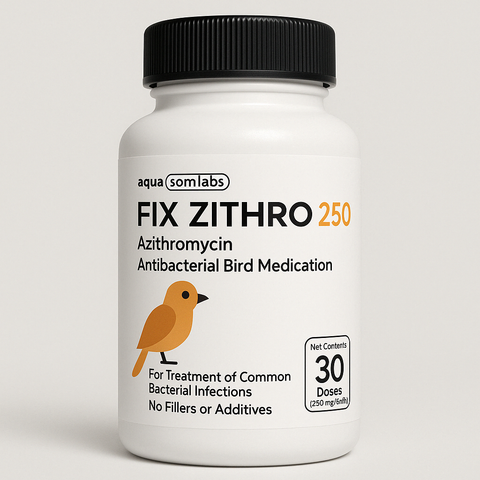








Fish Zithro Azithromycin: Aquarium Azithromycin 250mg Guide
Fish Zithro Azithromycin: Aquarium Azithromycin 250mg Guide
A fish develops a frayed tail.
Another begins breathing rapidly.
A pale patch appears around the mouth of a newly purchased fish.
A goldfish develops an ulcer.
An aquarium keeper searching these symptoms may quickly encounter:
Fish Zithro Azithromycin 250mg.
Fish Zithro is an azithromycin-based antibacterial product for ornamental aquarium fish.
Azithromycin belongs to the:
macrolide family of antibacterial medications.
It is commonly researched by aquarium owners looking at bacterial conditions involving:
- Fins
- Skin
- Mouth
- Gills
- Internal tissues
But choosing an aquarium antibacterial product should never begin with the product name alone.
The first question should be:
Does the fish actually have a bacterial problem?
White patches can be bacterial.
They can also be fungal or water-mold growth.
Rapid breathing can result from bacterial gill disease.
It can also occur with:
- Ammonia
- Nitrite
- Low oxygen
- Parasites
- Chlorine exposure
A damaged fin may have a bacterial infection.
Or it may simply have been bitten by another fish.
This guide therefore explains both sides of Fish Zithro:
the product—and the aquarium-health decisions that should come before choosing it.
Fish Zithro 250mg: Quick Answer
Fish Zithro is an ornamental aquarium antibacterial product containing:
Azithromycin 250 mg per tablet.
Azithromycin is a macrolide-class antibacterial ingredient that interferes with bacterial protein production.
Fish Zithro is commonly researched for bacterial aquarium problems involving:
- Fin and tail deterioration
- Columnaris-type disease
- Bacterial gill disease
- Mouth lesions
- Skin ulcers
- Selected systemic bacterial infections
Azithromycin is antibacterial. It is not a general treatment for Ich, velvet, flukes, worms or true fungal disease.
Explore Fish Antibiotics
Browse our Fish Antibiotics collection and explore aquarium bacterial-care products organized in one convenient place.
EXPLORE PRODUCTS →What Is Fish Zithro?
Fish Zithro is the familiar aquarium product name associated with:
azithromycin.
The current BirdAntibiotic.com Fish Zithro collection contains azithromycin-based products labeled at:
250 mg per tablet.
Current options include:
- Fish Zithro 250 mg — 12 Tablets
- Fish Zithro 250 mg — 30 Tablets
- Aquarium Azithromycin 250 mg — 30 Tablets
Shop Fish Zithro Azithromycin
Compare current BirdAntibiotic.com azithromycin products by brand, tablet count and aquarium labeling.

What Is Azithromycin?
Azithromycin is an antibacterial medication in the macrolide family.
Macrolides work differently from several other familiar aquarium antibiotic classes.
Azithromycin
Primarily interferes with bacterial protein production.
Amoxicillin
A beta-lactam antibacterial that targets bacterial cell-wall formation.
Cephalexin
A cephalosporin that also acts on bacterial cell-wall synthesis.
Doxycycline
A tetracycline-class antibacterial that also interferes with bacterial protein synthesis, but through a different ribosomal target.
Ciprofloxacin
A fluoroquinolone antibacterial that acts primarily on bacterial DNA replication processes.
Why Does Antibiotic Class Matter?
Different bacteria can respond differently to different antibacterial classes.
This is why:
“strong antibiotic”
is not a useful way to choose a fish medication.
A more useful question is:
“Which antibacterial ingredient fits the bacterial organism or disease pattern involved?”
What Is Fish Zithro Commonly Researched For?
Aquarium owners frequently encounter Fish Zithro while researching:
- Columnaris
- Mouth rot
- Fin rot
- Tail rot
- Bacterial gill disease
- Skin ulcers
- Open sores
- Selected bacterial eye problems
- Systemic bacterial infection
These conditions do not all have the same cause.
The symptom pattern, aquarium history and water quality still matter.
Explore Fish Antibiotics
Browse our Fish Antibiotics collection and explore aquarium bacterial-care products organized in one convenient place.
EXPLORE PRODUCTS →Fish Zithro and Columnaris
Columnaris is one of the most important bacterial diseases aquarium owners research alongside fish antibiotics.
It is associated with bacteria in the Flavobacterium group.
Possible signs include:
- Pale white or gray areas
- Mouth erosion
- Saddleback-shaped lesions
- Fin deterioration
- Gill damage
- Excess mucus
- Rapid breathing
- Lethargy
Why Columnaris Is Often Mistaken for Fungus
Some columnaris lesions look:
- White
- Gray
- Cream-colored
- Cotton-like
This can lead aquarium owners to search for a fungal medication first.
But classic columnaris is:
bacterial.
Fish Zithro and Mouth Rot
Bacterial disease around the mouth may produce:
- Pale tissue
- Erosion
- Redness
- Ulceration
- Difficulty feeding
Columnaris is an important differential when mouth lesions appear together with:
- Fin damage
- Skin lesions
- Gill abnormalities

Fish Zithro and Bacterial Gill Disease
Gill disease requires careful interpretation because respiratory signs are highly nonspecific.
A fish with gill problems may show:
- Rapid breathing
- Flared gill covers
- Surface gasping
- Reduced appetite
- Isolation
- Rubbing against objects
But Do Not Assume Rapid Breathing Means Bacteria
Immediately check:
- Ammonia
- Nitrite
- Temperature
- Oxygenation
- Recent water changes
- Possible chlorine or chloramine exposure
Gill parasites can also cause similar respiratory signs.
Several Fish Gasping at Once?
If multiple fish suddenly begin gasping, breathing rapidly or gathering near the surface, check the aquarium environment before assuming every fish simultaneously developed a bacterial infection.
Priority checks include:
- Dissolved oxygen
- Ammonia
- Nitrite
- Temperature
- Filter operation
- Recent chemical exposure
An antibiotic cannot correct an ongoing oxygen shortage or toxic ammonia exposure.
Fish Zithro and Fin Rot
Fin rot is another common Fish Zithro search.
Possible bacterial fin-rot signs include:
- Progressive fraying
- Fin erosion
- Red edges
- Inflammation
- Loss of fin tissue
Rule Out Physical Injury
Torn fins can also result from:
- Aggressive tankmates
- Fin nipping
- Sharp rocks
- Plastic decorations
- Filter intakes
The important clue is progression.
A simple tear may stabilize.
Active bacterial deterioration continues damaging previously healthy tissue.
Fish Zithro and Skin Ulcers
Bacterial skin disease may produce:
- Red sores
- Open ulcers
- Hemorrhage
- Scale loss
- Inflamed wounds
Common aquatic bacterial groups involved in ulcerative disease can include:
- Aeromonas
- Pseudomonas
- Vibrio in marine environments
Fish Zithro and Popeye
Popeye means abnormal protrusion of one or both eyes.
Possible causes include:
- Trauma
- Poor water quality
- Gas supersaturation
- Systemic disease
- Bacterial infection
Azithromycin only becomes relevant when a susceptible bacterial process is involved.
One Eye vs Both Eyes
A single swollen eye can make physical injury more likely.
Both eyes becoming swollen together can raise greater concern for:
- Environmental problems
- Systemic disease
although this is not an absolute diagnostic rule.
Fish Zithro and Septicemia
Systemic bacterial disease can produce:
- Red streaks
- Hemorrhage
- Skin ulcers
- Swelling
- Popeye
- Appetite loss
- Lethargy
Fish with rapidly progressing systemic signs deserve more than trial-and-error medication.
When possible, bacterial culture and susceptibility testing can help identify the organism and compare antibacterial options.
What Fish Zithro Does NOT Treat
This section is essential because many aquarium diseases look similar.
Ich
Ich is caused by the protozoan parasite Ichthyophthirius multifiliis.
Azithromycin is not an Ich medication.
Velvet
Velvet disease is parasitic.
Gill Flukes
Flukes are parasitic flatworms.
Internal Worms
Azithromycin is not a dewormer.
True Fungal or Water-Mold Disease
Azithromycin is antibacterial rather than antifungal.
Ammonia Poisoning
Medication does not neutralize toxic ammonia.
Nitrite Poisoning
Water quality must be corrected.
Low Oxygen
Increase aeration and determine why oxygen has fallen.
How Can You Tell Whether a Fish Problem May Be Bacterial?
No visual sign proves bacterial disease by itself.
But a bacterial problem becomes more plausible when the fish develops combinations such as:
- Progressive ulcers
- Red streaking
- Hemorrhage
- Fin erosion
- Mouth tissue destruction
- Gill lesions
- Inflamed wounds
- Progressive tissue loss
Test the Aquarium Before Choosing an Antibiotic
Many bacterial outbreaks are encouraged by environmental stress.
Check:
- Ammonia
- Nitrite
- Nitrate
- pH
- Temperature
- Salinity when applicable
- Oxygenation
Why Water Quality Matters So Much
Opportunistic bacterial disease commonly becomes more severe when fish are already stressed by:
- Poor water quality
- High organic waste
- Handling
- Shipping
- Overcrowding
- Large temperature changes
- Low oxygen
- Physical trauma
Correcting these conditions improves the entire aquarium rather than treating only one symptom.
Explore Fish Antibiotics
Browse our Fish Antibiotics collection and explore aquarium bacterial-care products organized in one convenient place.
EXPLORE PRODUCTS →Should Fish Zithro Be Used in a Hospital Tank?
A hospital or quarantine tank is often the cleanest way to organize antibacterial treatment.
Advantages include:
- Known water volume
- Close observation
- Reduced medication exposure for healthy tankmates
- Less risk to the display aquarium's biological filtration
- Easy monitoring of appetite and waste
- Easy removal of chemical filtration when required
Basic Hospital Tank Setup
Depending on species requirements, a treatment tank may include:
- Conditioned water
- Appropriate heater
- Air pump and air stone
- Simple biological filtration
- Minimal decorations
- Easy-to-clean surfaces
Why Strong Aeration Matters
A fish being treated for:
- Gill disease
- Columnaris
- Septicemia
- Advanced infection
may already be physiologically stressed.
Maintain good oxygenation throughout the treatment environment.
Activated Carbon and Fish Zithro
Activated carbon can remove many dissolved aquarium medications.
Always review the specific Fish Zithro product label regarding:
- Activated carbon
- Chemical filtration
- Water changes
- UV equipment
before starting treatment.
Monitor Ammonia and Nitrite During Antibiotic Treatment
Antibacterial medications can affect aquarium microbial communities.
This makes water testing particularly important during treatment.
Monitor:
- Ammonia
- Nitrite
rather than assuming biological filtration will remain unchanged.
Fish Zithro 250mg Tablet Format
Each current Fish Zithro tablet contains:
250 mg azithromycin.
The strength printed on the tablet package describes:
how much active ingredient each tablet contains.
It should not be interpreted as one universal treatment amount for every:
- Tank size
- Fish species
- Disease
- Treatment route
Use the aquarium product's own label instructions rather than converting human or other-animal directions into an aquarium protocol.

Current Fish Zithro Products at BirdAntibiotic.com
Fish Zithro Azithromycin 250mg — 12 Tablets
A smaller-count Fish Zithro option for aquarium keepers who want:
- Azithromycin 250 mg tablets
- A compact aquarium medication package
- Quarantine-tank preparedness
View Fish Zithro 250mg — 12 Tablets →
Fish Zithro Azithromycin 250mg — 30 Tablets
The larger Fish Zithro package provides:
- Azithromycin 250 mg per tablet
- 30-tablet bottle
- Ornamental aquarium antibacterial product format
View Fish Zithro 250mg — 30 Tablets →
Aquarium Azithromycin 250mg — 30 Tablets
BirdAntibiotic.com also carries an Aquarium Azithromycin product with:
- Azithromycin 250 mg
- 30 tablets
- Ornamental aquarium labeling
View Aquarium Azithromycin 250mg →
Fish Zithro 12 Tablets vs 30 Tablets
| Product | Active Ingredient | Strength | Count |
|---|---|---|---|
| Fish Zithro | Azithromycin | 250 mg | 12 Tablets |
| Fish Zithro | Azithromycin | 250 mg | 30 Tablets |
| Aquarium Azithromycin | Azithromycin | 250 mg | 30 Tablets |
Fish Zithro vs Fish Doxy
Fish Doxy contains doxycycline.
Both azithromycin and doxycycline interfere with bacterial protein production, but they belong to different antibacterial classes and act at different bacterial ribosomal targets.
Do not treat them as interchangeable simply because both may appear in searches for bacterial fish disease.
Fish Zithro vs Fish Flox
Fish Flox contains ciprofloxacin.
Ciprofloxacin belongs to a different antibacterial class and works through bacterial DNA-related mechanisms.
Aquarium keepers commonly compare Fish Flox with Fish Zithro when researching:
- Persistent bacterial infections
- Ulcers
- Fin deterioration
- Systemic bacterial disease
Fish Zithro vs Fish Mox
Fish Mox contains amoxicillin.
Amoxicillin targets bacterial cell-wall formation.
Azithromycin and amoxicillin therefore differ substantially in:
- Antibacterial class
- Mechanism
- Bacterial susceptibility patterns
Fish Zithro vs Fish Flex
Fish Flex contains cephalexin.
Cephalexin is a cephalosporin antibacterial that acts on bacterial cell-wall formation.
Fish Flex is commonly researched for:
- External bacterial infections
- Fin damage
- Skin lesions
- Wound-related bacterial problems
Fish Zithro vs Fish Sulfa
Fish Sulfa contains sulfamethoxazole and trimethoprim.
This is a dual-active antibacterial combination and differs mechanistically from azithromycin.
Fish Antibiotics Comparison Table
| Product Family | Active Ingredient | Antibacterial Class | Common Aquarium Search Context |
|---|---|---|---|
| Fish Zithro | Azithromycin | Macrolide | Columnaris-type disease, gill disease, fin/skin bacterial concerns |
| Fish Doxy | Doxycycline | Tetracycline | Fin, gill and broader susceptible bacterial conditions |
| Fish Flox | Ciprofloxacin | Fluoroquinolone | Persistent ulcerative and systemic bacterial concerns |
| Fish Mox | Amoxicillin | Penicillin / beta-lactam | Common aquarium bacterial infection searches |
| Fish Flex | Cephalexin | Cephalosporin | External fin, skin and wound bacterial concerns |
| Fish Sulfa | SMZ / TMP | Potentiated sulfonamide | Broad bacterial-disease comparison searches |
Explore Fish Antibiotics
Browse our Fish Antibiotics collection and explore aquarium bacterial-care products organized in one convenient place.
EXPLORE PRODUCTS →Is Fish Zithro Better Than Other Fish Antibiotics?
There is no universal:
“best fish antibiotic.”
The best product depends on factors such as:
- The bacterial organism involved
- Location of infection
- Disease severity
- Previous medication
- Bacterial susceptibility
- Fish species
- Treatment route
A product comparison should therefore focus on:
active ingredient and bacterial fit—not which bottle sounds strongest.
Should You Combine Fish Zithro With Another Antibiotic?
Do not automatically combine several antibacterial products.
Adding multiple antibiotics without a clear reason can:
- Make treatment harder to evaluate
- Increase stress on the aquarium
- Complicate water-quality management
- Increase pressure on beneficial bacteria
If an appropriate treatment fails, reassess:
- The diagnosis
- Water quality
- Medication compatibility
- Whether the disease is actually bacterial
What If Fish Zithro Does Not Work?
Several explanations are possible.
The Disease Was Not Bacterial
Ich, velvet, flukes and fungal disease require different treatment categories.
The Bacteria Were Not Susceptible
Not every bacterial organism responds to every antibacterial ingredient.
The Aquarium Environment Was Still Poor
Medication cannot compensate for continuing:
- Ammonia exposure
- Low oxygen
- Severe overcrowding
- Repeated injury
The Diagnosis Was Wrong
Columnaris, fungus, excess mucus and physical injuries can resemble one another visually.
The Fish Was Already Severely Ill
Advanced systemic disease may have a poorer prognosis regardless of medication choice.
How to Monitor Fish During a Bacterial Treatment Program
Track the entire disease curve rather than only one lesion.
Record:
- Appetite
- Activity
- Breathing rate
- Fin condition
- Ulcer size
- Mouth lesions
- Eye swelling
- Water quality
Photograph External Lesions
Take daily photographs under similar lighting.
This makes it easier to determine whether:
- An ulcer is shrinking
- Fin erosion has stopped
- Columnaris-like lesions are spreading
- Inflammation is decreasing
Signs a Bacterial Fish Problem May Be Improving
Positive changes can include:
- No new lesions
- Fin deterioration stops
- Redness decreases
- Ulcers begin closing
- Appetite improves
- Normal activity returns
- Breathing becomes easier
Signs the Fish Is Getting Worse
Reassess quickly when:
- Lesions spread
- Ulcers deepen
- Fish stop eating
- Breathing becomes progressively faster
- New fish become sick
- Swelling or popeye develops
- Fish lose balance
- Mortality begins increasing
Freshwater Fish and Fish Zithro
Azithromycin products are commonly researched for ornamental freshwater species including:
- Goldfish
- Koi
- Bettas
- Guppies
- Tetras
- Barbs
- Cichlids
- Mollies
Species sensitivity and disease cause still matter.
Saltwater Fish and Fish Zithro
Aquarium azithromycin is also searched in marine-fish care.
However, saltwater systems introduce additional concerns including:
- Corals
- Invertebrates
- Live rock
- Biological filtration
A separate hospital aquarium is often much easier to manage than medicating an entire reef display.
Explore Fish Antibiotics
Browse our Fish Antibiotics collection and explore aquarium bacterial-care products organized in one convenient place.
EXPLORE PRODUCTS →Fish Zithro FAQ
What is Fish Zithro?
Fish Zithro is an ornamental aquarium antibacterial product containing azithromycin.
How much azithromycin is in Fish Zithro?
The current BirdAntibiotic.com Fish Zithro products contain 250 mg of azithromycin per tablet.
How many tablets are available?
Current BirdAntibiotic.com options include 12- and 30-tablet Fish Zithro packages plus a 30-tablet Aquarium Azithromycin product.
What class of antibiotic is azithromycin?
Azithromycin belongs to the macrolide family.
How does azithromycin work?
It interferes with bacterial protein production, limiting the ability of susceptible bacteria to grow.
Is Fish Zithro used for columnaris?
Fish Zithro is commonly researched for columnaris-type bacterial disease. Correct identification matters because columnaris can resemble fungal growth.
Can Fish Zithro treat mouth rot?
It may be considered when mouth damage is associated with a susceptible bacterial condition. Mouth damage can also have other causes.
Can Fish Zithro be used for bacterial gill disease?
Azithromycin is researched for bacterial gill conditions, but rapid breathing can also result from ammonia, nitrite, low oxygen or parasites.
Can Fish Zithro treat fin rot?
It is commonly researched for bacterial fin and tail deterioration. Physical injury and fin nipping should also be ruled out.
Can Fish Zithro treat ulcers?
Fish Zithro may be considered in bacterial ulcer disease when the organism is susceptible to azithromycin.
Can Fish Zithro treat popeye?
It may be relevant if popeye is associated with bacterial infection. Injury and water-quality problems are other important causes.
Does Fish Zithro treat Ich?
No. Ich is caused by a protozoan parasite.
Does Fish Zithro treat velvet?
No. Velvet is a parasitic disease.
Does Fish Zithro treat fish fungus?
No. Azithromycin is antibacterial rather than antifungal.
Does Fish Zithro treat worms?
No. It is not a dewormer.
Does Fish Zithro treat flukes?
No. Gill and skin flukes require antiparasitic management.
Can Fish Zithro correct ammonia poisoning?
No. Ammonia exposure requires immediate correction of water quality.
Why should water quality be tested first?
Environmental stress can cause disease-like symptoms and predispose fish to opportunistic bacterial infections.
Should Fish Zithro be used in a hospital tank?
A hospital tank often makes treatment, observation and water-quality management easier while limiting exposure of healthy tankmates and the display biofilter.
Should activated carbon be removed during treatment?
Activated carbon can remove many dissolved medications. Follow the exact product label regarding chemical filtration.
Can antibiotics affect the aquarium biofilter?
They can affect microbial communities, so ammonia and nitrite should be monitored during antibacterial treatment.
Can Fish Zithro be used in freshwater aquariums?
Use should follow the specific ornamental aquarium product label and species requirements.
Can Fish Zithro be used in saltwater aquariums?
Some azithromycin aquarium products are positioned for freshwater and saltwater ornamental systems according to their labeling, but treatment in a separate hospital system may be easier for reef aquariums.
What is the difference between Fish Zithro and Fish Doxy?
Fish Zithro contains azithromycin, a macrolide. Fish Doxy contains doxycycline, a tetracycline-class antibacterial.
What is the difference between Fish Zithro and Fish Flox?
Fish Zithro contains azithromycin. Fish Flox contains ciprofloxacin, a fluoroquinolone antibacterial.
What is the difference between Fish Zithro and Fish Mox?
Fish Zithro contains azithromycin. Fish Mox contains amoxicillin, a beta-lactam antibacterial.
What is the difference between Fish Zithro and Fish Flex?
Fish Zithro contains azithromycin. Fish Flex contains cephalexin, a cephalosporin antibacterial.
Can several fish antibiotics be used together?
Do not automatically combine antibacterial products. Compatibility and the bacterial condition involved should guide product selection.
What symptoms suggest a bacterial fish infection?
Progressive fin erosion, ulcers, hemorrhage, inflamed wounds, mouth damage and some gill lesions can occur with bacterial disease, although none of these signs is diagnostic by itself.
How do I know Fish Zithro is working?
Look for stabilization of lesions, improved appetite, reduced inflammation, easier breathing and return of normal activity.
What if my fish gets worse?
Reassess the diagnosis, water quality and treatment plan. Rapidly progressing disease, widespread lesions, severe respiratory distress or increasing mortality deserves qualified aquatic-health evaluation.
The Professional Fish Zithro Checklist
1. Confirm that the problem appears bacterial rather than parasitic, fungal or environmental.
2. Test ammonia and nitrite.
3. Check temperature, pH and oxygenation.
4. Identify whether the disease involves fins, skin, mouth, gills or internal tissues.
5. Use a hospital tank when practical.
6. Confirm the Fish Zithro active ingredient and strength.
7. Follow the aquarium product label rather than transferring directions from another species.
8. Review activated-carbon and filtration instructions.
9. Monitor ammonia and nitrite throughout treatment.
10. Photograph lesions and track appetite, breathing and behavior.
Shop Fish Zithro Azithromycin 250mg
Compare Fish Zithro and Aquarium Azithromycin 250 mg products currently available from BirdAntibiotic.com.
Explore Our Fish Antibiotics
Browse the complete Fish Antibiotics collection and explore aquarium bacterial-care products in one convenient place.
EXPLORE PRODUCTS →The Most Important Fish Zithro Rule
Choose the medication for the disease—not the disease for the medication.
Azithromycin is antibacterial.
That makes it relevant when a susceptible bacterial condition is involved.
It does not make it the answer to every:
- White patch
- Fast-breathing fish
- Damaged fin
- Swollen eye
- Fish sitting at the bottom
Those symptoms can have many different causes.
The strongest aquarium-care plan combines correct identification, excellent water quality, a stable hospital tank when appropriate, careful label-based product selection and continuous monitoring of the fish's response.
Recommended Products
Products selected to complement this guide.


Shop Related Products
Explore the products featured for this topic.


