 Help & Contact
 Track order












Bird Zithro Azithromycin: Azithromycin for Pet Birds & Pigeons
Bird Zithro Azithromycin: Azithromycin for Pet Birds & Pigeons
Your pigeon has started sneezing.
Your parrot has nasal discharge.
A bird that was normally energetic is suddenly quieter and less interested in food.
Or perhaps you are comparing several avian antibiotics and wondering:
What is Bird Zithro—and when is azithromycin used in birds?
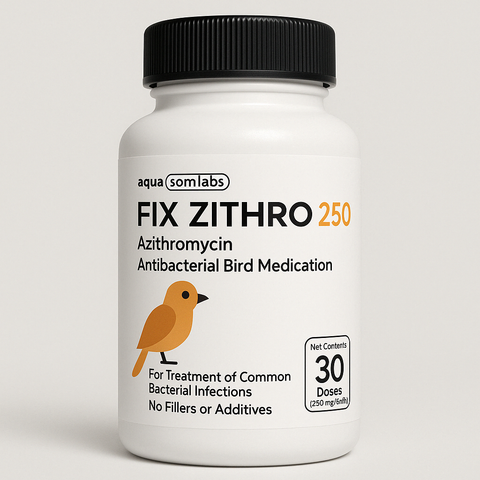
Bird Zithro 250 is an azithromycin-based avian antibacterial product currently available from BirdAntibiotic.com.
Each tablet contains:
Azithromycin 250 mg
and each bottle contains:
30 tablets.
Azithromycin belongs to the macrolide family of antibacterial medications and is used in avian medicine for selected susceptible bacterial infections.
It is especially relevant to searches involving:
- Bird respiratory infections
- Pigeon respiratory disease
- Selected systemic bacterial infections
- Avian chlamydial disease
- Bird antibiotic comparisons
But there is one important rule:
respiratory symptoms alone do not prove that a bird has a bacterial infection.
Sneezing, wheezing, nasal discharge and breathing changes can also occur with:
- Fungal disease
- Air-sac mites
- Other parasites
- Viruses
- Environmental irritants
- Nutritional problems
That is why the strongest Bird Zithro care plan begins with understanding the bird's complete symptom pattern.
Bird Zithro 250: Quick Product Profile
| Product | Bird Zithro 250 |
| Active Ingredient | Azithromycin |
| Strength | 250 mg per tablet |
| Count | 30 tablets |
| Form | Tablets |
| Product Category | Avian antibacterial medication |
| Suitable Product Category For | Pet birds, pigeons and other companion avian species |
Important: 250 mg is the strength of each tablet. It is not a universal dose for every bird. Bird size, species, condition and treatment plan all matter.
Explore Bird Antibiotics
Browse our Best Bird Antibiotics collection and explore bird care products organized in one convenient place.
EXPLORE PRODUCTS →What Is Azithromycin?
Azithromycin is an antibacterial medication within the:
macrolide family.
More specifically, it is commonly classified as an:
azalide antimicrobial.
Azithromycin works by interfering with bacterial protein production.
Susceptible bacteria need to manufacture proteins in order to:
- Grow
- Multiply
- Maintain important cellular functions
Azithromycin binds to bacterial ribosomal structures and disrupts that process.
What Makes Azithromycin Different From Some Other Bird Antibiotics?
Azithromycin is known for:
- Good distribution into many tissues
- Relatively prolonged tissue activity
- Activity against selected susceptible bacterial organisms
- Use in several avian bacterial-disease situations
But no antibiotic covers every bacterial organism.
That is why azithromycin should be considered:
one useful antibacterial option—not a universal bird medicine.
Explore Bird Antibiotics
Browse our Best Bird Antibiotics collection and explore bird care products organized in one convenient place.
EXPLORE PRODUCTS →What Is Bird Zithro 250?
Bird Zithro 250 is the azithromycin bird-antibiotic product currently available from BirdAntibiotic.com.
Current product specifications include:
- Azithromycin 250 mg per tablet
- 30 tablets per bottle
- Tablet format
- No unnecessary fillers, dyes or additives according to the current product listing
Shop Bird Zithro 250
Bird Zithro 250 provides azithromycin 250 mg in a convenient 30-tablet avian antibacterial format.
What Is Bird Zithro Commonly Researched For?
Bird owners commonly search Bird Zithro and azithromycin when birds develop signs associated with bacterial respiratory or systemic disease.
Common searches include:
- Azithromycin for bird respiratory infection
- Azithromycin for pigeons
- Bird Zithro for pigeons
- Azithromycin for parrots
- Pigeon respiratory antibiotic
- Bird antibiotic for sneezing
- Bird antibiotic for nasal discharge
Respiratory Signs That Bird Owners Commonly Notice
Bacterial respiratory disease may be associated with signs such as:
- Repeated sneezing
- Nasal discharge
- Wet nostrils
- Eye discharge
- Swollen sinus areas
- Reduced voice
- Wheezing
- Tail bobbing
- Reduced appetite
- Reduced activity
Not Every Sneezing Bird Needs Azithromycin
This distinction is critical.
Sneezing can occur because of:
- Dust
- Dry air
- Seed hull particles
- Environmental irritation
- Respiratory infection
An occasional isolated sneeze is very different from:
persistent sneezing plus nasal discharge, eye changes, weight loss or respiratory effort.

Bird Zithro and Bacterial Respiratory Disease
When respiratory disease is caused by a susceptible bacterial organism, azithromycin may be considered as part of the antibacterial treatment plan.
Potential bacterial respiratory problems can involve:
- Upper respiratory structures
- Sinuses
- Trachea
- Lungs
- Air sacs
Upper Respiratory Signs
These may include:
- Sneezing
- Nasal discharge
- Blocked nares
- Swollen sinus area
- Eye discharge
Lower Respiratory Signs
Lower respiratory involvement may produce more serious signs such as:
- Tail bobbing
- Labored breathing
- Reduced exercise tolerance
- Weakness
- Open-mouth breathing
Respiratory Emergency Signs
A bird showing:
- Continuous open-mouth breathing
- Severe respiratory effort
- Pronounced tail bobbing
- Collapse
- Inability to perch
- Profound weakness
requires prompt avian veterinary assessment.
Do not repeatedly chase, restrain or force oral medication into a bird that is already struggling to breathe.
Azithromycin and Avian Chlamydial Disease
One avian bacterial disease frequently discussed in relation to macrolide antibiotics is:
avian chlamydiosis.
It is caused by:
Chlamydia psittaci.
The condition may also be described as:
- Psittacosis
- Ornithosis
- Parrot fever
Signs Associated With Avian Chlamydiosis
Depending on species and severity, possible signs can include:
- Reduced appetite
- Weight loss
- Fluffed feathers
- Lethargy
- Respiratory signs
- Nasal discharge
- Eye discharge
- Abnormal droppings
Some infected birds can show relatively mild signs, which is one reason diagnostic testing can be important.
Azithromycin Has Documented Avian Use
Azithromycin is included among antimicrobial agents used in pet-bird medicine.
Veterinary literature has also documented azithromycin use in:
- Cockatiels
- Pigeons
- Other selected avian species
However, birds do not all process medications identically.
Species, body weight and bacterial cause matter.
Explore Bird Antibiotics
Browse our Best Bird Antibiotics collection and explore bird care products organized in one convenient place.
EXPLORE PRODUCTS →Bird Zithro for Pigeons
Pigeon keepers frequently research azithromycin because respiratory disease can quickly affect:
- Flight
- Training
- Condition
- Appetite
- Loft performance
Pigeon Respiratory Signs
Watch for:
- Sneezing
- Wet eyes
- Nasal discharge
- Swollen sinuses
- Reduced flying performance
- Noisy breathing
- Poor appetite
Explore Pigeon Respiratory Care
BirdAntibiotic.com also has a dedicated collection for pigeon respiratory products.
Shop Pigeon Respiratory Products →
Bird Zithro for Parrots
Parrots can develop respiratory disease from several different categories of causes.
These include:
- Bacteria
- Chlamydial organisms
- Fungi
- Viruses
- Nutritional problems
- Environmental irritants
Azithromycin belongs specifically to the:
antibacterial treatment category.
Bird Zithro for Cockatiels
Cockatiels are particularly relevant in discussions of avian chlamydial disease.
Possible warning signs include:
- Reduced appetite
- Fluffing
- Eye discharge
- Nasal discharge
- Respiratory changes
- Weight loss
Azithromycin has documented veterinary use in selected chlamydial treatment protocols for cockatiels.
Bird Zithro for Budgies
Budgies can deteriorate quickly because of their small body size.
If respiratory disease is suspected, monitor:
- Breathing
- Tail movement
- Body weight
- Food intake
- Droppings
- Activity
A 250 mg tablet is far larger than the amount a small bird would typically receive in an individualized veterinary plan, which is why accurate calculation and formulation matter.
Bird Zithro for Canaries and Finches
Canaries and finches may show subtle respiratory signs before becoming obviously ill.
Watch for:
- Reduced song
- Persistent fluffing
- Clicking
- Sneezing
- Tail bobbing
- Reduced appetite
Important Differential: Air-Sac Mites
Canaries and some finches can develop respiratory mite infestations.
Possible signs include:
- Clicking
- Open-mouth breathing
- Sneezing
- Reduced song
- Respiratory distress
Azithromycin does not replace antiparasitic treatment when respiratory mites are the cause.
Important Differential: Aspergillosis
Fungal respiratory disease can create:
- Breathing difficulty
- Voice changes
- Exercise intolerance
- Weight loss
- Lethargy
A fungal infection requires:
antifungal therapy—not an antibacterial drug such as azithromycin.
Important Differential: Environmental Irritation
Respiratory signs can also occur after exposure to:
- Smoke
- Aerosols
- Dust
- Strong fragrance
- Cooking fumes
- Other airborne irritants
Removing the exposure is essential.
Bird Zithro vs Doxycycline
Azithromycin and doxycycline belong to different antimicrobial classes.
| Feature | Bird Zithro | Doxycycline |
|---|---|---|
| Active Ingredient | Azithromycin | Doxycycline |
| Drug Family | Macrolide / azalide | Tetracycline |
| Common Search Intent | Respiratory and selected systemic bacterial disease | Respiratory disease, ornithosis and several bacterial conditions |
| BirdAntibiotic Format | 250 mg tablets | Several powder and other avian formulations |
Explore Doxycycline for Birds
BirdAntibiotic.com carries multiple doxycycline-based avian products.
Bird Zithro vs Tylosin
Tylosin is another macrolide-class antibiotic commonly associated with bird respiratory-care searches.
But azithromycin and tylosin are not identical products.
They have different:
- Pharmacologic properties
- Bacterial susceptibility patterns
- Product formats
- Veterinary uses
Tylosin Is Commonly Researched for CRD-Type Respiratory Problems
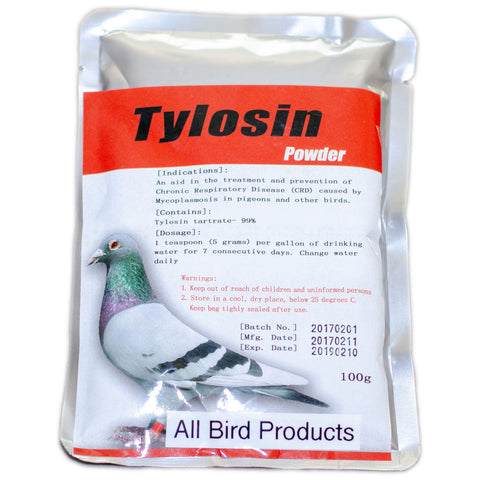
BirdAntibiotic.com currently carries Tylosin Powder for birds and pigeons.
Bird Zithro vs Doxy-Tyl
Doxy-Tyl combines two different antibacterial ingredients:
- Doxycycline
- Tylosin
Bird Zithro contains:
Azithromycin only.
The best choice should be based on the suspected bacterial disease rather than selecting whichever product contains more ingredients.
When Bird Zithro Is NOT the Right Category
Azithromycin should not be expected to treat:
- Air-sac mites
- Scaly-face mites
- Roundworms
- Coccidia
- Trichomonas canker
- Fungal infections
- Viral infections
- PTFE or smoke exposure
- Heat stress
- Trauma
Explore Bird Antibiotics
Browse our Best Bird Antibiotics collection and explore bird care products organized in one convenient place.
EXPLORE PRODUCTS →Why Diagnosis Matters
Several diseases can produce the same visible respiratory signs.
For example:
Sneezing + nasal discharge
could be associated with bacterial disease.
But:
clicking + respiratory distress in a canary
may raise concern for air-sac mites.
And:
voice change + progressive breathing difficulty
may require evaluation for fungal disease.
How Avian Bacterial Infections Are Evaluated
Depending on the bird and signs, veterinary evaluation may include:
- Physical examination
- Body weight
- Choanal or respiratory samples
- Cytology
- Gram stain
- Bacterial culture
- Susceptibility testing
- Imaging
- Specific infectious-disease testing
Culture and susceptibility testing are especially useful in:
- Severe disease
- Recurring infections
- Treatment failures
Why Exact Bird Weight Matters
A budgie, cockatiel, pigeon and macaw can differ enormously in body mass.
This makes:
“one tablet per bird”
an inappropriate general rule.
The 250 mg printed on the Bird Zithro label is:
tablet strength.
It does not describe an automatic dose for every bird.
Bird Zithro Product Advantages
The current BirdAntibiotic.com Bird Zithro product offers:
- Clearly labeled active ingredient
- 250 mg tablet strength
- 30-tablet bottle
- Compact tablet format
- No unnecessary fillers or dyes according to the current listing
- Easy identification in an organized bird-care cabinet
Tablet Format vs Powder Format
Some bird owners prefer tablets because they provide:
- Clearly defined unit strength
- Compact storage
- Easy product identification
Others prefer powder products for:
- Aviary management
- Multiple birds
- Water-based preparation
The correct format depends on the treatment plan.
Can Bird Zithro Be Crushed?
The current BirdAntibiotic.com product listing notes that Bird Zithro may be administered orally in tablet form or prepared according to an appropriate avian treatment plan.
However, accurate measurement remains essential.
Do not estimate an individual bird's amount by visually breaking a tablet without knowing the required dose.
Can Bird Zithro Be Added to Drinking Water?
Water-based medication can be used in some avian treatment programs, but several variables affect actual intake:
- Bird size
- Species
- Water consumption
- Temperature
- Illness severity
- Whether the bird is still drinking normally
A bird that is severely ill may drink less than expected.
This is why drinking-water medication should follow a defined treatment plan rather than guessing from tablet strength.
Bird Zithro and Appetite Loss
Respiratory and systemic bacterial disease can reduce appetite.
A bird on antibacterial treatment should therefore also be monitored for:
- Food intake
- Body weight
- Hydration
- Dropping changes
- Activity
Guardian Angel — Recovery Support
Guardian Angel is one of the most relevant supportive BirdAntibiotic.com products to pair with the recovery section of this article.
It contains a combination of:
- Electrolytes
- Energy-support nutrients
- Vitamins
- Probiotics
- Prebiotics
for birds experiencing illness, stress or recovery.
Support Recovery During Illness
Guardian Angel provides nutritional, electrolyte and digestive support for sick, stressed or recovering birds.
Bio Plus — Probiotic Support After Antibiotic Treatment
Bio Plus is a probiotic and digestive-support product relevant to birds recovering after an appropriate antimicrobial program.
Its role is supportive:
- Digestive balance
- Recovery support
- Stress support
It does not replace treatment of the bacterial infection itself.
Should Probiotics Be Given at the Same Time as an Antibiotic?
Timing depends on the specific products being used.
Some owners prefer to separate probiotic administration from antibacterial medication so the antibiotic does not immediately reduce the probiotic organisms.
Follow the applicable product instructions or avian treatment plan.
How Do You Know a Bird Is Improving?
Positive signs may include:
- Improved appetite
- More activity
- Reduced nasal discharge
- Cleaner eyes
- Less sneezing
- Improved breathing
- Return of normal vocalization
- Stable or increasing body weight
How Do You Know Treatment Needs Reassessment?
Reassess when:
- Respiratory effort increases
- Open-mouth breathing develops
- The bird stops eating
- Weight continues falling
- Eye or nasal discharge worsens
- The bird becomes weak
- The bird begins sitting on the cage floor
- Symptoms return after apparent improvement
Frequently Asked Questions About Bird Zithro & Azithromycin
What is Bird Zithro?
Bird Zithro is an avian antibacterial product containing azithromycin.
What is the strength of Bird Zithro?
The current BirdAntibiotic.com Bird Zithro product contains 250 mg of azithromycin per tablet.
How many tablets are in Bird Zithro?
The current bottle contains 30 tablets.
What type of antibiotic is azithromycin?
Azithromycin belongs to the macrolide family and is commonly described as an azalide antimicrobial.
What does azithromycin do?
It interferes with bacterial protein production, limiting the growth of susceptible bacterial organisms.
Is Bird Zithro used for bird respiratory infections?
Azithromycin may be used for selected susceptible bacterial respiratory infections in birds.
Can Bird Zithro be used for pigeons?
The current Bird Zithro product is marketed for pigeons and other companion birds.
Can Bird Zithro be used for parrots?
Azithromycin is used in avian medicine, including selected infections in parrots and other pet birds, when appropriate to the bacterial condition.
Can Bird Zithro be used for cockatiels?
Azithromycin has documented veterinary use in cockatiels, including selected chlamydial treatment protocols.
Can Bird Zithro be used for budgies?
Azithromycin is an avian antimicrobial, but very small birds require particularly careful weight-based calculation.
Can azithromycin treat bird sneezing?
Only when the sneezing is associated with a susceptible bacterial condition. Dust, mites, fungal disease and environmental irritation require different management.
Can Bird Zithro treat wheezing?
Wheezing is a symptom rather than a diagnosis. Azithromycin may be relevant to susceptible bacterial disease but not fungal, parasitic or environmental causes.
Can azithromycin treat air-sac mites?
No. Air-sac mites are parasites and require an appropriate antiparasitic treatment.
Can azithromycin treat Aspergillus?
No. Aspergillosis is a fungal disease and requires antifungal treatment.
Can azithromycin treat viruses?
No. Antibiotics do not directly treat viral infections.
What is avian chlamydiosis?
Avian chlamydiosis is a bacterial disease caused by Chlamydia psittaci. It may cause respiratory, systemic and digestive signs depending on the bird.
Is azithromycin used for Chlamydia in birds?
Azithromycin has documented avian use against selected chlamydial infections, including published use in cockatiels.
What is ornithosis in pigeons?
Ornithosis is a term commonly used for avian chlamydial disease, which can affect respiratory health and general condition.
What is the difference between Bird Zithro and doxycycline?
Bird Zithro contains azithromycin, a macrolide/azalide antibiotic. Doxycycline is a tetracycline-class antibiotic.
What is the difference between Bird Zithro and tylosin?
Both are related to the macrolide antibacterial category, but they are different active ingredients with different veterinary-use patterns and susceptibility profiles.
Is Bird Zithro stronger than doxycycline?
“Stronger” is not the useful comparison. The better choice depends on the bacterial organism, infection site, species and susceptibility.
Is Bird Zithro stronger than tylosin?
They are different antibiotics. One is not universally stronger than the other for every avian infection.
Does Bird Zithro come in powder?
The current BirdAntibiotic.com Bird Zithro 250 product is supplied as tablets.
Can Bird Zithro tablets be divided?
Tablet manipulation should follow an accurately calculated treatment plan because the required amount varies greatly among bird species and weights.
Is 250 mg a dose for one bird?
No. 250 mg identifies the strength of each Bird Zithro tablet. It is not a universal dose for an individual bird.
Why does bird weight matter with azithromycin?
Medication requirements are commonly calculated relative to body weight, and a small finch or budgie differs dramatically from a pigeon or macaw.
What should I monitor during treatment?
Monitor appetite, body weight, droppings, respiratory effort, activity, nasal or eye discharge and overall condition.
Can probiotics be used after Bird Zithro?
Probiotic support such as Bio Plus may be useful during digestive recovery after an appropriate antibiotic program.
What supportive product can be used during recovery?
Guardian Angel provides vitamins, electrolytes, energy and digestive-support components for sick, stressed and recovering birds.
When is bird respiratory disease an emergency?
Continuous open-mouth breathing, marked respiratory effort, collapse, profound weakness and inability to perch require prompt veterinary care.
Where can I buy Bird Zithro 250?
Bird Zithro 250 is currently available from BirdAntibiotic.com in a 30-tablet bottle containing 250 mg of azithromycin per tablet.
Explore Bird Antibiotics
Browse our Best Bird Antibiotics collection and explore bird care products organized in one convenient place.
EXPLORE PRODUCTS →Bird Zithro 250: Professional Product Summary
Active Ingredient: Azithromycin
Strength: 250 mg per tablet
Pack Size: 30 tablets
Form: Tablet
Product Category: Avian antibacterial medication
Common Search Use: Bird respiratory and systemic bacterial-care programs
Suitable Product Category For: Pet birds, pigeons, parrots and other companion avian species
Shop Bird Zithro 250
Bird Zithro 250 provides clearly labeled azithromycin 250 mg tablets in a 30-tablet bottle for organized avian bacterial-care programs.
Explore Our Best Bird Antibiotics
Browse the complete Bird Antibiotics collection and explore available bird care products in one convenient place.
EXPLORE PRODUCTS →The Most Important Bird Zithro Rule
Do not choose an antibiotic from one symptom alone.
A sneezing bird may have:
- Bacterial disease
- Dust irritation
- Fungal disease
- Parasites
A clicking canary may have:
air-sac mites.
A bird with progressive voice change and respiratory difficulty may require evaluation for:
fungal respiratory disease.
And a bird with a susceptible bacterial respiratory infection may require:
an appropriate antibacterial treatment such as azithromycin, doxycycline, tylosin or another agent selected for that bacterial problem.
The strongest avian-care strategy combines correct identification of the disease, accurate bird weight, appropriate antibacterial selection, monitoring of response and supportive recovery care.
Recommended Products
Products selected to complement this guide.


Shop Related Products
Explore the products featured for this topic.


