 Help & Contact
 Track order













Bird Tail Bobbing: Normal Behavior or Respiratory Warning Sign?
Bird Tail Bobbing: Normal Behavior or Respiratory Warning Sign?
You are watching your bird sitting quietly on a perch.
Then you notice something.
Every time the bird breathes, the tail moves:
up.
down.
up.
down.
The movement seems synchronized with every breath.
For bird owners, this raises an important question:
Is tail bobbing normal—or is my bird having trouble breathing?
Small changes in body movement can be difficult to interpret because birds naturally move their tails during:
- Balancing
- Defecating
- Excitement
- Landing
- Post-exercise recovery
But those movements are different from:
pronounced rhythmic tail bobbing that follows every breath while the bird is resting.
That pattern can indicate that the bird is using additional muscles to breathe.
And when tail bobbing occurs together with:
- Open-mouth breathing
- Wheezing
- Clicking
- Nasal discharge
- Eye discharge
- Weakness
- Reduced appetite
the concern becomes substantially greater.
Bird Tail Bobbing: Quick Answer
A small temporary increase in breathing movement after vigorous flying, excitement or heat may settle after the bird rests.
What is more concerning is:
repetitive up-and-down tail movement synchronized with every breath while the bird is calm or resting.
This often indicates increased respiratory effort.
Check immediately for:
- Open-mouth breathing
- Rapid breathing
- Wheezing
- Clicking
- Sneezing
- Nasal or eye discharge
- Voice changes
- Fluffed feathers
- Weakness
- Reduced appetite
Pronounced tail bobbing at rest—especially with open-mouth breathing, weakness or inability to perch—deserves prompt avian veterinary attention.
Explore Bird Antibiotics
Browse our Best Bird Antibiotics collection and explore bird care products organized in one convenient place.
EXPLORE PRODUCTS →What Is Bird Tail Bobbing?
Tail bobbing refers to an obvious:
up-and-down movement of the tail synchronized with breathing.
When breathing becomes more difficult, the bird may recruit additional muscles to move air through its respiratory system.
The tail movement becomes visible because those respiratory movements affect the body and abdominal structures connected to breathing mechanics.
Is Some Tail Movement Normal?
Yes.
Not every tail movement is respiratory distress.
A bird may move or flick its tail when:
- Balancing
- Changing position
- Landing
- Preparing to defecate
- Showing excitement
- Recovering briefly after vigorous flight
Normal Tail Movement vs Respiratory Tail Bobbing
| Feature | Less Concerning | Respiratory Warning |
|---|---|---|
| Timing | After vigorous activity | While resting quietly |
| Duration | Brief and resolves with rest | Persistent or worsening |
| Rhythm | Irregular body movement | Tail moves with each breath |
| Mouth | Closed after recovery | Open-mouth breathing may occur |
| Other signs | Bird remains bright and active | Weakness, fluffing, wheezing, discharge or appetite loss |
Why Does the Tail Bob When a Bird Has Trouble Breathing?
Birds have a highly specialized respiratory system involving:
- Trachea
- Lungs
- Air sacs
When airflow becomes restricted or respiratory effort increases, the bird has to work harder.
That extra effort may become visible as:
- Tail bobbing
- Neck stretching
- Rapid chest movement
- Open-mouth breathing
Tail Bobbing Is a Sign—not a Diagnosis
This is one of the most important points in this article.
Tail bobbing does not automatically mean:
“bacterial respiratory infection.”
Possible causes include:
- Bacterial respiratory disease
- Chlamydial infection
- Mycoplasma-associated disease
- Fungal infection
- Air-sac mites
- Airway obstruction
- Smoke or chemical irritation
- Heat stress
- Cardiovascular disease
- Abdominal or reproductive pressure
Explore Bird Antibiotics
Browse our Best Bird Antibiotics collection and explore bird care products organized in one convenient place.
EXPLORE PRODUCTS →Cause #1 — Bacterial Respiratory Disease
Bacterial disease can involve different portions of the respiratory tract.
Affected birds may develop:
- Sneezing
- Nasal discharge
- Wet nostrils
- Eye discharge
- Wheezing
- Tail bobbing
- Reduced activity
- Reduced appetite
Upper vs Lower Respiratory Disease
Upper-airway problems may involve the:
- Nares
- Nasal passages
- Sinuses
- Trachea
Lower respiratory disease affects structures such as:
- Lungs
- Air sacs
Pronounced breathing effort becomes particularly concerning when deeper respiratory structures are involved.

Doxycycline 20% Powder for Pet Birds
Doxycycline 20% Powder is one of the main BirdAntibiotic.com avian antibiotic powders relevant to respiratory-care searches.
Product details:
- Active ingredient: Doxycycline
- Concentration: 20%
- Net weight: 100 g
- Form: Powder
- Intended for pet-bird care
Doxycycline is commonly researched when owners encounter bird respiratory problems, including conditions involving susceptible bacterial or chlamydial organisms.
Explore Doxycycline 20% Powder
Compare doxycycline-based avian care for parrots, pigeons, budgies, cockatiels, canaries, finches and other pet birds.
Cause #2 — Chlamydial Respiratory Disease
Chlamydia psittaci can cause illness in companion and aviary birds.
Possible signs can include:
- Eye discharge
- Nasal discharge
- Reduced appetite
- Weight loss
- Lethargy
- Respiratory difficulty
- Abnormal droppings
The visible symptoms overlap with many other avian diseases.
Tail bobbing by itself cannot diagnose chlamydial disease.
Cause #3 — Mycoplasma-Associated Respiratory Disease
Mycoplasma organisms can contribute to respiratory problems in avian species.
Possible signs include:
- Sneezing
- Eye irritation
- Nasal discharge
- Respiratory noise
- Reduced performance
- Tail bobbing when breathing becomes difficult
This concern is particularly common in pigeon and aviary respiratory searches.
Doxy-Tyl — Doxycycline + Tylosin
Doxy-Tyl Powder combines:
- Tylosin 40%
- Doxycycline 20%
in a 100 g powder format.
This combination is commercially relevant to bird owners researching:
- Respiratory problems
- Mycoplasma-related concerns
- Pigeon respiratory care
- Doxycycline + tylosin combination products
Doxy-Tyl Respiratory Product
Compare the combined Tylosin 40% + Doxycycline 20% formula for structured pet-bird respiratory-care programs.
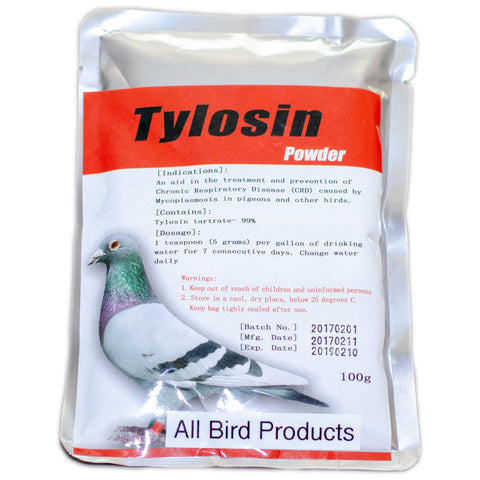
Tylosin Tartrate 99% Powder
Tylosin Powder contains:
Tylosin Tartrate 99%
in a 100 g powder format.
Tylosin is commonly researched in connection with:
- Mycoplasma
- Chronic respiratory problems
- Pigeon respiratory care
- Aviary respiratory disease
Explore Tylosin Powder
BirdAntibiotic.com Tylosin Tartrate 99% Powder is available in a professional 100 g resealable format for pet-bird care.
Explore Bird Antibiotics
Browse our Best Bird Antibiotics collection and explore bird care products organized in one convenient place.
EXPLORE PRODUCTS →Cause #4 — Air-Sac Mites
Respiratory mites are particularly important in:
- Canaries
- Gouldian finches
- Other susceptible finches
The air-sac mite Sternostoma tracheacolum can inhabit respiratory structures including:
- Trachea
- Syrinx
- Lungs
- Air sacs
Air-Sac Mite Symptoms
Heavy infestations may cause:
- Clicking sounds
- High-pitched respiratory noises
- Sneezing
- Tail bobbing
- Open-mouth breathing
- Reduced singing
- Breathing difficulty
Handling and exercise may make symptoms much more obvious.
SCATT for Air-Sac Mites
SCATT is a BirdAntibiotic.com topical parasite-control product marketed for:
- Air-sac mites
- Scaly-face mites
- Selected other avian mite concerns
Its most relevant placement in this article is specifically:
tail bobbing accompanied by clicking or other respiratory signs when air-sac mites are the identified concern.
Air-Sac Mite Care
SCATT is particularly relevant to canaries, finches and other cage birds when respiratory mites are involved.
Ivermectin 0.02% for Birds
Ivermectin 0.02% Oral Solution is another BirdAntibiotic.com avian antiparasitic option.
Product details:
- Active ingredient: Ivermectin
- Strength: 0.02% w/v
- Volume: 55 mL
- Form: Oral liquid solution
Ivermectin may be used in avian parasite-control programs when the specific parasite involved is appropriate for this ingredient.
Cause #5 — Fungal Respiratory Disease
Fungal disease can also produce respiratory difficulty.
The most important avian respiratory fungus is:
Aspergillus.
Possible Aspergillosis Signs
- Breathing difficulty
- Tail bobbing
- Exercise intolerance
- Voice changes
- Appetite loss
- Weight loss
Antibiotics do not treat fungal infection.
This is another reason tail bobbing should not automatically lead to antibacterial treatment without considering the wider symptom pattern.
Cause #6 — Airway Obstruction
The airway can become partially obstructed by:
- Mucus
- Inflammatory material
- Foreign material
- Masses
A bird with restricted airflow may show:
- Open-mouth breathing
- Neck stretching
- Respiratory noise
- Tail bobbing
Cause #7 — Smoke, Aerosols & Household Fumes
Bird respiratory systems are extremely sensitive to airborne irritants.
Potential hazards include:
- Cooking smoke
- Overheated coated cookware
- Cigarette smoke
- Vape aerosol
- Incense
- Scented candles
- Cleaning sprays
- Air fresheners
- Strong perfume
Sudden Tail Bobbing After Fume Exposure
If a previously normal bird suddenly develops:
- Rapid breathing
- Tail bobbing
- Open-mouth breathing
- Weakness
- Collapse
after suspected airborne exposure, move the bird to clean air and seek urgent veterinary care.
Cause #8 — Heat or Vigorous Exercise
A bird that has just:
- Flown repeatedly
- Been chased
- Become intensely excited
- Overheated
may breathe faster temporarily.
Some visible tail movement may accompany the increased respiratory rate.
The Important Difference
Normal post-exercise breathing should:
settle with rest.
Respiratory tail bobbing tends to:
continue while the bird is calm.
Tail Bobbing After Exercise That Does Not Stop
If the bird continues:
- Breathing rapidly
- Bobbing the tail
- Holding the mouth open
well after exercise has ended, underlying respiratory or cardiovascular disease becomes more concerning.
Cause #9 — Heart or Cardiovascular Disease
Not every breathing problem originates in the lungs.
Birds with cardiovascular disease may develop:
- Exercise intolerance
- Weakness
- Faster breathing
- Difficulty breathing
- Loss of balance
Large parrots such as:
- Amazon parrots
- Macaws
- African grey parrots
can develop cardiovascular disease as they age.
Cause #10 — Abdominal Enlargement or Egg Binding
The respiratory system occupies space alongside other internal organs.
Significant abdominal enlargement can mechanically interfere with normal breathing.
Egg Binding
An egg-bound female may show:
- Tail bobbing
- Breathing difficulty
- Straining
- Swollen abdomen
- Weakness
- Cage-floor sitting
- Reduced droppings
This is particularly important in:
- Budgies
- Cockatiels
- Lovebirds
Explore Bird Antibiotics
Browse our Best Bird Antibiotics collection and explore bird care products organized in one convenient place.
EXPLORE PRODUCTS →When Tail Bobbing Is an Emergency
Seek urgent veterinary care when tail bobbing occurs with:
- Continuous open-mouth breathing
- Severe respiratory effort
- Neck stretching to breathe
- Blue, gray or unusually pale tissue
- Profound weakness
- Inability to perch
- Cage-floor collapse
- Loss of coordination
- Rapid deterioration
A bird already struggling to breathe should be handled as little as possible while veterinary assistance is arranged.
Do Not Force Oral Medication Into a Bird in Severe Respiratory Distress
If the bird is struggling to breathe, repeated catching and forceful oral administration can:
- Increase stress
- Increase oxygen demand
- Increase aspiration risk
Stabilization becomes the priority.
How to Observe Tail Bobbing Correctly
Do not immediately grab the bird.
Watch from a quiet distance first.
Observe the Bird at Rest
Ask:
- Is the tail moving with every breath?
- Is breathing fast?
- Is the mouth closed?
- Is the bird making noise while breathing?
Record a Video
A short video can document:
- Tail movement
- Respiratory rhythm
- Clicking or wheezing
- Posture
This can be useful because breathing can change after transportation or handling.
Tail Bobbing + Sneezing
Repeated sneezing plus tail bobbing increases concern for:
- Respiratory infection
- Respiratory irritation
- Air-sac mites in susceptible species
Tail Bobbing + Clicking
This combination is especially important in:
- Canaries
- Gouldian finches
because air-sac mites can cause:
- Clicking
- High-pitched breathing
- Tail bobbing
- Open-mouth breathing
Tail Bobbing + Nasal Discharge
This pattern can occur with respiratory disease involving the:
- Nasal passages
- Sinuses
- Trachea
- Lower respiratory tract
Tail Bobbing + Eye Discharge
Eye and respiratory symptoms occurring together can appear with:
- Sinus disease
- Chlamydial disease
- Mycoplasma-associated disease
- Other infections
Tail Bobbing + Open-Mouth Breathing
This is a much more serious combination.
The bird is visibly working harder to move air.
Minimize handling and arrange prompt veterinary care.
Tail Bobbing + Fluffed Feathers
Persistent fluffing combined with increased respiratory effort suggests the bird is not simply excited or recovering from exercise.
Check for:
- Daytime sleeping
- Appetite loss
- Weight loss
- Weakness
Tail Bobbing + Not Eating
Respiratory disease can significantly reduce appetite.
A bird that:
- Bobs its tail
- Breathes hard
- Stops eating
is more concerning than a bird showing isolated brief tail movement after activity.
Tail Bobbing + Cage-Floor Sitting
This combination indicates substantial weakness or respiratory compromise.
A normally perching bird that is:
- Breathing hard
- Bobbing the tail
- Sitting on the cage bottom
requires prompt attention.
Budgie Tail Bobbing
Budgies are small and can deteriorate quickly.
Watch for:
- Tail bobbing at rest
- Fluffing
- Daytime sleeping
- Sneezing
- Wet nostrils
- Reduced chatter
- Appetite loss
Respiratory infection, nutritional problems, air-sac disease and other systemic conditions can produce increased breathing effort.
Cockatiel Tail Bobbing
A cockatiel that normally whistles, climbs and interacts but suddenly becomes:
- Quiet
- Fluffed
- Breathing visibly
- Tail bobbing
should be evaluated carefully.
Female cockatiels also deserve assessment for reproductive problems if:
- Abdominal enlargement
- Straining
- Cage-bottom sitting
occur with tail bobbing.
Canary Tail Bobbing
Canaries have an important additional differential:
air-sac mites.
Especially watch for:
- Clicking
- High-pitched breathing
- Reduced song
- Sneezing
- Tail bobbing
- Open-mouth breathing
Gouldian Finch Tail Bobbing
Gouldian finches are particularly associated with respiratory air-sac mite problems.
Heavy infestation can significantly compromise breathing.
SCATT and ivermectin-based parasite products may become relevant when mites are appropriately identified.
Pigeon Tail Bobbing
Pigeon respiratory disease can involve:
- Mycoplasma-associated disease
- Chlamydial disease
- Bacterial respiratory disease
- Environmental irritation
- Fungal disease
Additional pigeon signs can include:
- Wet eyes
- Swollen sinuses
- Sneezing
- Reduced flight performance
- Reduced appetite
Parrot Tail Bobbing
In parrots, important possibilities include:
- Respiratory infection
- Fungal disease
- Airway disease
- Household fume exposure
- Heart disease
- Abdominal enlargement
Large parrots may conceal illness for a substantial period before respiratory effort becomes obvious.
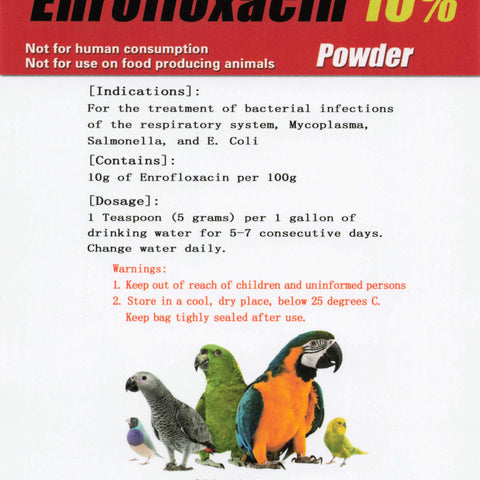
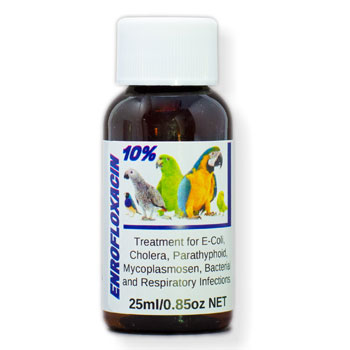
Enrofloxacin 10% Powder for Pet Birds
Enrofloxacin 10% Powder is another BirdAntibiotic.com avian antibiotic powder.
Product details:
- Active ingredient: Enrofloxacin
- Strength: 10%
- Net weight: 100 g
- Form: Powder
- Intended for pet birds
It belongs in the bacterial respiratory-care comparison section when an appropriate susceptible bacterial organism is involved.
Explore Enrofloxacin 10% Powder
Compare enrofloxacin-based pet-bird antibacterial care by ingredient, strength and format.
Which Respiratory Product Fits Which Search?
| Product | Active Ingredient | Most Relevant Article Context |
|---|---|---|
| Doxycycline 20% | Doxycycline 20% | Susceptible bacterial/chlamydial respiratory-care searches |
| Doxy-Tyl | Tylosin 40% + Doxycycline 20% | Combination respiratory and Mycoplasma-related searches |
| Tylosin Powder | Tylosin Tartrate 99% | Mycoplasma and chronic respiratory-care searches |
| Enrofloxacin 10% | Enrofloxacin 10% | Selected susceptible bacterial respiratory concerns |
| SCATT | Moxidectin-based topical parasite care | Air-sac mite and scaly-face mite concerns |
| Ivermectin 0.02% | Ivermectin 0.02% | Selected avian mite and parasite-control programs |
Do Not Treat Every Tail Bob With an Antibiotic
Tail bobbing can occur with:
- Bacteria
- Chlamydia
- Mycoplasma
- Fungi
- Air-sac mites
- Household fumes
- Heat
- Cardiovascular disease
- Abdominal enlargement
- Egg binding
The treatment category must match the cause.
How Veterinarians Investigate Bird Breathing Problems
Depending on the bird's condition, evaluation may include:
- Observation before restraint
- Physical examination
- Body weight
- Blood tests
- Radiographs
- Respiratory or sinus sampling
- Microscopy
- Other testing based on the suspected disease
A severely dyspneic bird may need stabilization before extensive handling or diagnostic procedures.
What Should You Do at Home While Arranging Care?
Keep the Bird Calm
Reduce:
- Noise
- Handling
- Flying
- Chasing
Observe Before Catching
Watch the bird's respiratory pattern from a distance.
Move Away From Possible Fumes
If household fumes or smoke may be involved, move the bird to clean air.
Keep Food and Water Accessible
A weak bird should not need to climb extensively to reach basic resources.
Record Symptoms
Take a short video of the breathing pattern for the veterinarian.
Explore Bird Antibiotics
Browse our Best Bird Antibiotics collection and explore bird care products organized in one convenient place.
EXPLORE PRODUCTS →Frequently Asked Questions About Bird Tail Bobbing
What does tail bobbing mean in birds?
Pronounced rhythmic tail movement synchronized with breathing often indicates increased respiratory effort.
Is bird tail bobbing always abnormal?
Brief increased body movement after vigorous activity may settle normally. Persistent tail bobbing while the bird is resting is more concerning.
How much tail bobbing is normal?
Small movements may be difficult to separate from normal breathing or balance. Clearly visible repetitive up-and-down movement with every breath at rest deserves attention.
Why is my bird's tail moving when it breathes?
The bird may be recruiting additional muscles because breathing requires more effort than normal.
Is tail bobbing a respiratory infection?
It can occur with respiratory infection, but it is not specific to bacterial disease.
Why is my parrot tail bobbing?
Possible causes include respiratory infection, fungal disease, household fumes, cardiovascular disease, airway problems and internal abdominal pressure.
Why is my budgie's tail bobbing?
Persistent bobbing at rest may indicate respiratory disease, air-sac problems or another illness causing increased breathing effort.
Why is my cockatiel's tail bobbing?
Respiratory disease is an important concern. In females, reproductive problems such as egg binding should also be considered when abdominal swelling or straining is present.
Why is my canary tail bobbing?
Respiratory infection and air-sac mites are important possibilities, especially when clicking or reduced song is also present.
Why is my finch tail bobbing?
Air-sac mites, respiratory infection and other breathing disorders are important differentials.
Why is my pigeon tail bobbing?
Pigeon respiratory problems can involve bacterial organisms, Mycoplasma, Chlamydia, fungal disease and environmental irritation.
Why is my bird tail bobbing after flying?
Brief faster breathing after vigorous flight can occur normally. It should settle once the bird rests.
Why is my bird still tail bobbing after resting?
Persistent respiratory effort after the activity has stopped is more concerning and should be evaluated.
Why is my bird tail bobbing and wheezing?
This combination indicates respiratory disease or airway compromise until proven otherwise.
Why is my bird tail bobbing and clicking?
Respiratory mites are one possibility, especially in canaries and Gouldian finches, but infection and other airway problems can also cause abnormal sounds.
Why is my bird tail bobbing and sneezing?
Consider respiratory infection, airway irritation and respiratory parasites depending on the species and other symptoms.
Why is my bird tail bobbing and opening its mouth?
Open-mouth breathing plus tail bobbing indicates substantial respiratory effort and deserves urgent veterinary attention.
Why is my bird tail bobbing and fluffed up?
This combination suggests the bird may be systemically ill rather than simply recovering from exercise.
Why is my bird tail bobbing and sleeping?
Daytime lethargy plus increased respiratory effort is concerning for illness.
Why is my bird tail bobbing and not eating?
Appetite loss plus respiratory difficulty can occur with significant respiratory or systemic disease.
Why is my bird tail bobbing on the bottom of the cage?
This combination indicates weakness and increased respiratory effort and should be treated seriously.
Can air-sac mites cause tail bobbing?
Yes. Heavy air-sac mite infestations can cause clicking, sneezing, breathing difficulty, tail bobbing and open-mouth breathing.
What birds commonly get air-sac mites?
Canaries and Gouldian finches are particularly associated with clinically significant air-sac mite disease.
What is SCATT for birds?
SCATT is a topical BirdAntibiotic.com parasite-control product used for air-sac mites, scaly-face mites and selected other avian mite concerns.
What is Ivermectin 0.02% for birds?
It is an avian antiparasitic oral solution used in selected parasite and mite-control programs.
Can fungal infection cause tail bobbing?
Yes. Aspergillosis and other serious fungal respiratory disease can produce increased respiratory effort.
Can Mycoplasma cause tail bobbing?
Mycoplasma-associated respiratory disease can produce respiratory signs that may include increased breathing effort.
Can psittacosis cause breathing problems?
Chlamydial disease can cause respiratory signs along with eye or nasal discharge, appetite loss, weight loss and other systemic signs.
Can heat cause tail bobbing?
Overheated birds may breathe rapidly or pant. The signs should improve once the bird is safely cooled and resting; persistent breathing difficulty requires evaluation.
Can heart disease cause tail bobbing?
Cardiovascular disease can cause exercise intolerance and increased breathing effort that can resemble respiratory disease.
Can egg binding cause tail bobbing?
Yes. Egg-bound birds may have abdominal enlargement and breathing difficulty, with tail movement synchronized to respiration.
Can smoke cause tail bobbing?
Smoke and airborne irritants can injure or irritate the respiratory system and cause acute breathing difficulty.
Should I force medicine into a tail-bobbing bird?
Do not force oral medication into a bird that is in severe respiratory distress unless specifically directed by an avian professional, because handling and aspiration can worsen the situation.
What is Doxycycline 20% Powder?
It is a BirdAntibiotic.com avian-use powder containing doxycycline at a 20% concentration in a 100 g pouch.
What is Doxy-Tyl?
Doxy-Tyl is a combination avian powder containing Tylosin 40% and Doxycycline 20%.
What is Tylosin Powder?
BirdAntibiotic.com Tylosin Powder contains Tylosin Tartrate 99% in a 100 g powder format.
What is Enrofloxacin 10% Powder?
It is a BirdAntibiotic.com avian powder containing enrofloxacin at a 10% concentration.
Should every respiratory bird receive antibiotics?
No. Similar breathing signs can arise from bacterial, fungal, parasitic, environmental, cardiovascular and reproductive causes.
When should I call an avian veterinarian?
Persistent tail bobbing at rest deserves prompt assessment, especially if accompanied by respiratory noise, discharge, appetite loss, weakness or changes in activity.
When is bird tail bobbing an emergency?
Continuous open-mouth breathing, severe respiratory effort, collapse, inability to perch or rapidly worsening weakness requires urgent care.
The Professional Tail-Bobbing Checklist
1. Observe the bird quietly at rest.
2. Determine whether the tail moves with every breath.
3. Check for open-mouth breathing.
4. Listen for wheezing or clicking.
5. Look for nasal or eye discharge.
6. Check appetite and activity.
7. Consider air-sac mites in susceptible canaries and finches.
8. Review smoke, aerosol or fume exposure.
9. Consider reproductive disease in laying females.
10. Match treatment to the actual cause rather than the tail movement alone.
Explore Bird Respiratory Care
Compare doxycycline, tylosin, Doxy-Tyl, enrofloxacin, air-sac mite treatments and other BirdAntibiotic.com respiratory-care products by active ingredient and health concern.
The Most Important Tail-Bobbing Rule
Do not judge the tail movement alone.
Ask:
Is the bird resting?
Does the tail move with every breath?
Is breathing noisy?
Is the mouth open?
Is the bird still eating?
Can the bird perch normally?
Is there clicking, sneezing, discharge or weakness?
A bird that briefly breathes faster after vigorous flight and quickly returns to normal is very different from a bird sitting quietly while its tail pumps up and down with every breath.
Persistent rhythmic tail bobbing at rest is not something to ignore. Identify the cause early, minimize unnecessary stress, and match respiratory, antiparasitic or other treatment to the actual underlying problem.
Recommended Products
Products selected to complement this guide.


Shop Related Products
Explore the products featured for this topic.


