 Help & Contact
 Track order













Bird Open-Mouth Breathing: Causes & Emergency Warning Signs
Bird Open-Mouth Breathing: Causes & Emergency Warning Signs
You look at your bird and immediately notice something unusual.
The beak is open.
The chest is moving faster than normal.
Perhaps the tail rises and falls with every breath.
The bird may also be:
- Stretching its neck
- Wheezing
- Making clicking sounds
- Sitting low on the perch
- Holding the wings slightly away from the body
- Looking weak or frightened
For bird owners, one of the most important questions is:
Is my bird simply panting—or is it struggling to breathe?
That distinction matters.
A bird may temporarily breathe with an open beak after:
- Intense flight
- Handling stress
- Extreme excitement
- Overheating
But:
persistent open-mouth breathing while the bird is resting is not something to ignore.
It can indicate significant respiratory compromise.
Bird Open-Mouth Breathing: Quick Emergency Answer
A bird continuously breathing with its beak open while resting may be experiencing respiratory distress.
The situation becomes especially concerning when open-mouth breathing occurs with:
- Pronounced tail bobbing
- Neck stretching
- Rapid chest movement
- Wheezing or clicking
- Weak grip
- Inability to perch
- Bottom-of-cage sitting
- Collapse
Minimize unnecessary handling.
A bird already struggling to breathe has increased oxygen demands, and repeated catching or restraint can make respiratory distress worse.
Continuous open-mouth breathing at rest, collapse, inability to perch or rapidly worsening respiratory effort requires prompt avian veterinary attention.
Explore Bird Antibiotics
Browse our Best Bird Antibiotics collection and explore bird care products organized in one convenient place.
EXPLORE PRODUCTS →What Does Normal Bird Breathing Look Like?
A healthy resting bird usually breathes:
- Quietly
- Rhythmically
- Without obvious effort
- With the beak closed
You generally should not see dramatic movement of:
- The chest
- The abdomen
- The tail
during quiet resting respiration.
When Can Open-Mouth Breathing Be Temporary?
There are situations where a bird may briefly pant without having primary respiratory disease.
After Intense Flight
A bird that has been flying vigorously may briefly breathe faster or open its beak while recovering.
This should improve as the bird rests.
After Severe Stress
Being:
- Chased
- Caught
- Restrained
- Transported
can temporarily increase respiratory rate.
During Overheating
Birds do not sweat like humans.
When overheated, they may use:
- Open-beak panting
- Rapid breathing
- Holding the wings away from the body
to help release heat.
The Important Difference: Recovery
Temporary panting should improve once:
- Exercise stops
- The bird calms down
- The environment becomes comfortable
A bird that continues open-mouth breathing while quietly perched deserves much more concern.
Open-Mouth Breathing vs Respiratory Distress
| Finding | Temporary Panting | Possible Respiratory Distress |
|---|---|---|
| Trigger | Exercise, handling or heat | May occur while resting |
| Duration | Improves with rest | Persists or worsens |
| Tail bobbing | Minimal after recovery | Pronounced with each breath |
| Respiratory noise | Usually absent | Clicking, wheezing, squeaking or rattling may occur |
| General condition | Alert and responsive | Weak, fluffed or lethargic |
What Is Tail Bobbing?
Tail bobbing means the tail moves visibly up and down in rhythm with respiration.
Small body movement can accompany normal breathing.
The concerning pattern is:
pronounced repeated tail movement synchronized with every breath while the bird is resting.
This often indicates increased respiratory effort.
Open-Mouth Breathing + Tail Bobbing
This combination deserves particular attention.
The bird may be recruiting additional muscles to move air through the respiratory system.
Other warning signs can include:
- Neck extension
- Wing drooping
- Weakness
- Reduced vocalization
- Loss of appetite
Open-Mouth Breathing + Neck Stretching
A bird repeatedly extending its neck while trying to breathe may be attempting to improve airflow.
Possible causes include:
- Airway obstruction
- Tracheal disease
- Severe respiratory inflammation
- Air-sac mite burden
- Fungal lesions

Open-Mouth Breathing + Wheezing or Clicking
Audible respiratory sounds are important clues.
These may include:
- Clicking
- Wheezing
- Squeaking
- Rattling
- Whistling
Different conditions can produce similar sounds.
A clicking bird does not automatically have air-sac mites.
A wheezing bird does not automatically have a bacterial infection.
The cause must be identified.
Explore Bird Antibiotics
Browse our Best Bird Antibiotics collection and explore bird care products organized in one convenient place.
EXPLORE PRODUCTS →12 Important Causes of Open-Mouth Breathing in Birds
Cause #1 — Temporary Exercise Panting
Birds may briefly breathe rapidly after strong exercise.
A flighted parrot completing several vigorous laps around a room may open its beak temporarily while recovering.
This becomes less reassuring when:
- Breathing stays abnormal after rest
- Tail bobbing continues
- The bird becomes weak
- Respiratory sounds appear
Cause #2 — Overheating
Heat stress can cause panting.
Additional signs can include:
- Wings held away from the body
- Rapid breathing
- Restlessness
- Weakness in severe cases
Remove the Heat Source
Move the bird away from:
- Direct sunlight
- Overheated rooms
- Heating appliances
and allow it to cool gradually in a comfortable environment.
Cause #3 — Bacterial Respiratory Disease
Bacterial respiratory infections can affect:
- Nasal passages
- Sinuses
- Trachea
- Lungs
- Air sacs
Possible signs include:
- Sneezing
- Nasal discharge
- Watery or swollen eyes
- Wheezing
- Tail bobbing
- Open-mouth breathing
- Reduced appetite

Doxycycline for Bird Respiratory Care
Doxycycline for Birds is one of the major BirdAntibiotic.com respiratory antibacterial categories.
The collection includes doxycycline powder and combination respiratory products for pet birds, pigeons and aviary birds.
Doxycycline becomes relevant when an appropriate susceptible bacterial or chlamydial respiratory condition is involved.
Explore Doxycycline for Birds
Compare doxycycline-based bird respiratory products by formulation and active ingredient.
Cause #4 — Chlamydia psittaci / Psittacosis
Chlamydia psittaci can infect parrots, pigeons and many other bird species.
Some infected birds may appear almost normal.
Others can develop:
- Lethargy
- Reduced appetite
- Weight loss
- Eye discharge
- Nasal discharge
- Respiratory difficulty
- Dropping changes
Chlamydia Is Also a Human-Health Concern
Chlamydia psittaci can spread from infected birds to people.
If avian chlamydiosis is suspected:
- Use good hand hygiene
- Avoid generating dust from dried droppings
- Clean contaminated areas carefully
- Seek appropriate veterinary guidance
Explore Bird Antibiotics
Browse our Best Bird Antibiotics collection and explore bird care products organized in one convenient place.
EXPLORE PRODUCTS →Cause #5 — Mycoplasma-Associated Respiratory Disease
Mycoplasma-associated respiratory disease is especially relevant in:
- Pigeons
- Aviary birds
- Mixed bird collections
Possible signs include:
- Sneezing
- Wet eyes
- Nasal discharge
- Respiratory noise
- Reduced performance
- Open-mouth breathing in more significant disease
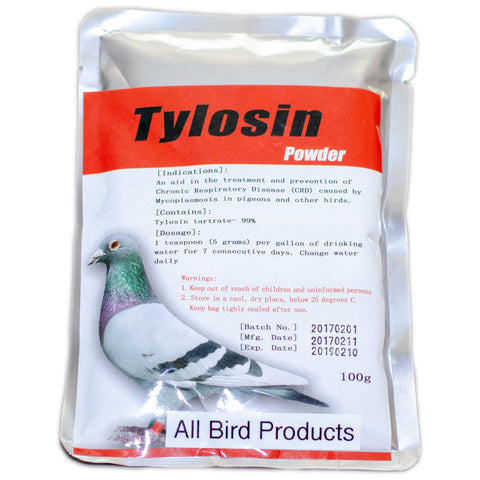
Tylosin for Bird Respiratory Problems
Tylosin / Tylan products are available from BirdAntibiotic.com for respiratory-care programs in pigeons and other birds.
Tylosin is particularly relevant to searches involving:
- Mycoplasma
- Chronic respiratory disease
- Respiratory signs in pigeons
Explore Tylosin Respiratory Products
Compare tylosin-based respiratory products for pigeons, cage birds and aviary care.
Cause #6 — Mixed Bacterial Respiratory Problems
Bird respiratory disease does not always involve only one suspected bacterial group.
Bird owners frequently research combination products when signs include:
- Sneezing
- Eye inflammation
- Wheezing
- Nasal discharge
- Breathing difficulty
Doxy-Tyl Powder
Doxy-Tyl Powder is a BirdAntibiotic.com combination avian product containing:
- Tylosin 40%
- Doxycycline 20%
in a 100 g powder format.
Its commercial placement is strongest in articles involving respiratory conditions where doxycycline and tylosin are being compared as part of a targeted bird-care program.
Doxycycline + Tylosin Combination
Doxy-Tyl combines two familiar avian respiratory active ingredients in one powder format.

Cause #7 — Air-Sac Mites
Air-sac mites are particularly important in:
- Canaries
- Finches
- Especially Gouldian finches
and can also affect other susceptible cage birds.
The mite commonly associated with this disease is:
Sternostoma tracheacolum.
Possible Air-Sac Mite Signs
- Clicking
- Squeaking
- Wheezing
- Sneezing
- Changes in song
- Tail bobbing
- Open-mouth breathing
- Exercise intolerance
Symptoms Can Worsen With Stress
A bird with respiratory parasites may breathe much worse after:
- Flight
- Handling
- Fear
This is another reason to minimize restraint in a severely breathless bird.
Ivermectin 0.02% for Birds
Ivermectin 0.02% Oral Solution is a BirdAntibiotic.com parasite-control product supplied in a 55 mL format.
Ivermectin may be considered for selected avian mites and nematodes when the parasite involved has been appropriately identified.
Exact concentration matters.
Do not transfer directions from a stronger ivermectin formulation to a 0.02% product or vice versa.
SCATT for Air-Sac Mites
SCATT is another BirdAntibiotic.com avian mite-control product commonly associated with:
- Air-sac mites
- Scaly-face mites
- Selected other mite problems
Air-Sac Mite Care
For canaries, finches and other susceptible cage birds with appropriately identified respiratory mites, compare parasite products by active ingredient, concentration and route.
Cause #8 — Aspergillosis and Other Fungal Respiratory Disease
Aspergillosis is an important fungal respiratory disease in birds.
It can involve:
- Trachea
- Lungs
- Air sacs
- Other organs
Possible respiratory signs include:
- Exercise intolerance
- Voice changes
- Wheezing
- Open-mouth breathing
- Labored breathing
- Weight loss
Mold Exposure Is Not the Same as Confirmed Aspergillosis
A bird exposed to mold does not automatically have fungal disease.
Diagnosis may require:
- Imaging
- Blood testing
- Endoscopy
- Culture
- Other veterinary testing
depending on the case.
Antibiotics Do Not Treat Aspergillosis
Fungal respiratory disease requires a different treatment category from bacterial respiratory disease.
This is why repeated antibiotic use without diagnosis can miss the real cause.
Cause #9 — Airway Obstruction or Foreign Material
Something physically obstructing the respiratory tract can produce sudden open-mouth breathing.
Possible causes include:
- Food material
- Foreign objects
- Swelling
- Masses
- Tracheal lesions
Possible Signs
- Sudden respiratory difficulty
- Neck extension
- Gagging
- Voice change
- Severe distress
A suspected airway obstruction is an emergency.
Explore Bird Antibiotics
Browse our Best Bird Antibiotics collection and explore bird care products organized in one convenient place.
EXPLORE PRODUCTS →Cause #10 — Smoke, Cooking Fumes & Airborne Irritants
The avian respiratory system is exceptionally sensitive to airborne contaminants.
Potential hazards include:
- Smoke
- Overheated nonstick or fluoropolymer products
- Cooking fumes
- Aerosol sprays
- Perfume
- Air fresheners
- Incense
- Scented candles
- Harsh cleaning fumes
Sudden Breathing Difficulty After Fume Exposure
If a previously normal bird suddenly develops:
- Open-mouth breathing
- Severe weakness
- Loss of coordination
- Collapse
after possible inhaled toxin exposure, move the bird away from the contaminated air and seek urgent veterinary care.
Cause #11 — Nutritional Disease
Nutrition can indirectly affect respiratory health.
Vitamin A is particularly important to normal epithelial tissues lining parts of the respiratory tract.
Birds maintained on chronically poor, seed-heavy diets may develop nutritional deficiencies that can impair normal tissue health.
Do Not Blindly Megadose Vitamin A
Vitamin supplementation should fit the complete diet.
Excessive supplementation can also create problems.
The first goal should be:
a nutritionally complete base diet.
Cause #12 — Heart Disease, Internal Masses or Other Systemic Illness
Not every bird breathing hard has primary lung disease.
Respiratory effort can also increase when internal conditions affect normal air-sac movement.
Examples may include:
- Heart disease
- Abdominal enlargement
- Internal masses
- Fluid accumulation
- Severe systemic illness
Why Abdominal Problems Can Affect Bird Breathing
Bird lungs and air sacs depend on normal movement of the body wall and internal spaces.
Significant internal enlargement can restrict normal respiratory mechanics.
Bird Open-Mouth Breathing and Not Eating
This combination is more concerning than temporary post-flight panting.
Possible causes include:
- Respiratory infection
- Chlamydial disease
- Fungal respiratory disease
- Severe air-sac mite infestation
- Systemic disease
- Toxic exposure
Bird Open-Mouth Breathing and Sitting on the Cage Floor
This is a high-priority combination.
A bird that cannot maintain its usual perch while struggling to breathe may be significantly compromised.
Minimize handling and arrange prompt veterinary evaluation.
Bird Open-Mouth Breathing and Wings Held Out
This pattern can occur with overheating.
But birds with severe respiratory distress may also alter their posture in an attempt to breathe more easily.
Consider:
- Room temperature
- Recent exercise
- Respiratory noise
- Tail bobbing
- Overall alertness
Bird Open-Mouth Breathing With No Noise
Silence does not make respiratory distress harmless.
A bird can have significant:
- Lung disease
- Air-sac disease
- Fume toxicity
- Internal pressure
without obvious wheezing.
Bird Clicking While Breathing
Clicking can occur with:
- Air-sac mites
- Airway inflammation
- Respiratory infection
- Other airway disease
Do not automatically treat every clicking bird for mites.
Budgie Open-Mouth Breathing
A budgie breathing with its beak open while resting should be watched very carefully.
Relevant causes include:
- Bacterial respiratory disease
- Chlamydial infection
- Fungal disease
- Environmental fumes
- Airway disease
- Overheating
Because budgies are small birds, significant respiratory compromise can progress quickly.
Cockatiel Open-Mouth Breathing
Cockatiels may show respiratory disease through:
- Tail bobbing
- Sneezing
- Watery eyes
- Open-beak breathing
- Reduced vocalization
- Lethargy
Also consider environmental irritants because cockatiels produce substantial feather dust and often live indoors around household fumes.
Canary Open-Mouth Breathing
In canaries, respiratory parasites deserve particular consideration.
Possible air-sac mite signs include:
- Clicking
- Squeaking
- Reduced song
- Tail bobbing
- Open-mouth breathing
But bacterial and fungal respiratory diseases can create similar signs.
Finch Open-Mouth Breathing
Gouldian finches and some other finches are particularly associated with air-sac mite disease.
Small finches have limited physiological reserve, so severe respiratory effort deserves prompt attention.
Pigeon Open-Mouth Breathing
For pigeons, consider:
- Mycoplasma-associated disease
- Chlamydial disease
- Other bacterial respiratory disease
- Air-sac disease
- Environmental irritation
- Heavy exercise or heat
Parrot Open-Mouth Breathing
In larger parrots, open-mouth breathing can be associated with:
- Bacterial respiratory disease
- Chlamydiosis
- Aspergillosis
- Fume exposure
- Airway obstruction
- Internal disease

What Should You Do When a Bird Is Breathing Hard?
Step 1 — Stop Unnecessary Handling
Observe the bird before catching it.
Step 2 — Move Away From Obvious Fumes
If smoke or airborne toxins are suspected, provide access to clean air immediately.
Step 3 — Check Temperature
Determine whether the bird may simply be overheated.
Step 4 — Watch the Tail
Pronounced tail bobbing at rest supports increased respiratory effort.
Step 5 — Listen
Note:
- Clicking
- Wheezing
- Whistling
- Rattling
Step 6 — Check Eyes and Nostrils
Look for:
- Discharge
- Swelling
- Crusting
Step 7 — Check Overall Strength
Is the bird:
- Perching?
- Alert?
- Eating?
- Responsive?
Step 8 — Record a Video
A video of respiratory effort can be valuable because breathing may change after transport or handling.
Step 9 — Arrange Veterinary Assessment
Persistent open-mouth breathing deserves diagnosis rather than trial-and-error treatment.
Do Not Force Oral Medication Into a Bird Struggling to Breathe
A bird in significant respiratory distress may:
- Aspirate liquid
- Become more stressed during restraint
- Experience increased oxygen demand
Emergency stabilization takes priority over aggressively forcing medication by mouth.
How Is Bird Respiratory Disease Diagnosed?
Depending on the suspected cause, an avian veterinarian may consider:
- Physical examination
- Weight and body-condition assessment
- Radiographs
- Blood testing
- Respiratory samples
- Culture
- PCR testing
- Endoscopy
- Parasite investigation
Why Diagnosis Matters
Open-mouth breathing can result from:
bacteria.
Chlamydia.
Mycoplasma.
fungi.
mites.
airway obstruction.
toxins.
heat.
internal disease.
These conditions do not all use the same medication.
Support During Respiratory Recovery
After the immediate respiratory problem has been addressed, supportive care may include attention to:
- Hydration
- Nutrition
- Digestive health
- Stress reduction
Guardian Angel — Recovery Support
Guardian Angel is available from BirdAntibiotic.com for nutritional and electrolyte support during illness and recovery.
It belongs in the:
recovery section—not as the primary treatment for respiratory distress.
Respiratory Recovery Support
Once a bird is stable and able to eat and drink safely, nutritional, electrolyte and digestive support can help during recovery.
Explore Bird Antibiotics
Browse our Best Bird Antibiotics collection and explore bird care products organized in one convenient place.
EXPLORE PRODUCTS →Frequently Asked Questions About Bird Open-Mouth Breathing
Why is my bird breathing with its mouth open?
Possible causes include exercise, overheating, respiratory infection, Chlamydia, Mycoplasma, air-sac mites, fungal disease, airway obstruction, fumes and other systemic illness.
Is open-mouth breathing normal in birds?
Brief panting may occur after exertion, severe stress or overheating. Persistent open-mouth breathing while resting is more concerning.
Is open-mouth breathing an emergency?
Continuous open-mouth breathing at rest—especially with severe tail bobbing, weakness, collapse or inability to perch—requires prompt veterinary attention.
Why is my bird's tail bobbing when it breathes?
Pronounced rhythmic tail movement can indicate increased respiratory effort.
Why is my bird stretching its neck to breathe?
Neck extension may occur when a bird is attempting to improve airflow through a compromised respiratory tract.
Why does my bird click when breathing?
Clicking can occur with air-sac mites, infection, inflammation or other airway disease.
Why is my bird wheezing?
Wheezing can result from airway narrowing, infection, inflammation, parasites or obstruction.
Why is my bird breathing hard but making no noise?
Significant lower respiratory disease or systemic illness can occur without obvious respiratory sounds.
Can a bird pant after flying?
Yes. Brief panting can occur after vigorous flight, but it should improve with rest.
Can heat make a bird breathe with its mouth open?
Yes. Overheated birds may pant and hold their wings away from the body.
Can stress make a bird breathe fast?
Yes. Handling, capture and fear can temporarily increase respiratory rate and can worsen existing respiratory disease.
Can bacterial infection cause open-mouth breathing?
Yes. Significant bacterial respiratory disease can cause labored breathing, especially when lower airways, lungs or air sacs are involved.
Can Chlamydia cause breathing problems in birds?
Yes. Avian chlamydiosis can produce respiratory and systemic illness, although some infected birds may show relatively subtle signs.
Can Mycoplasma cause open-mouth breathing?
Severe Mycoplasma-associated respiratory disease can contribute to significant breathing difficulty.
Can air-sac mites cause open-mouth breathing?
Yes. Heavy air-sac mite infestations can cause clicking, wheezing, tail bobbing and open-mouth breathing, particularly in canaries and finches.
Can aspergillosis cause open-mouth breathing?
Yes. Fungal lesions involving the lungs, air sacs or major airways can cause significant respiratory effort.
Can mold exposure cause aspergillosis?
Mold exposure can be a risk factor, but exposure alone does not prove that a bird has aspergillosis.
Can smoke make birds breathe hard?
Yes. Smoke and inhaled irritants can cause severe respiratory injury.
Can cooking fumes affect birds?
Yes. Birds are highly sensitive to some cooking and heated-product fumes.
Should I give antibiotics when my bird is breathing hard?
Only when a susceptible bacterial condition is the relevant cause. Fungal disease, mites, toxins, overheating and airway obstruction require different approaches.
What is doxycycline used for in birds?
Doxycycline is an avian antibacterial ingredient commonly used in veterinary respiratory-care programs, including selected bacterial and chlamydial conditions.
What is tylosin used for in birds?
Tylosin is commonly associated with Mycoplasma and chronic respiratory disease management in pigeons and other birds.
What is Doxy-Tyl?
Doxy-Tyl is a combination avian powder containing doxycycline and tylosin.
What is ivermectin used for in birds?
Ivermectin may be used for selected mites and other susceptible parasites after the parasite and correct product concentration are identified.
What is SCATT used for?
SCATT is an avian parasite-control product commonly used in mite-care programs, including air-sac mite management.
Should I force medicine into a bird breathing with its mouth open?
A bird in severe respiratory distress should not be repeatedly restrained or force-fed because handling can worsen respiratory demand and aspiration is a concern.
Why is my budgie breathing with its mouth open?
Possible causes include respiratory infection, Chlamydia, fungal disease, overheating, fumes and airway problems.
Why is my canary clicking and breathing with its mouth open?
Air-sac mites are an important possibility in canaries, but bacterial and fungal respiratory diseases can produce overlapping signs.
Why is my pigeon breathing hard?
Possible causes include respiratory infection, Mycoplasma-associated disease, chlamydial disease, environmental irritation, heat and severe exertion.
When should I take my bird to an avian veterinarian?
Persistent open-mouth breathing at rest, pronounced tail bobbing, severe respiratory noise, weakness, inability to perch or rapid deterioration deserves prompt evaluation.
The Professional Bird Breathing Checklist
1. Observe before handling.
2. Determine whether the bird recently exercised.
3. Check for overheating.
4. Watch for persistent tail bobbing.
5. Listen for clicking, wheezing or rattling.
6. Check eyes and nostrils for discharge.
7. Look for neck stretching.
8. Confirm whether the bird can still perch.
9. Review possible smoke or fume exposure.
10. Consider respiratory parasites in susceptible species.
11. Consider bacterial, chlamydial, fungal and other respiratory disease.
12. Treat severe open-mouth breathing as urgent.
Explore Bird Respiratory Care
BirdAntibiotic.com carries doxycycline, tylosin, Doxy-Tyl, parasite-care products and supportive recovery products for different bird respiratory-health needs.
The Most Important Open-Mouth Breathing Rule
Do not diagnose the cause from the open beak alone.
First determine:
Did the bird just exercise?
Is the room too hot?
Is the bird tail bobbing?
Are there respiratory noises?
Is there eye or nasal discharge?
Can the bird still perch?
Was there possible smoke or fume exposure?
Is this a canary or finch at risk for respiratory mites?
A bird that briefly pants after vigorous flight and then returns to normal is very different from a quiet bird sitting low and gasping with every breath.
Persistent open-mouth breathing at rest is a respiratory warning sign. Observe before handling, minimize stress, identify the cause and treat severe respiratory effort as urgent.
Recommended Products
Products selected to complement this guide.


Shop Related Products
Explore the products featured for this topic.


